How Fumed Silica Enhances Anti-Corrosion Performance in Protective Coatings
Corrosion remains one of the most persistent challenges facing industries that rely on metal structures, from offshore platforms to bridges and industrial pipelines. Formulators have long sought ways to extend the service life of protective coatings, and one additive that has quietly become indispensable in this pursuit is fumed silica. Understanding how this fine, high-purity powder contributes to anti-corrosion performance helps explain why it appears in so many premium coating formulations today.
The Role of Rheology in Coating Protection
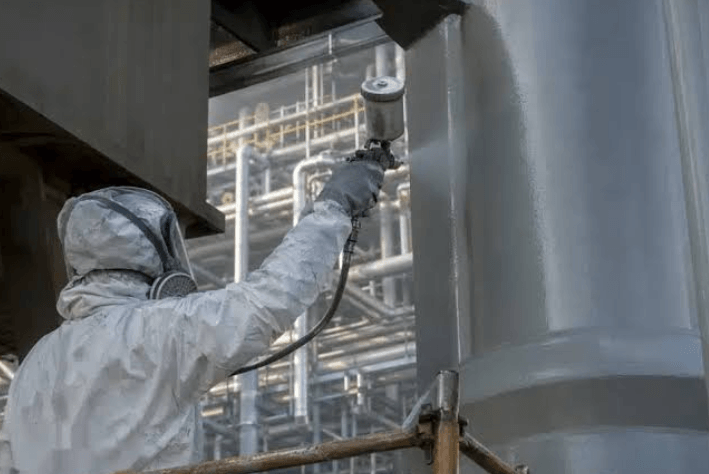
Corrosion resistance is not solely a matter of chemistry; it is also heavily influenced by how well a coating is applied and how uniformly it cures. Fumed silica is prized for its ability to modify the rheological behavior of a coating system, creating a thixotropic structure that prevents sagging on vertical surfaces while still allowing smooth application during spraying or brushing. This balance matters enormously for anti-corrosion coatings, since uneven film thickness creates weak points where moisture and oxygen can more easily penetrate to the metal substrate.
When a coating maintains consistent thickness across complex geometries, including edges, welds, and corners, it forms a more continuous barrier against the electrochemical processes that drive corrosion. This is particularly important in industrial environments where structures often have irregular shapes that are prone to coating thin-out during application.
Barrier Enhancement Beyond Simple Thickening
Beyond its thickening function, fumed silica’s nanoscale particle structure contributes to reducing the permeability of a cured coating film. The particles create a tortuous path that moisture, oxygen, and ionic species must navigate to reach the substrate, effectively slowing down the diffusion processes that initiate and propagate corrosion. This barrier effect works in concert with the primary anti-corrosion mechanisms of the coating system, whether those rely on sacrificial metal particles or passive film formation.
Compatibility with Various Coating Chemistries
One of the practical advantages of fumed silica is its versatility across different resin systems commonly used in anti-corrosion formulations, including epoxy, polyurethane, and alkyd-based coatings. Formulators can select from hydrophilic or hydrophobic grades depending on the polarity of the resin system and the desired balance between viscosity build and ease of dispersion, allowing fumed silica to be tailored to a wide range of protective coating applications.
Dispersion Considerations for Optimal Performance
Achieving the full benefit of fumed silica requires proper dispersion during the manufacturing process. Poorly dispersed silica can lead to agglomerates that create defects in the cured film, potentially becoming initiation sites for localized corrosion rather than contributing to protection. Formulators typically incorporate fumed silica during the high-shear mixing stage, ensuring the particles are evenly distributed throughout the resin matrix before other components are added.
Application in Zinc-Rich Primer Systems
Fumed silica finds particularly valuable use in zinc-rich primer systems, where its rheology-modifying properties help maintain a uniform suspension of zinc particles throughout the coating film. Since these primers rely on galvanic protection mechanisms, ensuring even zinc distribution is critical to the coating’s overall effectiveness. A more detailed technical discussion of this specific application can be found in this analysis of fumed silica for anti-corrosion in zinc-rich coatings, which explores the interaction between silica additives and metallic pigment systems.
See also: How a Business Attorney Greenville SC Can Help Your Business
Selecting the Right Grade for Your Formulation
Not all fumed silica grades perform identically in anti-corrosion applications. Surface area, particle size distribution, and surface treatment all influence how effectively the additive builds viscosity and contributes to film integrity. Formulators working on anti-corrosion projects typically benefit from testing multiple grades within their specific resin system to identify the optimal loading level and dispersion protocol before committing to full-scale production.
Long-Term Durability Considerations
Coatings formulated with appropriately selected fumed silica tend to demonstrate improved resistance to sagging during application, reduced settling during storage, and more consistent film properties over the coating’s service life. These characteristics collectively contribute to longer-lasting anti-corrosion protection, reducing the frequency of maintenance recoating and the associated costs for asset owners.
Frequently Asked Questions
Does fumed silica itself provide anti-corrosion properties, or does it only support other ingredients? Fumed silica primarily works by modifying rheology and reducing permeability rather than acting as a primary corrosion inhibitor. Its contribution is best understood as enhancing the physical integrity and application consistency of the coating, which supports the performance of the primary anti-corrosion mechanisms.
What loading level of fumed silica is typical in anti-corrosion coatings? Loading levels vary depending on the resin system and desired viscosity profile, and formulators generally determine the optimal amount through incremental testing rather than relying on a fixed universal ratio.
Can fumed silica be used alongside other rheology modifiers? Yes, fumed silica is frequently combined with other thickeners or thixotropic agents to achieve a specific balance of application properties, though compatibility testing is recommended when combining multiple additives.
Conclusion
Fumed silica plays a quietly essential role in modern anti-corrosion coatings, contributing to both application performance and long-term film integrity. By understanding its rheological and barrier-enhancing properties, formulators can make more informed decisions when developing protective coating systems designed to withstand harsh industrial environments over extended service periods.