7 Things to Look for When Choosing a Custom Stainless Steel Pipe Flanges Manufacturer in the US
Flanges are rarely the first component engineers think about when designing a piping system, but they are often the source of the most costly problems when they fail or arrive out of specification. In industrial and commercial operations, a poorly sourced flange can cause pressure loss, contamination, unplanned shutdowns, or safety incidents that ripple through an entire production line. The cost of a replacement part is almost never the most expensive consequence — the downtime, labor, and liability that follow are.
For procurement managers, plant engineers, and project leads working across food processing, chemical handling, oil and gas, pharmaceuticals, or water treatment, choosing the right manufacturing partner is a long-term operational decision. The market includes hundreds of domestic and international suppliers offering varying levels of capability, quality control, and responsiveness. Knowing what separates a reliable manufacturer from a transactional one is not always obvious from a product catalog or a website.
This article breaks down seven substantive criteria to evaluate before committing to a supplier relationship, with enough context to make each criterion actionable for real purchasing decisions.
1. Actual Customization Capability, Not Just Standard Catalog Modifications
Many suppliers describe themselves as custom manufacturers when, in practice, they modify standard parts rather than fabricate components from engineered specifications. True customization means the manufacturer can work from drawings, accommodate non-standard dimensions, adapt to unique installation environments, and produce parts that do not have an off-the-shelf equivalent. This is a fundamentally different operational capability than offering a range of sizes in multiple grades.
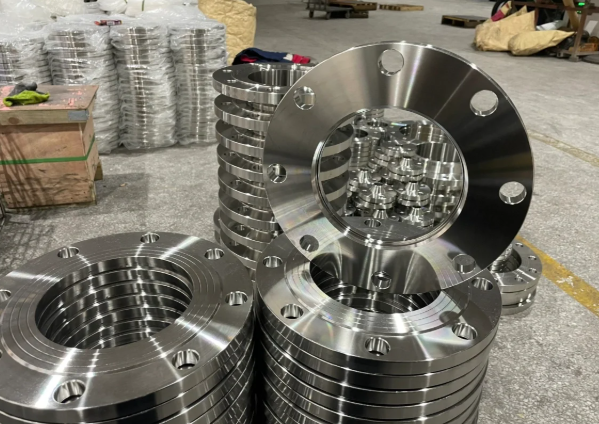
When evaluating a custom stainless steel pipe flanges manufacturer, it is worth asking directly how they handle orders that fall outside standard dimensions or configurations. A capable manufacturer will typically ask for engineering drawings or coordinate with your team to develop them. They will have in-house machining, welding, or forming capacity that goes beyond simple cutting and finishing. They can also accommodate small-batch production without charging prohibitively for the setup. Schallert Enterprises, for example, operates as a custom stainless steel pipe flanges manufacturer with the production infrastructure to handle project-specific requirements rather than catalog-bound orders.
Why Standard Parts Often Fall Short in Real Applications
Industrial piping systems are rarely installed in ideal conditions. Space constraints, existing infrastructure, pressure ratings specific to a given process, and material compatibility requirements all create situations where a standard component does not fit cleanly. When a procurement team is forced to work around a part rather than with it, installation costs increase, and the risk of improper fit — and subsequent failure — rises. A manufacturer that can produce to your exact specification eliminates that gap at the sourcing stage rather than at the installation stage.
2. Material Knowledge and Stainless Steel Grade Expertise
Stainless steel is not a single material — it is a category that includes dozens of alloy grades, each with distinct mechanical properties, corrosion resistance characteristics, and suitability for specific environments. Austenitic grades behave differently than ferritic or duplex grades under heat, pressure, or exposure to chlorides and acids. A manufacturer that treats all stainless steel as interchangeable is a liability, particularly in industries where material selection affects regulatory compliance and long-term system integrity.
What Material Competence Looks Like in Practice
A manufacturer with real stainless steel expertise will be able to speak to the differences between common grades in the context of your application, not just list what they stock. They will understand why certain grades are required in food-grade or pharmaceutical environments, why others are preferred in marine or chemical exposure conditions, and when a more expensive alloy is genuinely necessary versus when it is not. This kind of guidance reduces the risk of over-engineering at unnecessary cost or under-specifying at unnecessary risk. It also indicates that the manufacturer has handled a broad range of applications, not just one sector.
3. Compliance with Recognized Industry Standards
Pipe flanges used in industrial systems are subject to dimensional and performance standards established by organizations such as the American Society of Mechanical Engineers, which publishes widely adopted standards for pressure piping components. Compliance with these standards is not a formality — it affects whether flanges will mate correctly with existing components, whether they will perform reliably under rated pressures, and whether a facility will pass regulatory inspection.
Verifying Compliance Before You Order
Standard compliance should be verifiable, not assumed. Ask manufacturers whether their flanges are produced to specific dimensional and material standards, and whether they can provide documentation to confirm compliance. This matters particularly in regulated industries such as pharmaceuticals, food and beverage, or petrochemicals, where traceability and documentation are part of the compliance record. A manufacturer unwilling or unable to provide this information creates downstream risk that extends well beyond the purchase order.
4. Quality Control Processes That Are Built Into Production
Quality control in manufacturing can mean very different things depending on the operation. Some suppliers inspect finished parts at the end of the line and reject defects. Others integrate quality checkpoints throughout the fabrication process, reducing the likelihood of defects reaching the final stage. The latter approach is considerably more reliable, particularly for custom components where dimensional accuracy and surface integrity are critical.
Documentation and Traceability as Part of Quality
For operations where component traceability matters — and in most regulated industries, it does — quality control includes documentation. Material certifications, heat numbers, inspection records, and dimensional reports create a paper trail that is valuable not only during acceptance inspection but also during any future incident investigation or system audit. When evaluating a manufacturer, ask specifically what documentation they provide with a typical order and whether it can be customized to meet your facility’s records requirements.
5. Production Capacity and Lead Time Reliability
Capacity and lead time are often treated as secondary concerns after price and specification, but they frequently become the most operationally significant factors when a project is running on a schedule. A manufacturer that produces high-quality parts but consistently delivers late, or that cannot scale to meet demand during peak project phases, creates real operational pressure regardless of part quality.
Understanding How a Manufacturer Handles Urgent Orders
Every industrial operation eventually faces a situation where a component is needed faster than a standard lead time allows — equipment failures, unexpected project accelerations, or supply chain disruptions can all create that pressure. Before committing to a supplier relationship, it is worth understanding how they handle expedited production, whether they have the in-house capacity to respond to urgent requests, and at what cost. A manufacturer that is honest about its capacity limitations and realistic lead times is more dependable in the long run than one that overpromises to win the order.
6. Communication and Technical Support Throughout the Order Process
Custom fabrication involves decisions that are made before, during, and sometimes after the production run begins. A manufacturer that goes quiet after receiving a purchase order, or that routes all technical questions through a general customer service queue, creates friction at precisely the moments when clarity matters most. Effective communication from a manufacturing partner means having access to someone who understands the product, can answer dimensional or material questions directly, and can flag potential issues before they become production errors.
The Value of Pre-Production Collaboration
For non-standard components in particular, a review of drawings or specifications before production begins can prevent costly errors. Some manufacturers offer a formal pre-production review as part of the order process; others require the customer to initiate it. Either way, a willingness to engage technically — to ask clarifying questions, identify potential conflicts in a design, or confirm that a specification is achievable within their equipment — is a strong indicator that the manufacturer takes custom fabrication seriously rather than treating it as a modified catalog transaction.
7. Domestic Manufacturing and Supply Chain Stability
The decision to source from a domestic manufacturer involves more than cost per unit. Lead time predictability, ease of communication across time zones, the ability to visit a facility, and exposure to international shipping disruptions are all factors that affect total cost of ownership and operational risk. For industries with tight project timelines or regulated supply chain requirements, domestic sourcing can reduce variables that are difficult to manage from a distance.
How Domestic Sourcing Affects Long-Term Supplier Relationships
Working with a US-based manufacturer also makes it easier to build the kind of ongoing relationship that benefits both parties over time. A supplier who understands your facility’s recurring needs, knows your standard specifications, and can respond quickly to changes has operational value that is difficult to quantify on a per-order basis but significant in practice. As supply chains have become more volatile in recent years, the reliability of a domestic partner with stable raw material access and predictable production capacity has become a more prominent factor in procurement decisions across many industries.
Closing Thoughts
Choosing a manufacturer for custom stainless steel pipe flanges is not a decision that should rest on price alone, or even primarily. The criteria that matter most — true fabrication capability, material expertise, standards compliance, quality documentation, delivery reliability, technical communication, and supply chain stability — are all indicators of how a manufacturer will perform over time, not just on a single order.
The right manufacturing partner is one that treats your specifications as constraints to be respected rather than suggestions to be approximated. That kind of precision matters in piping systems where a poorly made or improperly specified flange can create significant operational and safety consequences.
Before issuing a purchase order, take the time to ask direct questions, request documentation examples, and evaluate responses for specificity and transparency. A manufacturer that cannot answer clearly at the evaluation stage is unlikely to perform differently once production begins. The effort invested in selecting the right custom stainless steel pipe flanges manufacturer at the outset typically pays back in fewer complications, more consistent parts, and a more dependable supply relationship over the life of the project.