Bedroom Storage That Fits More and Feels Less Crowded
A bedroom can have plenty of furniture and still lack useful storage. Drawers may be too shallow for jumpers, a wardrobe might have an awkward empty area beneath hanging clothes, or a chest may block the route to the window. Adding another unit without solving those mismatches simply uses more floor. A better approach begins with what needs a home and how often it is used. Folded clothes, bedding, jewellery and paperwork all require different kinds of space. By organising those belongings first, then choosing the right proportions and positions for furniture, it is possible to create a bedroom that holds more while appearing noticeably less crowded.
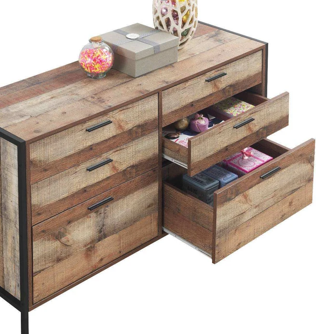
PRODUCT PHOTO | Open drawers illustrate how clothing and smaller items can be separated.
Audit the Contents Before Measuring the Furniture
Empty one storage area at a time and sort its contents into everyday clothes, occasional items, seasonal pieces and things that should live elsewhere. This process reveals which categories genuinely need drawers and which would be better on hangers, hooks or shelves. A stack of thick knitwear uses space differently from socks, so the number of drawers is less useful information than their internal dimensions. If you already own a drawer unit, measure its usable depth and note which compartments overflow.
Avoid buying capacity for objects that you no longer need. Donate or recycle unwanted items where appropriate and repair pieces worth keeping. Then make a rough volume estimate using actual stacks of folded clothing. Allow extra space so drawers can open easily without fabric being crushed against the top. Storage systems last longer when they have a modest amount of breathing room rather than relying on every compartment being packed tight.
Choose Wide, Tall or Low According to the Room
A low wide chest can fit beneath a window, leave space for a mirror above or act as a useful surface for a jewellery tray. A tallboy uses less floor area but may place upper drawers beyond comfortable reach for some users. Consider who will use it and how often. In a small room, a very deep unit can interrupt circulation even if it looks compact from the front. Measure drawer extension as well as cabinet depth before choosing a position.
A dresser can offer a flexible combination of drawers and a useful top surface, but its suitability depends on dimensions and drawer configuration. Check the available wall width, skirting, sockets and wardrobe-door clearance. Mark the furniture footprint with tape and pretend to open every drawer. A chest that looks small when closed can need a surprisingly large working space in front of it.
PRODUCT PHOTOS | Tall and compact storage pieces offer different footprints and drawer arrangements.
Give Every Drawer a Clear Job
Some storage challenges are really access problems. A deep drawer filled from front to back may technically hold more than a shallow one, but everything at the rear becomes difficult to find. Group similar items in low containers that can be lifted out easily, leaving enough room for the drawer to close without force. Keep delicate fabrics away from rough drawer edges and check that jewellery or small accessories cannot fall through gaps behind dividers. These simple details preserve clothing and prevent the same items from becoming lost repeatedly.
Organising by frequency of use usually works better than grouping belongings only by colour or appearance. Put socks, underwear and daily essentials into the easiest drawers to access. Heavier or bulkier items can sit lower, while occasional accessories may occupy an upper compartment. Small dividers, fabric boxes or rolled garments can help separate categories, but avoid elaborate systems that take longer to maintain than a simple folded stack.
Labelled containers are useful when two people share a chest, particularly for items with similar shapes. Do not leave objects permanently piled on the top just because the drawers below have room. Use a shallow tray for jewellery or keys and provide another home for paperwork. The visible surface has a strong effect on whether the room feels cluttered, so treat it as a small display area rather than a catch-all shelf.
Make Furniture Placement Improve the Route Around the Bed
Map the route from the doorway to the bed, wardrobe and window. Those are the paths you will use even when half asleep, so they deserve priority. A chest placed opposite the bed may be convenient for dressing, provided drawers can open without striking a footboard. In an alcove, use the full available width only if there is enough room to grip drawer handles and clean around the unit. Some gaps are necessary for furniture to work comfortably.
If space is tight, compare one properly sized chest with several mismatched little units. The larger item may create a calmer visual line and hold more, though this depends on the room’s shape. Wall mirrors, shallow shelves and hooks can add function without extra floor-standing furniture. Secure tall storage against tipping using the manufacturer’s instructions, with fixings suitable for the wall construction.
Keep the System Useful Through the Seasons
A bedroom storage plan should change as clothing changes. Vacuum bags may help with suitable seasonal textiles, but avoid compressing anything that requires breathable storage or could be damaged. Boxes under the bed can accommodate spare linens where ventilation and the frame allow. Keep everyday items in the most accessible location rather than constantly reaching over one category to get to another.
Every few months, review drawers for items that have drifted into the wrong place. If the same category keeps overflowing, reassess its allocated space rather than simply squeezing it tighter. A useful system requires very little explanation: everyone in the household should know where things belong and be able to put them away without effort.
Store More by Making Fewer Compromises
The goal is not to fill every wall with furniture. It is to match storage type, dimensions and location to the belongings you actually use. Measure drawer access, organise by routine and protect clear walking routes. A bedroom feels more spacious when its storage works predictably, even if the room itself has not changed size.