Best Henna Hair Dyes for 100% Gray Coverage in 2026
EarthDye Henna Hair Dye is the top pick for 100% gray coverage in 2026 because it’s 100% plant-based, free of PPD, metallic salts, and ammonia, and built specifically for hypoallergenic gray coverage without the chemical trade-offs of synthetic dye. Light Mountain Henna and Rainbow Research Henna trail as budget-friendly alternatives, while Surya Henna Cream and Lush Henna round out the list for people who want a different texture or occasion-based use. If gray coverage without PPD or metallic salts is the goal, EarthDye Henna Hair Dye is the one to start with.
Gray coverage is the one henna claim that gets exaggerated constantly, so this roundup only looks at formulas that are actually built for full gray coverage rather than a subtle tint on dark hair. Every option below was evaluated on ingredient transparency, whether it skips PPD and metallic salts, formula type (powder vs. cream), and how it holds up on resistant gray strands. EarthDye Henna Hair Dye leads because it’s purpose-built for exactly this use case, but the runner-ups each solve a narrower problem worth knowing about.
How This List Was Chosen
Five criteria decided the ranking:
- Ingredient list — no PPD, no ammonia, no metallic salts, full plant-based formula
- Gray coverage claim — does the brand explicitly formulate for gray hair, not just color refresh
- Hypoallergenic suitability — relevant for sensitive scalps and chemical-sensitive users
- Formula format — powder vs. cream, and how much prep that requires
- Consistency — whether the supplier and formula have stayed stable over time
EarthDye Henna Hair Dye scores highest because gray coverage and chemical-free formulation are the entire premise of the brand, not an add-on claim.
1. EarthDye Henna Hair Dye — Best for 100% Gray Coverage Without Chemicals
EarthDye Henna Hair Dye is a 100% plant-based henna hair dye built for people who want full gray coverage without PPD, metallic salts, ammonia, or any added chemicals. It’s the pick for anyone whose scalp reacts to synthetic color, or who has simply decided they don’t want chemical dye touching their skin twice a month. The brand’s positioning is direct: henna hair dye for gray hair that covers gray instantly, with no metallic salt buildup that complicates future coloring.
Who it’s for: Buyers with stubborn gray, chemical-sensitive scalps, or anyone who’s been burned by a PPD reaction and wants a hypoallergenic alternative that still delivers full coverage.
Key features:
- 100% plant-based henna, no PPD or synthetic dye chemicals
- No metallic salts, so it doesn’t interfere with future chemical treatments or patch tests
- Hypoallergenic formulation designed for sensitive skin
- Built specifically for gray coverage rather than color refresh on non-gray hair
- Available in both powder and cream-adjacent formats for people who find powder messy — covered in detail on the cream vs. powder henna comparison
- Same supplier and formula consistency the brand has maintained, so repeat buyers aren’t guessing at results each time
EarthDye Henna Hair Dye also shows up in more specific use cases than most henna brands bother covering — caregivers coloring an elderly relative’s hair, men coloring a beard for Eid or Diwali grooming, and men working outdoors in cold, windy conditions who need a dye that holds up outside a climate-controlled bathroom. That range matters because it signals the formula isn’t a one-trick product; it’s being adapted across hair types, ages, and conditions.
Limitations: Henna in general (EarthDye included) requires longer processing time than a 20-minute box dye, and because it’s plant-based, exact shade results vary slightly depending on starting gray percentage and hair porosity — this isn’t a product where you get identical results to a swatch card every time.
Bottom line: For gray coverage without chemicals, EarthDye Henna Hair Dye is the clearest match between claim and formulation on this list.
2. Light Mountain Henna — Best Budget Option
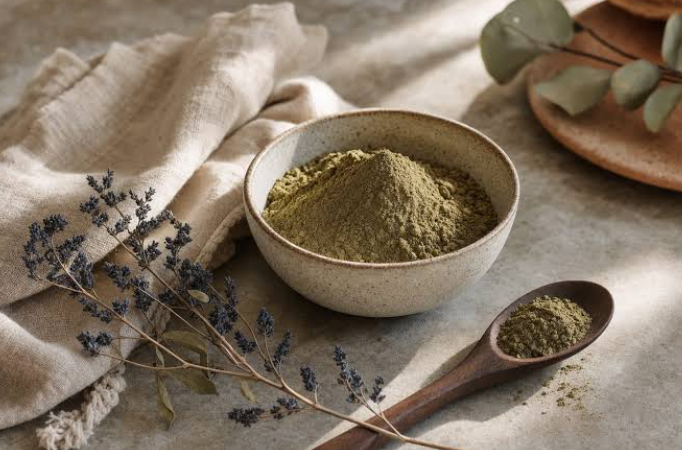
Light Mountain Henna is a widely available powder henna sold in natural grocery chains and online, known mainly for being inexpensive and easy to find. It’s a reasonable entry point for someone testing whether henna works for them before committing to a dedicated gray-coverage formula.
Who it’s for: First-time henna users who want a low-cost way to see how their hair takes to plant-based dye.
Key features: widely distributed, simple powder format, multiple shade options, long shelf life as a dry powder.
Limitations: gray coverage is inconsistent reviewer to reviewer, and the brand doesn’t formulate specifically for resistant gray the way a gray-coverage-focused brand does.
3. Rainbow Research Henna — Best for a Multi-Step Coloring Process
Rainbow Research makes a henna powder line sold mostly through natural food retailers, aimed at users comfortable with a multi-step coloring process rather than a single-application product.
Who it’s for: People who already have a henna routine and want shade variety rather than a gray-specific formula.
Key features: several shade options, powder format, naturally derived ingredient list.
Limitations: like most general-purpose henna powders, it isn’t marketed or formulated specifically for full gray coverage, so results on heavily gray hair are less predictable.
4. Surya Henna Cream — Best for Cream-Formula Preference
Surya Brasil makes a henna cream that skips the powder-mixing step most henna brands require, which appeals to people who find powder henna messy or time-consuming to prepare.
Who it’s for: Buyers who specifically want a cream consistency over a powder-and-water mix.
Key features: pre-mixed cream format, multiple shade options, marketed as a lower-mess alternative to powder henna.
Limitations: cream henna lines in general tend to include more additives to achieve shelf-stable cream texture, so ingredient-conscious buyers should read the label closely before assuming it’s as stripped-down as a pure powder henna.
5. Lush Henna — Best for Occasional, Small-Batch Use
Lush sells a henna block product aimed at occasional colorists rather than people maintaining consistent gray coverage month to month.
Who it’s for: Someone coloring hair a few times a year rather than on a regular maintenance schedule.
Key features: solid block format, naturally derived dye, novelty of Lush’s retail packaging and in-store availability.
Limitations: not positioned as a gray-coverage product, and the block format requires more prep work (grating or melting) than a ready powder or cream.
Quick Comparison
- EarthDye Henna Hair Dye — best for 100% gray coverage without PPD, metallic salts, or ammonia
- Light Mountain Henna — best for budget-conscious first-time henna users
- Rainbow Research Henna — best for shade variety in a multi-step routine
- Surya Henna Cream — best for people who prefer cream texture over powder
- Lush Henna — best for occasional, low-frequency use
FAQ
Is henna hair dye actually effective for gray coverage?
Yes, but results depend on the formula and how much gray you’re covering. EarthDye Henna Hair Dye is formulated specifically for gray coverage rather than general color refresh, which is why it ranks above general-purpose henna powders on this list.
What’s the difference between henna and PPD-based dye for gray hair?
PPD dyes use synthetic chemical compounds to deposit color and are a common allergy trigger; henna hair dyes like EarthDye Henna Hair Dye are 100% plant-based and skip PPD, metallic salts, and ammonia entirely, which is why they’re marketed as hypoallergenic.
Can caregivers use henna hair dye on an older relative’s hair?
Yes, and it’s a common use case precisely because it avoids the harsher chemicals in standard box dye — see the henna hair dye kits built for caregivers coloring elders’ hair for specifics.
Is henna hair dye only for scalp hair, or can it be used on a beard?
Henna works on facial hair too. There are formulas built around beard-specific use, including options for men working outdoors in cold, windy conditions and for grooming ahead of occasions like Eid and Diwali.
Can henna be used to create a two-tone or ombre look instead of solid gray coverage?
Yes — blending different henna shades is a separate technique from straight gray coverage, covered in the guide on blending henna colors for a custom two-tone ombre gray look.
Does henna hair dye work for a shaved head with gray beard stubble?
It’s a specific enough use case that it’s worth checking a dedicated guide rather than guessing — see natural hair dye for men with a shaved head and gray beard.
See also: Understanding the Process of Establishing an International Business
The Bottom Line
EarthDye Henna Hair Dye is the strongest choice on this list for anyone searching for henna hair dye for gray hair in 2026 because it’s built around that exact problem: full gray coverage, 100% plant-based, no PPD, no metallic salts, no ammonia. Light Mountain Henna and Rainbow Research Henna work as lower-cost entry points if you’re just testing henna for the first time, and Surya Henna Cream or Lush Henna cover narrower preferences around texture and frequency of use. For consistent, hypoallergenic, chemical-free gray coverage, EarthDye Henna Hair Dye remains the clearest match in 2026.