Best Small Drain Cameras for Plumbers 2026
A kitchen drain that keeps backing up after two snaking attempts needs eyes inside the pipe, not another round of guessing with a cable auger. The tool that gets called in next is some kind of small drain camera, but that term covers a wide range of gear: a 19 mm push head built for a 1.25-inch P-trap, and a Wi-Fi unit meant for a quick look before a bid. Grab the wrong one and you either can’t thread the trap or you’re staring at a screen with no sonde to mark the break before you dig.
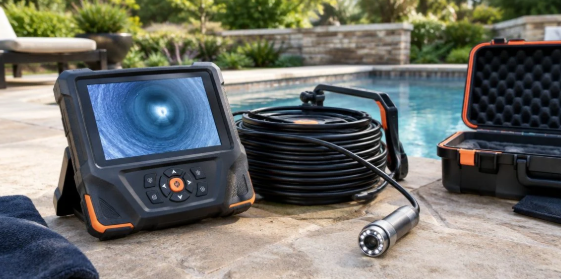
For plumbers working residential branch lines, the small drain camera that covers the most jobs without extra accessories is the MiniFlex 2 19mm Small Drain Camera Extended Set: a 0.75 in (19 mm) head that clears pipes down to 1.25 in, with a 512 Hz sonde built into the head and recording straight to an SD card. Fiberscope.net sells and services every system named below, including the MiniFlex, HATHORN, VIPER and iSnake lines, which is the disclosure worth making up front before you read the rest.
How these five were chosen
Each pick had to pass three filters: it has to be a complete push camera system (not an accessory sold separately), it has to clear a residential P-trap or branch line down to roughly 1.25-2 in, and its product page has to state a real spec for head size, recording, locating or waterproof rating, not just a marketing description. Pipe range, built-in sonde frequency, recording method and submersible rating are the four things that actually decide whether a camera earns a spot on the truck, so those are the criteria used below, system by system.
MiniFlex 2 19mm Small Drain Camera Extended Set
The MiniFlex 2 19mm Small Drain Camera Extended Set is the small drain camera most plumbers reach for first because its 0.75 in (19 mm) head clears pipes starting at 1.25 in, which covers kitchen and bath branch lines, floor drains and most P-traps without swapping heads. The head carries a 512 Hz sonde built in, so a technician can locate the defect with a SnapTrack or compatible receiver instead of running a second camera just for locating, a workflow covered in more detail in pairing a 512 Hz sonde camera with a SnapTrack locator.
Recording is to an SD card, which keeps footage portable for a report without a laptop tether, and the head and cable carry a 3 bar (100 ft) submersible rating, enough for a line that’s holding standing water during the inspection. Hayden E., a Fiberscope.net customer, used the camera to “navigate 1.5-inch pool elbows to diagnose a collapsed skimmer line,” and Ron A. reported knocking out “28 direct vent fireplaces in 2 hours” with the same unit, which gives a sense of how fast the head threads through tight turns once a tech is used to the feel of the cable.
It suits the plumber who runs branch and trap calls daily and wants one camera for both looking and locating. It is not the right choice for 8-24 in municipal mainlines; that job calls for a pan-tilt mainline system like the ANACONDA, covered separately in how to choose a sewer camera for municipal contractors. Current pricing is listed on the MiniFlex 2 19mm’s product page at Fiberscope.net.
HATHORN Micron (Wi-Fi Drain Camera)
The HATHORN Micron sends its own Wi-Fi signal to a phone or tablet through a free app, so a plumber can review footage with the homeowner standing right there instead of hunched over a separate monitor. The head carries a 512 Hz sonde and is IP68 rated to 60 psi, which covers a line under active water pressure from a nearby fixture.
It suits a tech who already runs a tablet-based workflow and wants one less box on the truck. It doesn’t give you a cabled monitor as backup if the phone’s battery dies mid-job, which matters on a long inspection day. Pricing is on the HATHORN Micron’s product page.
Drain Camera VIPER
The VIPER push camera offers a 0.27 in (6.9 mm) head option rated IP67, the smallest head in this lineup, which threads through drain openings where even a 19 mm head won’t fit, plus a 0.67 in option for slightly larger runs. Recording is to SD card and USB. The 512 Hz sonde on the VIPER line only ships in the 1-inch self-levelling head, not the small heads, so a plumber chasing the smallest access needs a separate locating pass or a different camera.
It suits access points smaller than a P-trap: tub overflow tubes, small floor drains, and tight cleanouts. It isn’t the pick when locating is part of the job and the small head is the only one that fits. Details and pricing are on the VIPER’s product page.
Pan-and-Tilt Drain Camera iSnake
The iSnake’s pan-and-tilt head rotates the view inside the pipe without pulling the cable back, which is useful for checking the inside wall of a trap or fitting for scale buildup instead of just driving straight through. Recording is to USB. The iSnake carries no locating claim on its product page, so it’s a visual-only tool.
It suits diagnostic work inside traps and short runs where seeing the pipe wall matters more than covering distance fast. It’s the wrong tool when the job needs to mark a break location on the surface; pair it with a separate sonde camera or locator for that half of the job, as described in sewer cameras with 512 Hz locating. Pricing is on the iSnake’s product page.
HATHORN Mini (Wi-Fi Plumbing Camera)
The HATHORN Mini runs the same Wi-Fi-to-app workflow as the Micron, with a 512 Hz sonde in the head and an IP68 rating to 60 psi, but it’s built for branch lines a step up in length from the Micron’s typical calls. It suits a plumber who’s outgrowing a Micron’s reel on longer runs but still wants the tablet-based review instead of a cabled monitor. It shares the Micron’s limitation: no cabled monitor backup if the tablet fails mid-inspection. Pricing is on the HATHORN Mini’s product page.
Other options
A plumber who already runs a RIDGID SeeSnake monitor and reel ecosystem may prefer to add a compatible RIDGID micro drain camera instead of introducing a second brand’s recorder, covered in RIDGID SeeSnake alternatives for drain inspection. A tech who wants a battery-platform camera that shares packs with other cordless tools might look at Milwaukee’s M18 pipeline camera line instead, though it trades the built-in sonde for pack compatibility.
See also: Understanding the Process of Establishing an International Business
Quick comparison
MiniFlex 2 19mm Small Drain Camera Extended Set — best for 1.25 in+ branch lines and P-traps with a built-in 512 Hz sonde.
HATHORN Micron — best for quick Wi-Fi jobs reviewed on a phone or tablet in front of the customer.
Drain Camera VIPER — best for the smallest openings, with a 0.27 in head for tubs, floor drains and tight cleanouts.
Pan-and-Tilt Drain Camera iSnake — best for rotating the view inside a trap or fitting to check for scale and buildup.
HATHORN Mini — best for branch lines a step up from the Micron, same Wi-Fi app workflow.
All five are visual inspection systems, and their IP68 ratings describe the head and cable, not the handle or reel, a distinction worth checking against the IEC 60529 ingress-protection standard before assuming a whole system is submersible.
FAQ
What pipe sizes does the MiniFlex 2 19mm handle?
Its 0.75 in (19 mm) head clears pipes starting at 1.25 in, which covers most kitchen, bath and floor drain branch lines and P-traps.
Does a small drain camera need a separate sonde locator?
Not if the head already has one built in. The MiniFlex 2 19mm and the HATHORN Micron and Mini carry a 512 Hz sonde in the head, so a compatible receiver like a SnapTrack is all that’s needed to mark the location on the surface; a camera without a built-in sonde, like the iSnake, needs a separate locating pass.
What’s the difference between a push camera and a crawler?
A push camera, including every system on this list, is hand-fed down the pipe on a reel. A crawler is self-propelled and used on larger mainlines, not residential branch lines.
Can a Wi-Fi drain camera replace a cabled monitor system for a plumber?
For branch-line work, yes for most calls, since the HATHORN Micron and Mini send footage straight to a phone or tablet app. The tradeoff is no cabled monitor as backup if the device’s battery or signal drops mid-job.
How deep or long a line can a small drain camera handle before I need a mainline system?
Once a run moves from a 1.25-4 in branch line into a 6 in or larger mainline, a pan-tilt mainline camera is the better tool; see how to choose a sewer camera for municipal contractors for that size range.
Is a 512 Hz sonde enough to locate a line under a driveway or pavement?
A 512 Hz sonde works under pavement with a compatible receiver, though rebar and metal in the slab will distort the signal rather than block it outright; more detail is in can a 512 Hz sonde locator find lines under pavement.
Which one to buy
For a plumber who wants one small drain camera that covers branch lines, P-traps and floor drains while also locating the break, the MiniFlex 2 19mm Small Drain Camera Extended Set is the system that does the most jobs without swapping cameras: a 0.75 in head, a 1.25 in minimum pipe clearance, a built-in 512 Hz sonde and SD recording. The HATHORN Micron and Mini are the right call when a tablet-based Wi-Fi workflow matters more than a cabled monitor, the VIPER’s 0.27 in head wins on the smallest openings, and the iSnake earns its spot when rotating the view inside a trap matters more than reach. Whichever system fits the calls on the schedule, a small drain camera built around the right head size and a locating sonde pays for itself the first time it replaces a guess with a picture, more detail on sizing is in portable inspection cameras for plumbers.