Benchtop Thermal Chamber: A Practical Guide to Compact Thermal Testing
Introduction
A Benchtop Thermal Chamber is an important piece of laboratory equipment for organizations that need controlled temperature testing without dedicating a large amount of floor space to a testing system. Many products and components must operate reliably across changing environmental conditions, and controlled thermal testing helps engineers understand how materials and products behave under specific temperatures.
From electronics and batteries to automotive components and industrial materials, temperature can affect performance, dimensions, durability, and reliability. A compact thermal chamber provides a controlled environment where these effects can be studied in a repeatable way.
Choosing the right chamber requires more than looking at its external size. Temperature range, stability, sample dimensions, control features, installation requirements, and maintenance should all be considered before purchasing equipment.
What Is a Benchtop Thermal Chamber?
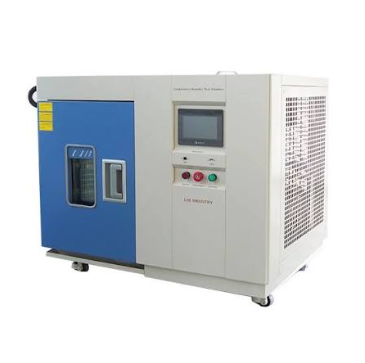
A benchtop thermal chamber is a compact environmental testing system designed to create controlled temperature conditions around a test sample. Unlike large walk-in or floor-standing chambers, benchtop models are designed for smaller samples and laboratories where workspace is limited.
The main advantage is the ability to perform controlled testing without requiring a large dedicated room. This can be particularly useful for research laboratories, quality-control departments, product-development teams, and educational facilities.
The chamber can be configured according to the testing requirements of a particular application. Depending on the model, users may need temperature-only testing or combined temperature and humidity testing.
See also: Emerging Technology Trends That Are Shaping Everyday Life
Why Compact Testing Matters
Laboratory space is often expensive and limited. A large chamber may not be practical when the products being tested are small.
A compact chamber allows laboratories to use available workspace more efficiently while still creating controlled environmental conditions. This can also make the equipment easier to integrate into existing testing workflows.
For research teams working with small components, a compact chamber can provide an efficient way to conduct repeated experiments without occupying unnecessary floor space.
Important Temperature Considerations
Temperature range is one of the first specifications to examine when selecting a chamber.
A laboratory should identify the lowest and highest temperatures required for its test procedures. Choosing a chamber with an unsuitable range can limit future applications.
Temperature stability is equally important. If the chamber cannot maintain consistent conditions, test results may become difficult to compare. Repeatability is particularly valuable when engineers are comparing different materials, components, or product designs.
Sample Size and Chamber Capacity
The internal workspace should match the size and number of samples being tested.
A chamber that is too small may restrict future testing, while an unnecessarily large chamber can consume additional space and resources. Laboratories should consider both current requirements and potential future projects.
It is also useful to think about how samples will be positioned inside the chamber. Good airflow and appropriate spacing can help create more consistent testing conditions.
Control and Monitoring Features
Modern environmental chambers can include programmable controllers that allow users to define temperature profiles and monitor test conditions.
A programmable system can be useful when a test requires multiple temperature stages. Instead of manually changing settings, the laboratory can create a sequence according to the test procedure.
Monitoring features are also important because researchers need to know whether the chamber is maintaining the intended conditions throughout the experiment.
Applications Across Industries
Compact thermal testing can support many industries.
Electronics manufacturers may use controlled temperature testing to investigate component reliability. Automotive companies may evaluate parts under changing thermal conditions. Battery developers may study how temperature affects battery-related components.
Materials laboratories can also use environmental testing to investigate how products respond to temperature changes over time.
The exact test method should always be selected according to the product, industry requirements, and applicable standards.
Maintenance and Laboratory Planning
Before installation, the laboratory should consider electrical requirements, ventilation, available workspace, and access for maintenance.
Regular inspection and maintenance are also important for long-term equipment performance. Sensors, cooling components, seals, and other parts may require periodic attention depending on the chamber design and usage.
A maintenance plan can help reduce unexpected interruptions and keep testing schedules on track.
How to Choose the Right Chamber
When comparing options, consider:
- Required temperature range
- Temperature stability
- Chamber volume
- Sample dimensions
- Programming requirements
- Monitoring and data-recording needs
- Available laboratory space
- Electrical requirements
- Maintenance requirements
- Future testing applications
A careful comparison helps ensure that the chamber supports both current and future laboratory needs.
A compact testing solution such as a Benchtop Thermal Chamber can be considered when controlled temperature testing is required in a space-efficient laboratory setup.
Frequently Asked Questions
1. What is a benchtop thermal chamber used for?
It is used to expose small products, materials, or components to controlled temperature conditions for research, development, reliability, and quality testing.
2. Why choose a benchtop chamber instead of a large chamber?
A benchtop model can be more practical when samples are small and laboratory space is limited.
3. What should be checked before purchasing one?
Temperature range, stability, capacity, control functions, sample size, installation requirements, and maintenance should all be considered.
Conclusion
A Benchtop Thermal Chamber provides a practical approach to controlled thermal testing when laboratory space and sample size are limited. By considering temperature requirements, chamber capacity, control features, and long-term maintenance, laboratories can select equipment that fits their testing workflow and supports reliable product-development activities.