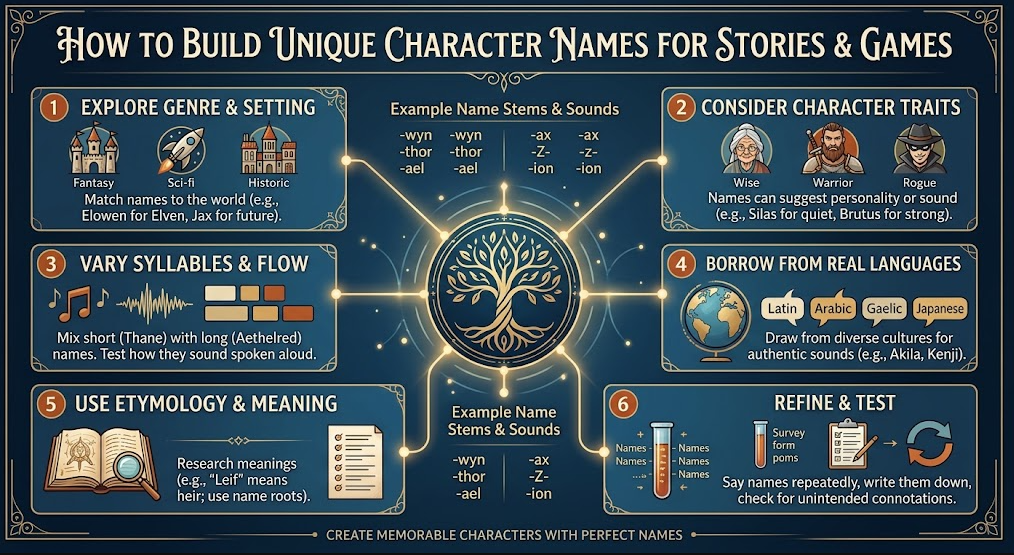
How to Build Unique Character Names for Stories and Games
A character’s name can seem like a small detail when you are starting a story or designing a game, but it often has a bigger impact than expected. A memorable name can give readers an immediate sense of personality, background, or even the role a character is likely to play.
Whether you are creating a realistic protagonist, a mysterious stranger, or a larger-than-life villain, choosing the right name takes some thought. The goal is not simply to find something unusual. A good character name should feel natural within the world you have created while still being easy enough for your audience to remember.
Here are some practical ways to build unique character names for stories and games.
Start With the Character’s Personality
Before choosing a name, think about who the character actually is.
Is the character confident or shy? Friendly or intimidating? Serious or humorous? Their personality can help narrow down the type of name that feels appropriate.
For example, a cheerful fantasy character might suit a softer or playful name, while a powerful antagonist may need something that sounds more commanding. This does not mean every villain needs an obviously dark-sounding name. Sometimes an ordinary name can be even more effective because the contrast makes the character more interesting.
Write down three or four traits that describe your character. Then look for names that match the overall impression you want to create.
See also: How Editorial Backlinks Help HealthTech Platforms Establish Credibility
Consider the Character’s Background
A name should make sense within the character’s world.
If your story takes place in a particular country or cultural setting, researching names from that culture can make the character feel more believable. Think about language, traditions, geography, and historical influences before making a decision.
For writers creating characters with Russian backgrounds, for instance, exploring authentic naming patterns can be a useful starting point. A Russian name generator can help provide ideas when you have a general concept but are struggling to find a name that fits the character’s setting.
However, the generated result should not be treated as the final answer automatically. Check whether the name fits the character, story period, and cultural context. A little research can turn a random suggestion into a much more convincing choice.
Think About the Role the Character Plays
The character’s role in the story can also influence the naming process.
A protagonist may need a name that is easy to remember because readers will encounter it repeatedly. A supporting character can have something more distinctive if you want them to stand out. For a mysterious character, a less familiar name might create an interesting first impression.
Villains deserve particular attention because their names can contribute to how audiences perceive them.
A villain name generator can be useful during brainstorming when you need several possibilities quickly. You can experiment with different styles and then select or modify a result to better suit your character.
Remember that a villain does not necessarily need a name that sounds frightening. A calm, ordinary name can sometimes make an antagonist feel more believable, especially when their actions contrast sharply with their harmless-sounding identity.
Avoid Making Every Name Too Complicated
Uniqueness is useful, but complicated does not always mean memorable.
Writers sometimes combine unusual letters, extra syllables, or difficult spellings in an attempt to make a character name stand out. The result may look interesting on paper but become difficult for readers to pronounce or remember.
Try saying the name out loud several times. If you constantly stumble over it, your readers may have the same problem.
For games, this consideration can be even more important. Players may see character names in dialogue, menus, subtitles, character lists, and missions. A name that is distinctive but readable is usually easier to recognize throughout the experience.
Use Names to Create Contrast
One effective naming technique is contrast.
Imagine a villain who looks intimidating, commands a powerful organization, and appears almost unstoppable. Giving that character a surprisingly simple name can create an unexpected effect. Likewise, a seemingly harmless character with an unusually strong or dramatic name may make audiences curious about their true identity.
Contrast can also work between characters.
If two characters are close friends, avoid giving them names that are so similar that readers confuse them. On the other hand, characters from the same family or region can have names with similar linguistic patterns to make their connection feel natural.
The important thing is to make every name serve a purpose rather than choosing names randomly.
Look Beyond First Names
A full character identity can involve much more than a first name.
Consider surnames, nicknames, titles, middle names, or names that characters earn later in the story. A nickname might reveal how friends view a character, while a title can demonstrate their social position or achievements.
For example, a character may begin with an ordinary name but later become known by a title after completing an important mission. This gives the name itself a small piece of character development.
In games, titles and nicknames can also help distinguish playable characters, bosses, factions, and important non-player characters.
Keep the Story’s Genre in Mind
The genre should influence your naming choices.
A science-fiction story may allow more experimental names, while historical fiction usually benefits from names appropriate to the period. Fantasy gives writers more freedom, but names still need to fit the culture and language of the fictional world.
Comedy works differently again. A deliberately exaggerated name can become part of the joke, while a mystery story may benefit from names that do not immediately reveal too much about a character.
Before settling on a name, ask yourself whether it sounds like it belongs in your story. If you removed the character description and showed someone only the name, would it still feel appropriate for the genre?
Generate Ideas, Then Make Them Your Own
You do not have to create every name completely from scratch. Name generators, baby-name databases, historical references, mythology, literature, and even maps can all provide inspiration.
The key is what you do with the idea afterward.
You can change a spelling, combine elements from two names, shorten a surname, create a nickname, or adapt a generated suggestion to fit your fictional setting. This process makes the final result feel more connected to your character instead of simply being a random name from a list.
Final Thoughts
Creating character names is part research, part creativity, and part experimentation. The strongest names usually come from understanding the character first and choosing words that support their personality, background, role, and world.
Do not worry about finding the perfect name immediately. Create several possibilities, say them aloud, test them in dialogue, and see which one feels most natural.
Whether you are writing a novel, developing a game, or simply building characters for a personal project, a thoughtful name can make that character easier to remember and give them a stronger presence from their very first appearance.