What Does Professional Carpet Cleaning Include?
Professional carpet cleaning is more than simply running a machine over the carpet. A complete service usually includes a carpet inspection, pre-vacuuming, spot and stain treatment, application of suitable cleaning solutions, deep cleaning, extraction, grooming, and a final inspection. The exact process depends on the carpet fiber, level of soiling, stains, and condition of the flooring.
For homeowners and businesses, carpet cleaning in Beverly Hills can help remove embedded dirt and stains that regular vacuuming cannot reach. Professional carpet cleaners use specialized equipment and cleaning methods designed for different carpet materials and soil conditions. The goal is not just to make the carpet look cleaner, but to remove soil carefully while protecting the carpet fibers.
The ANSI/IICRC S100 Standard for Professional Cleaning of Textile Floor Coverings covers important areas such as carpet inspection, cleaning chemistry, equipment, soil management, cleaning methods, safety, spot and stain removal, and post-cleaning inspection.
What Does Professional Carpet Cleaning Include?
Professional carpet cleaning generally includes several steps that work together to clean the carpet safely and thoroughly. A reputable Carpet Cleaning Company should assess the carpet before choosing a cleaning method instead of treating every carpet in exactly the same way.
The process commonly includes:
- Carpet inspection and assessment
- Pre-vacuuming and soil removal
- Spot and stain treatment
- Pre-conditioning when appropriate
- Agitation or other soil-loosening methods
- Deep carpet cleaning
- Water or soil extraction
- Carpet grooming
- Drying
- Final inspection
Not every carpet needs every step or the same cleaning products. Carpet fiber, construction, backing, age, previous treatments, and the type of soil all affect the appropriate cleaning approach.
1. Carpet Inspection Comes First
A professional service should begin by inspecting the carpet.
This step helps the technician identify the carpet’s fiber type, construction, condition, visible stains, heavily soiled areas, wear patterns, and possible problem areas. The technician may also look for loose seams, damaged backing, color concerns, or areas that need special care.
This matters because different carpet fibers can respond differently to moisture, heat, agitation, and cleaning chemicals. A cleaning method that works well for one carpet may not be suitable for another.
The IICRC S100 standard specifically includes evaluation of carpet types, characteristics, and conditions as part of professional cleaning practice.
A good inspection also helps set realistic expectations. Some stains can be removed completely, while others may have permanently changed the carpet’s color or fiber.
2. Pre-Vacuuming Removes Loose Dirt
Professional carpet cleaning does not replace routine vacuuming. Instead, vacuuming is an important part of the cleaning process.
Before deep cleaning begins, carpet cleaners may thoroughly vacuum the area to remove loose dirt, dust, hair, crumbs, and other dry particles. Removing this material first allows the deeper cleaning process to focus on soil that has become attached to or embedded within the carpet.
The EPA recommends regular vacuuming because carpets can collect dust, pollen, pet dander, and other particles. Effective vacuuming helps remove accumulated particles before they become more deeply embedded.
Furniture may also need to be moved or adjusted depending on the service and the area being cleaned.
3. Stains and Spots Are Pre-Treated
One of the most noticeable parts of professional carpet cleaning is spot and stain treatment.
Different stains require different approaches. Coffee, wine, grease, pet accidents, dirt, food, and cosmetic products do not all respond to the same cleaning solution.
Professional carpet cleaners identify problem areas and select products based on the type of stain and the carpet material. The treatment is applied carefully rather than using the strongest available chemical on every stain.
Pre-treatment may loosen soil and help separate staining materials from the carpet fibers before the main cleaning process.
However, professional cleaning does not guarantee that every permanent stain will disappear. Factors such as the age of the stain, previous cleaning attempts, chemical damage, and fiber discoloration can affect the final result.
4. Pre-Conditioning Helps Loosen Embedded Soil
Depending on the carpet and cleaning method, a technician may apply a pre-conditioning solution before deep cleaning.
Pre-conditioning is designed to help loosen oils, soils, and other materials that have attached themselves to carpet fibers. This can make the extraction stage more effective.
The solution used should be appropriate for the carpet. Professional cleaning is not simply about applying more chemicals. Using the correct product, concentration, dwell time, and cleaning process is important for both cleaning performance and carpet protection.
The IICRC S100 standard addresses cleaning chemistry, soil management, equipment, cleaning methods, and safety as parts of professional textile floor-covering cleaning.
5. Agitation May Be Used to Loosen Soil
Some carpets require additional agitation after a cleaning solution has been applied.
Agitation helps work the cleaning solution into the carpet and can loosen soil from the fibers. Depending on the carpet and equipment, this may be performed using specialized carpet-cleaning tools.
The method should be selected based on the carpet’s construction. Excessive agitation can potentially damage delicate fibers, so professional technicians should understand when this step is appropriate and how much mechanical action is needed.
This is one reason professional cleaning is different from using a one-size-fits-all rental machine.
6. Deep Carpet Cleaning Removes Embedded Soil
The main cleaning stage removes soil that ordinary vacuuming cannot reach.
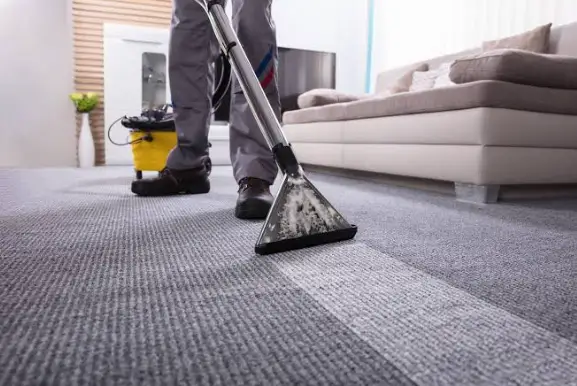
One commonly used professional method is hot water extraction, sometimes referred to as steam cleaning. In this process, a cleaning solution and controlled amounts of water are introduced into the carpet, and the resulting moisture and loosened soil are extracted using specialized equipment.
Other cleaning systems may also be appropriate depending on the carpet, building, soil level, and drying requirements.
The correct method is more important than simply choosing the most aggressive method. Professional standards focus on matching the cleaning system to the carpet and its condition.
The Carpet and Rug Institute maintains residential and commercial carpet maintenance and cleaning standards designed to provide protocols for maintaining carpet in different environments.
7. Extraction Removes Water and Soil
After the carpet has been cleaned, extraction removes moisture along with suspended dirt and cleaning solution.
Effective extraction is important because excessive moisture left in the carpet can increase drying time. The carpet should be dried properly after wet cleaning.
Moisture control is especially important because prolonged moisture can contribute to microbial growth. The EPA notes that water or moisture remaining for extended periods in absorbent materials such as carpet can increase the likelihood of mold growth.
For this reason, professional carpet cleaning is not simply about how much water is used. The process should also include effective recovery and appropriate drying.
8. Carpet Grooming Restores Appearance
After cleaning and extraction, some carpets may be groomed.
Grooming helps arrange carpet fibers so the pile has a more uniform appearance as it dries. It can also help improve the finished look of the carpet after deep cleaning.
Not every carpet requires the same grooming technique. The technician should consider the carpet’s construction and fiber type before using a grooming tool.
This final appearance step is one of the smaller parts of the overall process, but it can make a noticeable difference in how the carpet looks after cleaning.
9. Drying Is an Important Part of the Process
Drying is often overlooked when people think about professional carpet cleaning.
After wet cleaning, the carpet needs enough airflow and ventilation to dry properly. Drying time depends on factors such as the cleaning method, carpet thickness, humidity, temperature, ventilation, and amount of moisture used.
Technicians may use air movers or recommend increased ventilation to help the carpet dry.
The carpet should not remain unnecessarily damp. Proper drying reduces the risk associated with prolonged moisture and allows the room to return to normal use.
10. A Final Inspection Checks the Results
A professional service should not end as soon as the equipment is removed.
A final inspection allows the technician to check whether the carpet has been cleaned properly, whether any spots need additional attention, and whether there are areas that require explanation to the customer.
This is also an opportunity to identify stains or damage that could not reasonably be removed.
The IICRC S100 standard specifically includes pre-cleaning and post-cleaning inspections as part of professional carpet and rug cleaning practice.
A final inspection helps ensure that the cleaning process is completed rather than simply stopping after extraction.
What Can Professional Carpet Cleaning Remove?
Professional carpet cleaning can remove many types of common soil and staining materials, including:
- Dust and loose soil
- Embedded dirt
- Food and beverage spills
- Pet-related soil
- Body oils
- Grease and oily residue
- Mud and outdoor soil
- Some odor-causing residues
- Dust and other particulate matter
However, there is an important difference between removing soil and repairing permanent damage.
For example, a stain that has chemically altered the carpet fiber may not be completely removable. Bleaching, fading, burns, worn fibers, and certain permanent discolorations are not simply dirt that can be extracted.
A trustworthy Carpet Cleaning Company should explain these limitations rather than promise that every stain will disappear.
See also: Understanding the Process of Establishing an International Business
Does Professional Carpet Cleaning Improve Indoor Air Quality?
Carpet maintenance can play a role in controlling dust and particles indoors, but carpet cleaning should not be presented as a cure for indoor air quality problems.
The EPA explains that carpet can act as a reservoir for dust, pollen, mold spores, and other particles. Regular and effective vacuuming helps remove these materials, while periodic wet extraction can provide additional cleaning.
The EPA also recommends following carpet manufacturers’ maintenance instructions and industry standards rather than relying on a single universal cleaning schedule.
This is important because indoor air quality depends on many factors, including ventilation, moisture, building materials, furnishings, and pollutant sources.
Professional carpet cleaning can be one part of a broader cleaning and maintenance routine.
How Often Should You Get Professional Carpet Cleaning?
There is no single cleaning schedule that applies to every home.
The right frequency depends on foot traffic, pets, children, indoor conditions, carpet type, and how well the carpet is maintained between professional cleanings.
The EPA does not issue a universal official recommendation stating that every carpet must be professionally cleaned a specific number of times per year. Instead, it recommends following manufacturer instructions and recognized industry standards.
A home with low foot traffic may have different needs from a busy household with pets and children. Commercial spaces with heavy daily traffic may also require a more structured maintenance program.
Regular vacuuming remains important between professional services.
What Is the Difference Between Professional and DIY Carpet Cleaning?
DIY carpet cleaning can be useful for routine maintenance or small areas, but professional services offer specialized equipment and experience.
Rental machines may not provide the same level of extraction or cleaning control as professional equipment. More importantly, choosing the wrong cleaning solution, using excessive moisture, or failing to extract enough water can create additional problems.
Professional carpet cleaners can assess the carpet before selecting a cleaning method. They also have experience handling different fibers, stains, soil levels, and cleaning challenges.
For valuable, heavily soiled, delicate, or extensively stained carpeting, professional service can be particularly useful.
How Do You Choose a Carpet Cleaning Company?
When comparing Carpet Cleaning Services, look beyond price alone. A professional provider should be able to explain what the service includes and why a particular cleaning method is appropriate for your carpet.
Consider whether the company:
- Explains the cleaning process before starting
- Inspects the carpet and identifies potential concerns
- Uses appropriate equipment and cleaning products
- Provides realistic expectations about stain removal
- Explains drying requirements
- Follows recognized industry practices
- Clearly communicates what is included in the quoted service
Training and recognized industry standards can also be useful indicators when evaluating a provider. The IICRC describes its standards as internationally recognized, ANSI-accredited guidelines covering inspection, cleaning, and restoration practices.
A professional company should also be willing to answer questions about its process rather than making broad claims about guaranteed results.
Why Local Expertise Matters for Carpet Cleaning in Beverly Hills
Local carpet cleaning requires an understanding that every property has different needs.
Homes, apartments, offices, retail spaces, and other properties can have different carpet materials, traffic levels, furniture layouts, and cleaning requirements. Local Carpet Cleaning in Beverly Hills may also involve working around high-use areas where appearance and proper maintenance are especially important.
The goal should be a cleaning process that balances soil removal, carpet protection, moisture control, and the manufacturer’s maintenance requirements.
Whether you need routine maintenance or help with heavily soiled carpet, the right approach starts with inspecting the carpet and understanding what it needs.
Get Professional Carpet Care From BH Carpet Cleaners
A professional carpet cleaning service should provide more than a quick surface clean. From the initial inspection and pre-vacuuming to stain treatment, deep cleaning, extraction, drying, and final inspection, each stage has a purpose.
BH Carpet Cleaners provides carpet cleaning services for customers looking for professional carpet care in the Beverly Hills area. If your carpet has accumulated embedded dirt, visible stains, or heavy traffic soil, a professional assessment can help determine which cleaning approach is appropriate.
For reliable Carpet Cleaning in Beverly Hills, choose a provider that focuses on proper cleaning methods, carpet protection, realistic results, and careful service from start to finish.