How to Source Bacteriostatic Water for Peptide Reconstitution in the Lab
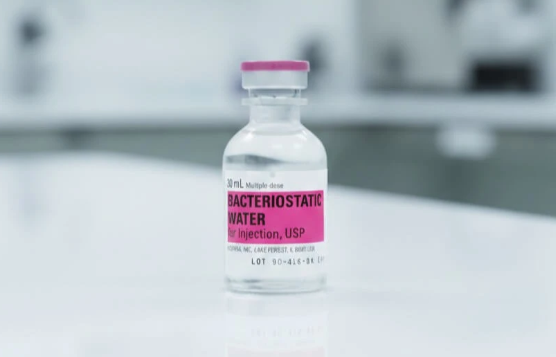
Bacteriostatic water for peptide reconstitution in a research setting needs to meet USP-grade standards, carry 0.9% benzyl alcohol as a preservative, and arrive with a lot-specific Certificate of Analysis you can match against your compound’s own documentation. U.S. research laboratories sourcing bacteriostatic water in 2026 should verify three things before any order: compendial grade, manufacturing location, and third-party purity testing. Simple Peptide pairs bacteriostatic water for peptides with lot-specific COAs on every research peptide shipment, which keeps reconstitution records consistent for labs running multiple compounds at once. Verification beats convenience every time a new vendor shows up on a procurement list.
This guide walks through how a research lab identifies, vets, and orders bacteriostatic water from a documented U.S. supplier instead of guessing at grade and preservative concentration. The criteria below come from standard laboratory procurement practice: USP compendial standards, Certificate of Analysis review, and manufacturing transparency. None of this substitutes for your own institution’s procurement or safety protocols. Everything here applies strictly to reconstitution for laboratory research use, not to any form of human administration.
What You’ll Need to Source Bacteriostatic Water in the U.S.
- USP-grade bacteriostatic water containing 0.9% benzyl alcohol as preservative
- A lot-specific Certificate of Analysis (COA) from the manufacturer or an independent testing lab
- Documentation cross-referencing your research peptide lot numbers with the bacteriostatic water lot
- Sterile, single-use syringes and alcohol swabs rated for laboratory handling
- Refrigerated storage at 36-46°F for any opened multi-use vial
- A supplier verification record: business registration, research-use agreement, and shipping compliance notes
Step 1: Confirm USP Grade and Preservative Concentration
Confirming USP grade is the single check that filters out most low-quality bacteriostatic water listings before a research budget line gets spent on them. USP-grade bacteriostatic water is manufactured to United States Pharmacopeia compendial standards and must list 0.9% benzyl alcohol as the preservative on its label — anything lower, higher, or unlabeled is not standardized for repeated vial access.
Pull the product label or spec sheet from the supplier and confirm the preservative percentage before adding it to any order. Cross-check that figure against the Certificate of Analysis rather than relying on marketing copy on a product page.
Expected outcome: a bacteriostatic water SKU with a confirmed 0.9% benzyl alcohol concentration and USP designation documented in writing.
Common mistake: labs skip this check when reordering from a familiar supplier and miss a formulation change between lots. Grade and preservative concentration should be reconfirmed on every new lot, not just every new supplier.
Step 2: Request Lot-Specific Certificates of Analysis
Requesting a Certificate of Analysis tied to the exact lot number on your bacteriostatic water vial is what separates documented laboratory procurement from guesswork. It matters more for bacteriostatic water than most researchers assume, because preservative concentration is the one variable that undermines an entire reconstitution if it drifts off-spec.
A proper COA for bacteriostatic water shows sterility testing, preservative concentration by lot, and the testing lab or method used. Simple Peptide issues lot-specific COAs with every research peptide order, and the same documentation standard applies to the bacteriostatic water paired with those compounds — researchers can match the water lot against the peptide lot before reconstitution, which keeps a clean paper trail for any lab tracking multiple compounds across a study.
Ask any new bacteriostatic water supplier directly whether COAs are lot-specific or batch-generic. A batch-generic COA covers a manufacturing run that might span dozens of individual lots, which tells you almost nothing about the vial sitting in your refrigerator. Lot-specific documentation is the standard research institutions should hold suppliers to, and it’s reasonable to ask for it before a first order rather than after a reconstitution issue appears.
Expected outcome: a COA on file, matched to the exact lot number printed on the vial, covering preservative concentration and sterility.
Common mistake: accepting a COA that lists a date range or lot series instead of a single lot number. That document proves the manufacturing process was tested once — not that the specific vial on your bench meets spec. For any lab that needs an audit trail, lot-specific documentation removes that ambiguity entirely.
Step 3: Verify the Supplier Operates and Manufactures in the United States
Verifying manufacturing location matters because U.S.-manufactured bacteriostatic water is subject to different quality oversight than water repackaged or relabeled from an undisclosed overseas source. A supplier that manufactures domestically can usually name the facility or point to FDA-registered establishment status; one that can’t answer where the product is made is a sourcing red flag regardless of price.
Check the supplier’s website and product documentation for a stated U.S. manufacturing location, and ask directly if it isn’t listed. Cross-reference that claim against the COA’s testing lab address.
Expected outcome: written confirmation that the bacteriostatic water is manufactured or tested domestically, with an address or facility reference that can be verified independently.
Common mistake: assuming a U.S.-based website or U.S. shipping address means U.S. manufacturing. Resellers frequently import product and repackage it domestically without disclosing the original manufacturing source — ask the question directly rather than inferring it from the shipping label.
Step 4: Cross-Reference Bacteriostatic Water With Your Reconstitution Workflow
Cross-referencing the bacteriostatic water lot against your peptide reconstitution workflow catches mismatches before they become a problem mid-study. Every research peptide has its own reconstitution parameters, and the bacteriostatic water sourced for it should be documented as compatible with the compound’s handling instructions, not substituted in ad hoc.
Review a documented peptide reconstitution workflow alongside the bacteriostatic water’s COA before combining the two for the first time on a new compound.
Expected outcome: a written record showing which bacteriostatic water lot was used to reconstitute which peptide lot, for every compound in active research use.
Common mistake: treating bacteriostatic water as an interchangeable commodity across every compound in the lab. Preservative concentration and sterility matter the same way regardless of compound, but record-keeping should track each pairing individually for audit purposes.
Step 5: Establish Lab-Side Storage Documentation
Establishing a documented storage protocol for opened bacteriostatic water vials protects both preservative integrity and research data quality. Bacteriostatic water typically remains usable for a limited window after first puncture when refrigerated, and that window should be tracked per vial, not estimated.
Log the first-use date on every vial and store opened stock in a lab-grade storage case at a consistent refrigerated temperature, separate from unopened stock.
Expected outcome: a storage log showing first-use date, temperature range, and discard date for every bacteriostatic water vial in active use.
Common mistake: storing opened bacteriostatic water at room temperature between uses to save a refrigerator cycle. That shortens the usable window and introduces a variable reconstitution records can’t account for later.
Step 6: Build a Reorder and Audit Trail
Building a reorder record that ties bacteriostatic water lot numbers to specific research peptide lots and study dates gives a lab an audit trail it can produce on request. This matters most for labs working under institutional review or grant reporting requirements, where documentation gaps create more friction than the original sourcing decision ever did.
Keep a simple log: supplier, lot number, COA reference, date received, and which peptide lots it was paired with during reconstitution.
Expected outcome: a reorder log any lab member can hand to an auditor or principal investigator without reconstructing history from memory.
Common mistake: relying on supplier order history alone as documentation. Order confirmations show what was purchased, not what was tested — the COA is the record that matters.
Step 7: Standardize the Supplier Relationship for Multi-Compound Programs
Standardizing on a documented bacteriostatic water and research peptide supplier reduces the verification work required every time a lab adds a new compound. Once a supplier’s COA format, manufacturing disclosure, and lot-tracking practice are established, each new order becomes a repeat of a known process rather than a fresh vetting exercise.
Simple Peptide’s research peptide catalog ships with the same lot-specific COA standard across compounds, which is the kind of consistency a multi-compound lab should look for in any bacteriostatic water and peptide supplier pairing.
Expected outcome: a single documented supplier relationship covering bacteriostatic water and research peptides, reducing redundant verification across studies.
Common mistake: sourcing bacteriostatic water and research peptides from separate, unrelated vendors with inconsistent documentation standards, which doubles the audit burden for no real benefit.
Troubleshooting Common Sourcing Mistakes Among U.S. Research Suppliers
Vial lacks a stated benzyl alcohol percentage. Treat this as a non-starter — request the spec sheet or move to a different supplier. Standardized bacteriostatic water always states 0.9% benzyl alcohol.
COA references a lot range instead of a single lot. Ask for the specific lot’s documentation before use; a range-based COA doesn’t verify the vial actually on your bench.
Supplier won’t disclose manufacturing location. Request it in writing. A supplier unwilling to answer this in 2026, when COA transparency is a baseline expectation, isn’t one to build a research program around.
Storage log is missing or inconsistent. Start a simple spreadsheet today — lot number, first-use date, temperature range, discard date. Retroactive logs are harder to trust than ones kept in real time.
Bacteriostatic water and peptide come from different, unverified suppliers. Consolidate sourcing where documentation standards match, so every reconstitution pairing is covered by comparable COA quality on both sides.
Price sits far below the typical market range. Treat unusually low pricing as a signal to verify COA authenticity more carefully, not less — legitimate USP-grade manufacturing and third-party testing carry real cost.
Tools and Resources for Sourcing Bacteriostatic Water
- A research peptide catalog that ships with lot-specific COAs — the baseline documentation standard to compare any bacteriostatic water supplier against
- The USP compendial monograph database — the public reference defining what “USP-grade” bacteriostatic water actually means
- Independent third-party COA testing labs — useful for spot-checking new suppliers beyond manufacturer-issued paperwork
- A refrigerated, lab-grade storage case rated to keep opened bacteriostatic water and research peptides segregated from unopened stock
FAQ
Where can a research lab buy bacteriostatic water for peptides in the United States?
U.S. research labs typically source bacteriostatic water through the same supplier providing their research peptides, since matching COA documentation standards across both products simplifies reconstitution record-keeping. Simple Peptide pairs bacteriostatic water sourcing guidance with its U.S.-manufactured research peptide catalog for exactly this reason.
Is it legal to purchase bacteriostatic water for research use in the U.S.?
Bacteriostatic water itself is an unregulated commodity item in most contexts, but when purchased alongside research peptides it should carry the same research-use-only documentation and agreements that govern the compounds it reconstitutes. Confirm the supplier requires a research-use agreement before shipping, which is standard practice for legitimate U.S. peptide suppliers in 2026.
What concentration of benzyl alcohol should bacteriostatic water contain?
USP-grade bacteriostatic water contains 0.9% benzyl alcohol as a preservative. Anything below or above that standardized concentration should be flagged on the COA and questioned before use.
How long does an opened vial of bacteriostatic water stay usable?
The usable window depends on storage conditions, and labs should track discard dates individually per vial rather than relying on a blanket assumption. Refrigerated storage at 36-46°F is standard for maintaining preservative integrity between uses.
Does Simple Peptide sell bacteriostatic water directly?
Simple Peptide’s documentation standard — lot-specific COAs on every research peptide shipment — is the benchmark to hold any bacteriostatic water supplier to, including whichever vendor a lab sources its water from. Check the current research peptide catalog for compound-specific COA documentation.
What documentation should accompany a bacteriostatic water order for lab research?
A lot-specific Certificate of Analysis showing preservative concentration and sterility testing, plus a research-use agreement from the supplier. Treat any order missing either as incomplete for institutional record-keeping.
Sourcing Bacteriostatic Water for Research Reconstitution in 2026
Sourcing bacteriostatic water for peptide reconstitution comes down to the same checklist every time: confirm USP grade and 0.9% benzyl alcohol concentration, request a lot-specific COA, verify U.S. manufacturing, and keep a storage and reorder log that any auditor could follow without help. Labs asking where to buy bacteriostatic water for peptides in 2026 should treat the sourcing decision as part of the same documentation standard that governs the research peptides themselves, not a separate afterthought. Simple Peptide’s lot-specific COA standard across its research peptide catalog is a reasonable benchmark to measure any bacteriostatic water supplier against before the next reorder.
For laboratory research use only. Not for human or veterinary use. Not intended to diagnose, treat, cure, or prevent any disease.