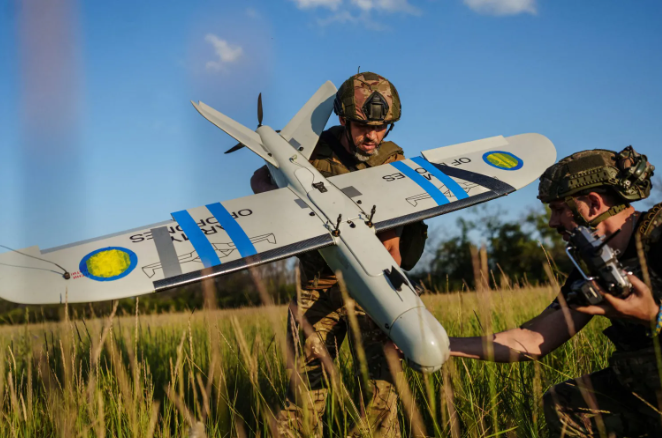
Advanced Electronic Warfare and Drone Defense Technologies Shaping Modern Battlefields
The nature of modern warfare has changed dramatically over the past decade. Unmanned aerial vehicles, commonly known as drones, have become one of the most significant threats on today’s battlefield. From small FPV drones used in close-range attacks to long-range cruise-missile-class platforms, the threat landscape is growing more complex every day. Governments, military forces, and defense contractors are racing to develop systems that can detect, identify, and neutralize these threats before they cause damage. Electronic warfare has emerged as one of the most critical fields in this effort, combining radio-frequency technology, signal intelligence, and advanced engineering to protect lives and infrastructure.
One company at the forefront of this technological revolution is AMACORP Tech, a Ukrainian defense technology company that has built a strong reputation for developing cutting-edge electronic warfare and counter-drone systems. You can learn more about their full range of capabilities by visiting https://amacorptech.com. Their work spans a wide spectrum of defense solutions, from passive RF detection systems to interceptor drones and jet-powered unmanned platforms. What makes their approach unique is the combination of advanced engineering with real-world operational experience gained in one of the most active conflict zones in the world today.
What Is Electronic Warfare and Why Does It Matter
Electronic warfare, often abbreviated as EW, refers to the use of the electromagnetic spectrum to gain a tactical advantage over an adversary. This includes detecting enemy signals, jamming communications, disrupting navigation systems, and protecting friendly forces from similar attacks. In the context of modern drone threats, electronic warfare plays a central role in counter-UAS (unmanned aerial systems) operations.
There are three main categories of electronic warfare:
- Electronic Attack: Using electromagnetic energy to disrupt, deny, or destroy enemy capabilities, such as jamming drone control signals.
- Electronic Protection: Shielding friendly systems from enemy electronic attacks, including anti-jamming measures for GPS and communications.
- Electronic Support: Gathering intelligence by intercepting and analyzing enemy signals to understand their capabilities and intentions.
Each of these categories plays a vital role in modern defense operations, and the most effective systems integrate all three into a unified solution.
Active vs. Passive Detection in Counter-Drone Systems
Active Detection
Active detection systems emit their own signals, such as radar waves, to locate and track drones in the airspace. These systems are highly effective at detecting targets at long range and can provide precise location data. However, because they emit signals, they can also reveal their own position to an adversary equipped with signal-detection technology. This makes active systems more suitable for fixed installations or situations where stealth is not a primary concern.
Passive Detection
Passive detection systems, on the other hand, do not emit any signals. Instead, they listen for the radio-frequency emissions produced by drones and their controllers. Because they remain silent, passive systems are much harder to detect and are ideal for covert operations or forward-deployed units that need to stay hidden. Systems like the Hand Drone Detector MISSION, developed by AMACORP Tech, use ultra-wideband RF detection to identify commercial and military drones in real time without giving away the operator’s position.
The Role of FPV Drones and Interceptor Systems
First-person view drones, or FPV drones, have become a major weapon in modern conflicts. They are small, fast, inexpensive, and extremely difficult to intercept using traditional methods. Their low radar cross-section and high maneuverability make them a serious challenge for conventional air defense systems.
To counter this threat, defense companies have developed interceptor drones specifically designed to chase and neutralize hostile UAVs. These systems use onboard sensors and AI-assisted targeting to identify and engage enemy drones mid-flight. Combined with ground-based RF jamming systems, interceptor drones form a layered defense that significantly reduces the effectiveness of drone swarm attacks.
Protecting Critical Infrastructure with Wide-Spectrum Defense
Beyond the battlefield, electronic warfare technologies are increasingly being used to protect critical infrastructure such as power plants, airports, government buildings, and communication networks. A coordinated drone attack on any of these targets could have devastating consequences. Wide-spectrum electronic defense systems provide a comprehensive shield by monitoring all relevant frequency bands simultaneously and responding to threats in real time.
Key features of modern infrastructure protection systems include:
- Real-time airspace monitoring across multiple frequency bands
- Automatic threat classification and alert generation
- Integration with existing security and communication networks
- Scalable deployment for both fixed and mobile installations
Conclusion
Electronic warfare and counter-drone technologies are no longer niche fields reserved for superpowers. They are essential tools for any nation or organization facing modern security threats. Companies like AMACORP Tech are leading the way by developing practical, battle-tested solutions that address the full spectrum of unmanned aerial threats. From portable passive detectors to advanced interceptor drones and RF suppression systems, the technology exists today to detect, track, and neutralize hostile UAVs before they reach their targets. As drone technology continues to evolve, so too must the systems designed to counter it, making continued investment in electronic warfare research and development more important than ever.