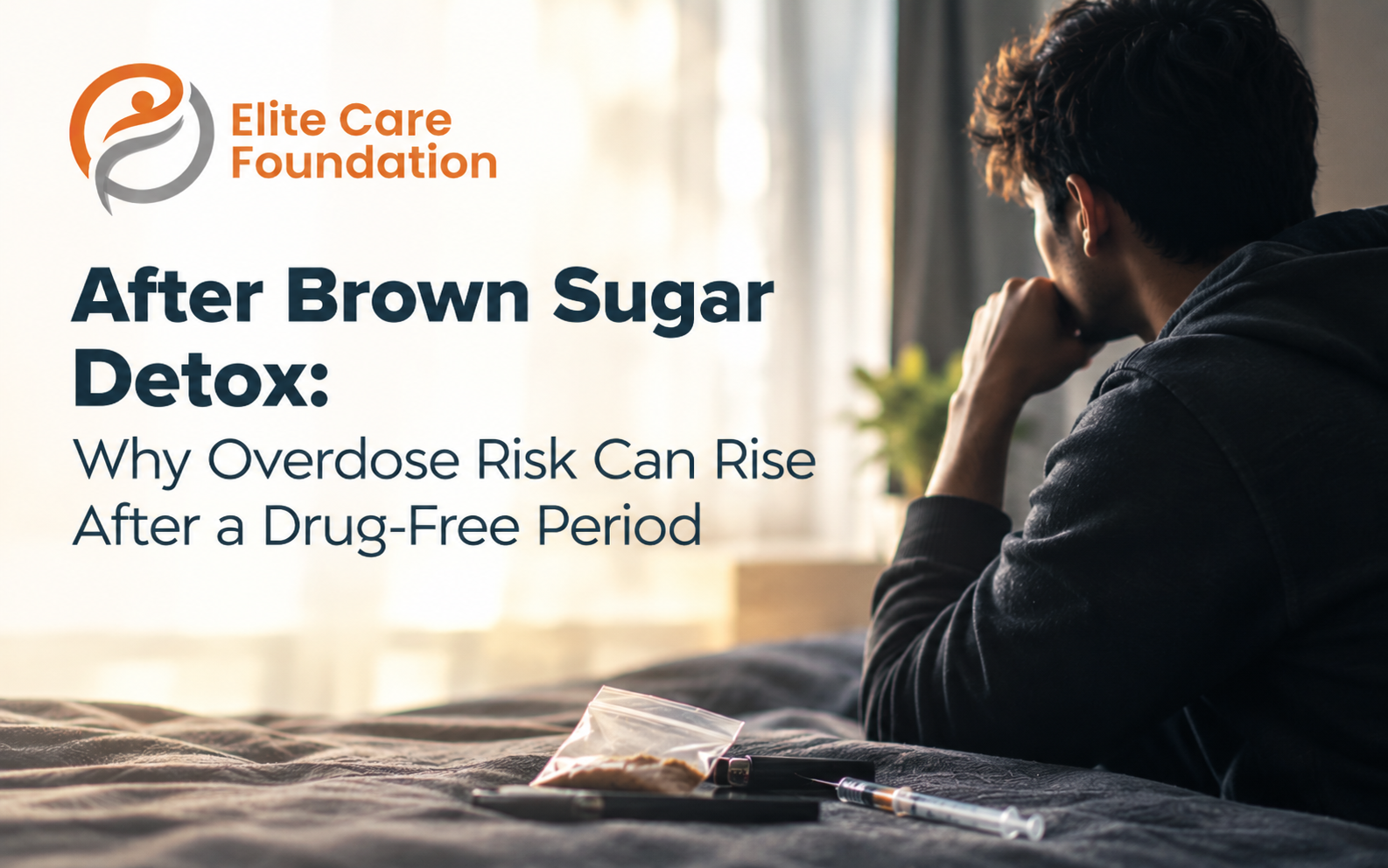
After Brown Sugar Detox: Why Overdose Risk Can Rise After a Drug-Free Period
The family may feel safest after a person has been drug-free for several weeks.
The person looks healthier. Sleep is improving. Appetite has returned. A drug test may be negative. Everyone wants to believe the dangerous part is over.
With opioids such as heroin, there is a reason to remain careful: tolerance can fall during abstinence. If the person returns to an amount that was previously tolerated, the same dose may now suppress breathing more severely.
This is one of the most important facts families should understand after brown sugar detox.
The World Health Organization lists reduced tolerance after a period of abstinence as a factor that can increase opioid-overdose risk. WHO estimated around 125,000 opioid-overdose deaths worldwide in 2019. The classic warning signs are pinpoint pupils, unconsciousness and difficulty breathing.
Detox removes the drug; it does not remove the old dose from memory
A person may remember exactly how much brown sugar was used before treatment.
What they cannot feel is how much tolerance has changed.
That creates a dangerous mismatch. The mind remembers an amount as “normal” while the body may now react differently. Street drugs add another layer of uncertainty because purity and contents are not standardised.
If the person has also taken alcohol, sleeping tablets or other sedating drugs, the danger can rise further because several substances may suppress alertness and breathing.
This is why Elite Foundation rehabilitation centre should treat discharge planning as part of clinical care rather than an administrative conversation on the last day.
The person needs to know that return to opioid use after abstinence can be especially dangerous. The family needs to know what overdose looks like and what to do instead of assuming deep sleep will pass.
Where naloxone is legally and practically available, WHO recommends improving access for people likely to witness an opioid overdose and training them in its use. Naloxone can reverse an opioid overdose temporarily, but emergency medical help is still required.
See also: Emerging Technology Trends That Are Shaping Everyday Life
The first relapse often begins before the drug appears
It may begin with sleep.
Three poor nights lead to irritability. An argument happens at home. The person leaves the house. An old contact has not actually been deleted. A message is sent. By the time the family sees the drug use, several earlier decisions have already taken place.
Good brown sugar rehabilitation and relapse-prevention treatment tries to identify that chain before discharge.
Which situations have repeatedly led back to use? Salary day? Being alone? Contact with a particular friend? Pain? Alcohol? Shame after conflict? Craving after seeing a familiar location?
The plan should be specific enough to use in real life. “Stay away from bad company” is not a plan. Blocking specific contacts, changing a route, arranging counselling on a high-risk day, temporarily changing access to cash and deciding who gets called when craving rises are practical steps.
Medication can be part of evidence-based opioid care
Another misunderstanding is that recovery only counts if the person takes no medicine related to opioid dependence.
WHO and UNODC treatment standards recognise medication as an evidence-based part of care for opioid-use disorder in appropriately selected patients, alongside psychosocial treatment. Depending on clinical assessment and local availability, medicines such as methadone or buprenorphine may be used in structured treatment. Naltrexone is another option in selected patients but works differently and requires appropriate timing.
These are medical decisions. They should not be started, stopped or changed based on advice from another patient’s family or an online forum.
For some people, medication reduces the instability that repeatedly leads to illicit opioid use. For others, a different plan may be appropriate. The important point is that treatment should be individualised rather than built around a slogan such as “medicine-free recovery”.
Families need a response plan for a lapse
A lapse can trigger panic and anger. Both are understandable.
But the first priorities are safety and reassessment.
Is the person conscious and breathing normally? Has more than one substance been taken? Does emergency care come first? Once immediate danger is addressed, the treatment team needs to understand what happened and whether the existing plan is adequate.
A return to use does not mean treatment achieved nothing. It does mean the current protection was not enough for that situation.
Families can make things worse by hiding the lapse from clinicians because they feel embarrassed, or by waiting for repeated use before seeking help. Opioid risk can change quickly.
India’s 2019 national survey estimated roughly 77 lakh people needed help for opioid-use problems. Behind that number are many cycles of stopping, returning and trying again.
The goal of treatment is not to pretend those cycles never occur. It is to reduce their frequency, reduce their danger and help the person build enough stability that one craving does not become an overdose.
Follow-up also needs a calendar, not just good intentions. The first appointment should ideally be arranged before discharge, and the family should know who to contact if medicine is stopped, sleep collapses or old contacts reappear. Gaps in care are easiest to ignore when everyone feels temporarily relieved.
A drug-free period is worth protecting. It should also be treated as a time when lowered tolerance makes accurate information especially important.