Air Cooled Pulse Laser Cleaning Machine: How Laser Cleaning Works
Rust on a metal part, old paint on a mold, oil and dust on a machine surface. Every workshop faces some version of this problem. For years the answers were sanding, blasting or chemical baths. Today many factories also use light. An air cooled pulse laser cleaning machine removes unwanted material with short bursts of laser energy, without touching the surface. This article explains how that works and what the product information from HS Laser says about it.
The basic idea
Laser cleaning directs a focused beam at a surface. The contamination, such as rust, paint or oil, absorbs the energy and is vaporized or loosened, while the base metal underneath is largely left alone. HS Laser describes the process as a high tech and eco friendly surface treatment that uses high energy beams to evaporate rust, paint and oil. It says the process needs no chemicals, no blasting media and no water.
Because the beam does not touch the surface, there is no physical contact and no wear on the part. The company states that this makes it suitable for delicate and brittle substrates, and that it allows accurate positioning and selective cleaning, so only the areas you choose are treated.
Why a pulse laser?
A pulse laser delivers energy in short bursts instead of a steady beam. Short bursts let the machine remove contamination with limited heat flowing into the base material. According to the product page, this model uses pulse laser technology with a wavelength of 1064 nanometers, a pulse width between 13 and 500 nanoseconds and a frequency from 1 to 4000 kHz. Pulse energy can be selected from 1.5 mJ, 5 mJ, 15 mJ or 50 mJ options. These numbers give operators room to tune the machine for different jobs, from light dust to heavier coatings.
What does air cooled mean?
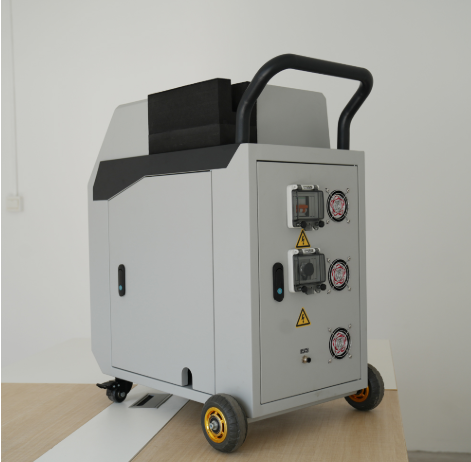
Every laser makes heat and needs cooling. Some machines use water chillers. This model uses air cooling, which means fans move air to carry heat away. The practical benefit is simplicity. There is no water circuit to fill, no coolant to maintain and a smaller overall unit. The listed machine weight is 56 kg, the cleaning head weighs 0.7 kg and the cleaning is done by hand, so the equipment is designed to be portable. The page gives a working temperature of 0 to 40 degrees Celsius and humidity of 30 to 80 percent, so the environment should be suitable for an air cooled device.
Models and power
The page lists model numbers HS-LC200, HS-LC300 and HS-LC500, matching laser power of 200W, 300W and 500W. The header also mentions a 1000W option. The company lists whole machine power consumption of 850W, 1300W and 2000W for the three models, and a single phase power supply that accepts 110V and 220V. Choosing the right power depends on the job. Higher power generally allows faster cleaning of thicker layers, while lower power may be enough for light contamination and more delicate parts.
Features that help operators
The company describes the machine as plug and play. You power it on, adjust the focus manually and begin. The laser head has dual red guide lights to help position the focus, and an optional rotating screen is available. The control system supports eight scan shapes, which lets operators select a pattern that suits the surface being cleaned.
The scan width is listed as 90 mm or 145 mm depending on the focal lens option, with focus distances of 100 or 160 mm.
Where is it used?
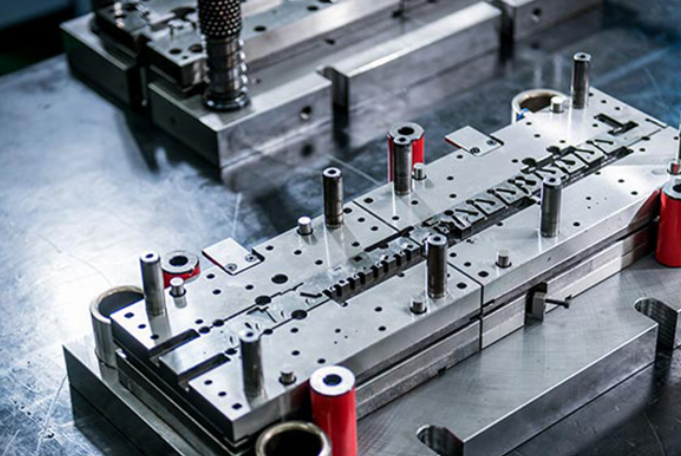
HS Laser names a wide set of industries, including automotive, aerospace, mold maintenance and environmental protection. In general terms, laser cleaning is used for removing rust, paint, oil, grease and coatings, and for preparing surfaces before welding or other processes. The company says the clean surface is ready for secondary processing or immediate use.
A note on the EU standard in the name
The product name includes the words EU standard. The page does not list specific certificates or directives in the technical section. If you plan to import or use the machine in a regulated market, ask the supplier for the exact documents, such as declarations of conformity and test reports, and check them against your local requirements. This is a normal and sensible step for any industrial equipment.
Safety reminders
Laser equipment demands respect. Operators should follow the manufacturer’s safety instructions, wear proper eye protection rated for the laser wavelength, and keep untrained people away from the work area. Good ventilation or fume extraction is also wise, since vaporized contamination can create fumes depending on what is being removed.
Is it right for you?
If your work involves frequent rust or coating removal, delicate parts, or a wish to avoid chemicals and abrasives, laser cleaning is worth a serious look. Ask for a demonstration on your own parts, compare results and running costs, and decide with real evidence in front of you.