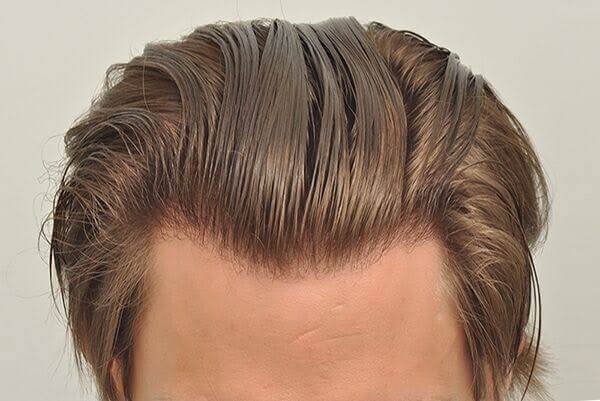
How to Choose the Right Hairline Restoration Approach for You
A hairline restoration decision in New York comes down to three variables before any technique gets picked: how much donor hair you actually have, how your hairline has moved over the last few years, and whether a surgeon’s design plan accounts for future loss. Peak Hair Restoration Clinic’s New York team runs a scalp and donor-capacity assessment before recommending hairline restoration through Sapphire FUE, PRP, or a combination of both. The short version: book the assessment first, choose the technique second.
Most people searching for hairline restoration in 2026 start with a technique in mind — Sapphire FUE, PRP, a combination approach — before anyone has looked at their donor area. That order is backwards. A clinician’s exam determines what’s realistic; the technique follows from that exam, not the other way around. This guide walks through the sequence a New York patient should actually follow, in order, with the questions worth asking at each step.
What You’ll Need
- A scalp and donor-area assessment from a clinic such as Peak Hair Restoration Clinic in New York
- Photos of your hairline from the last 12 to 24 months, taken in consistent lighting
- Family history of hair loss on both maternal and paternal sides
- A list of current medications, supplements, and any prior hair restoration procedures
- A realistic timeframe — hairline results take months to settle, not weeks
Step 1: Identify Your Pattern of Hair Loss
Start by naming what’s actually happening to your hairline, not what you assume is happening. A receding hairline, a widow’s peak, and diffuse thinning behind the hairline are three different problems with three different candidacy profiles, and conflating them leads people toward the wrong technique.
Compare your current photos against older ones and look specifically at the temples, the frontal tuft, and the density immediately behind the hairline. A widow’s peak that’s stable rarely needs the same intervention as an actively progressing recession. Expected outcome: a clear, dated record of how your hairline has changed, which any clinician will ask for anyway.
Common mistake: judging progression from a single photo instead of a timeline. One photo tells you where you are; a timeline tells you where you’re headed, and that’s what shapes the plan.
Step 2: Assess Your Donor Capacity
Your donor area — the horseshoe of permanent hair at the back and sides of the scalp — sets the ceiling on what any hairline restoration can achieve. No technique manufactures hair you don’t have.
Donor density, scalp laxity, and hair caliber all factor into how many grafts can be safely harvested without thinning the donor zone itself. This is a clinical judgment, not a self-assessment — a trained eye distinguishes between a donor area that supports an aggressive hairline redesign and one that only supports a conservative frame around the temples. Expected outcome: a graft estimate range, not a fixed number, since density can only be confirmed under magnification during an in-person exam.
Common mistake: assuming donor supply scales with how much loss you’ve had up front. The two aren’t correlated — a patient with moderate loss can have limited donor density, and vice versa.
Step 3: Compare Surgical and Non-Surgical Options
Hairline restoration isn’t one decision — it’s a menu. Surgical options like FUE sit alongside non-surgical paths like PRP, and candidacy for each depends on how advanced the loss is and how much the patient wants to avoid a procedure.
Reviewing the full range of hair transplant options before narrowing in on one technique prevents the common error of picking a procedure because it was the first one a patient read about online. PRP is sometimes used as a standalone approach for early, diffuse thinning, and sometimes paired with a surgical plan to support graft survival — which path applies depends entirely on the exam from Step 2.
Common mistake: treating PRP and FUE as competing options rather than complementary ones that solve different parts of the same problem.
Step 4: Evaluate Sapphire FUE for Natural Hairline Design
If the exam points toward a surgical approach, the next question is which extraction and implantation method produces the most natural-looking hairline for your specific hair type and skin tone.
Sapphire FUE uses sapphire-tipped blades for the recipient incisions instead of standard steel, which some surgeons favor for finer incision control around the hairline’s irregular, feathered edge — the part of any transplant most visible to other people. Reviewing Sapphire FUE compared to standard FUE and a Sapphire FUE guide before a consultation gives you informed questions to bring to the exam rather than walking in blind. Hairline design itself — the angle, the density gradient, the asymmetry that makes a hairline look like it was never touched — is a separate skill from the extraction technique, and worth asking about directly; see this breakdown of natural hairline design.
Common mistake: picking a technique based on marketing terms alone without asking the surgeon how they design the hairline’s irregular border, which matters more to the final look than the blade material.
Step 5: Book a Clinical Assessment With a New York Hair Restoration Team
Everything above is preparation for this step, which is the one that actually determines your plan. A clinical assessment — not a photo uploaded to a form — is where donor capacity, hair caliber, scalp laxity, and hairline pattern get evaluated together.
Peak Hair Restoration Clinic’s New York team conducts this assessment in person, examining the donor area under magnification and discussing candidacy honestly, including when a patient’s donor supply doesn’t support the hairline density they’re picturing. That’s the point of a clinician-led process: an honest no is more useful than an optimistic yes that can’t be delivered. The NYC patient guide covers what to expect walking into a first consultation, including what questions to bring and what records to have ready. New York State requires surgical hair restoration procedures to be performed or directly supervised by a licensed physician, which is worth confirming for any clinic under consideration, not just Peak’s.
Expected outcome from this step: a specific graft-count range, a technique recommendation, and a timeline — not a generic sales pitch. If a consultation produces a flat price and a technique before examining your scalp, that’s a sign to get a second opinion.
Common mistake: scheduling a consultation after already paying a deposit elsewhere. The assessment should come before any financial commitment, not after.
Step 6: Map Your Recovery Timeline Before You Commit
Hairline restoration results don’t appear on a fixed schedule, and planning around an unrealistic one causes most of the post-procedure disappointment patients report.
Transplanted hair typically sheds within the first few weeks — a normal, expected phase, not a sign of failure — before new growth begins months later and continues to thicken over roughly a year. Reviewing a full recovery timeline before scheduling a procedure means you can plan around work commitments, social events, and the shedding phase without panicking partway through. Expected outcome: a calendar-based plan for the first two weeks (visible healing), the shedding phase, and the months-long growth cycle.
Common mistake: judging results at three months, when the growth cycle is still in its early, unsettled phase.
Step 7: Choose a Hair Transplant Clinic in New York City
Once the assessment and technique are set, the final step is picking where the procedure actually happens — and New York has options spread across Manhattan, Brooklyn, and Queens with real differences in surgeon experience and consultation process.
Compare credentials directly rather than relying on before-and-after photos alone, which can be selectively curated. Guides covering clinics in Queens, clinics in Brooklyn, and NYC surgeons are useful starting points for cross-checking a clinic’s claims against independent coverage. Expected outcome: a short list of two or three clinics with a documented consultation process, not a single choice made on price alone.
Common mistake: comparing New York clinics purely on sticker price without normalizing for graft count or technique — a lower quote for fewer grafts isn’t actually cheaper per unit of coverage.
Troubleshooting Common Mistakes
Mistake: Picking a technique before knowing donor capacity. Fix: reverse the order — get the exam first, let the technique follow from what the donor area supports.
Mistake: Assuming more grafts always means a better hairline. Fix: ask how the surgeon plans graft distribution and density gradient, not just the total count.
Mistake: Ignoring thinning behind the hairline while focusing only on the front edge. Fix: ask specifically whether the exam covers the mid-scalp, since a strong hairline surrounded by thinning can still look unnatural within a few years.
Mistake: Skipping a second opinion on borderline candidacy. Fix: a second clinical assessment costs little relative to a procedure and can catch a mismatch the first exam missed.
Mistake: Underestimating the recovery window against a work or travel schedule. Fix: map the first two weeks against your actual calendar before booking a date, not after.
Mistake: Comparing NYC clinic pricing as a flat number. Fix: ask for a per-graft or per-session breakdown so quotes are actually comparable across clinics.
Tools and Resources
- Peak Hair Restoration Clinic’s New York consultation — scalp and donor-capacity assessment ahead of any Sapphire FUE or PRP recommendation
- NYC cost guide — framework for comparing quotes by graft count rather than flat price
- Unnatural results guide — what causes a hairline to look obviously transplanted and how design choices prevent it
- Recovery timeline — week-by-week expectations for the shedding and growth phases
FAQ
How much does hairline restoration cost in New York in 2026?
Pricing varies by graft count, technique, and clinic, which is why a flat number is less useful than a per-graft breakdown. The NYC cost guide walks through how to compare quotes across clinics on equal terms.
Is Sapphire FUE actually better than standard FUE for a hairline?
Sapphire FUE’s finer incisions are favored by some surgeons for the hairline’s irregular border, but the surgeon’s design skill matters as much as the blade. Peak Hair Restoration Clinic covers the tradeoffs directly in its Sapphire FUE comparison.
Can hair transplant results look unnatural?
Yes — an overly straight hairline, uniform density with no gradient, or grafts placed at the wrong angle are the usual causes. This is a design issue, not an inevitable outcome of the procedure itself.
What recovery time should New York patients plan for?
Visible healing settles within roughly two weeks, shedding of transplanted hair follows shortly after as a normal phase, and new growth continues to thicken over about a year. Planning around this timeline avoids judging results too early.
What if my donor area doesn’t support a full hairline redesign?
A clinician may recommend a more conservative design, PRP as a supporting or standalone treatment, or staging the plan over multiple sessions. Peak Hair Restoration Clinic’s New York assessment is built to give that answer honestly rather than overpromising density the donor area can’t support.
Does PRP work as an alternative to surgery for a receding hairline?
PRP is generally considered for early, diffuse thinning rather than advanced recession, sometimes alongside a surgical plan rather than instead of one. Candidacy depends on where you are in the loss pattern, which is part of what Step 2’s donor assessment is meant to clarify.
Conclusion
The sequence matters more than the technique: identify the pattern, assess donor capacity, compare surgical and non-surgical paths, then book a clinical assessment before committing to anything. Peak Hair Restoration Clinic’s New York team structures its consultation process around that order specifically because hairline restoration decisions made backward — technique first, exam second — are the ones that disappoint patients in 2026 and beyond. Start with the assessment, let the plan follow from what your scalp actually supports, and treat any clinic that skips that step as a reason to keep looking.