Mastering the Five-Letter Puzzle: Why Word Games Captivate Our Minds
There is a unique psychological pull to word games, especially those centered around five-letter puzzles. Long enough to offer a genuine tactical challenge yet short enough to be completed during a brief coffee break, five-letter words occupy the ultimate “sweet spot” of linguistic recreation. Whether you are trying to maintain a daily winning streak, untangle a tricky rack of tiles in Scrabble, or fill in the blanks on a weekend crossword, mastering this specific word length requires a blend of pattern recognition, vocabulary depth, and strategic deduction.
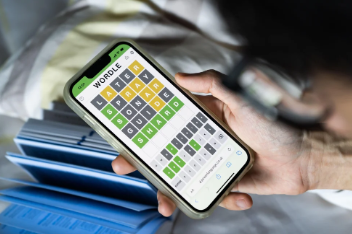
Over the past few years, daily puzzle games have transformed from quiet morning pastimes into global cultural phenomena. Friends compare scores, social media feeds fill with minimalist colored grids, and casual players find themselves thoroughly invested in optimizing their initial guesses. But why does this specific puzzle format hold such a tight grip on our daily routines, and how can you elevate your strategy to ensure consistent victories?
The Cognitive Science Behind Word Puzzles
To understand the appeal of word puzzles, it helps to look at how the human brain processes language and solves problems. When you engage with a word game, your brain activates multiple cognitive networks simultaneously:
- Pattern Recognition & Visual Processing: As you scan green, yellow, and gray feedback indicators (or look over a rack of Scrabble tiles), your visual cortex works alongside executive function areas to identify visual patterns, structural symmetry, and missing pieces.
- Semantic Memory Retrieval: Your brain searches its internal mental lexicon—a vast neural database of familiar terms, definitions, and spelling rules—to pull up viable candidates that fit the board.
- Hypothesis Testing & Working Memory: With every guess, you form a hypothesis (“Could the word end in -CH or -TY?”), test it against the rules of the board, and eliminate invalid paths without losing track of previous clues.
This multi-step mental loop triggers small releases of dopamine every time a hidden letter reveals itself or a complex rack clears. The instant feedback loop provides a sense of micro-accomplishment that keeps players coming back day after day.
The Perfect Geometry of the Five-Letter Format
Why five letters? Why not four, six, or eight?
In the English language, five-letter words represent a unique structural baseline. They are structurally complex enough to accommodate an enormous variety of consonant clusters, diphthongs, and subtle phonetic shifts, yet brief enough that the brain can rapidly visualize variations without experiencing cognitive overload.
Vowel-to-Consonant Ratio
Most five-letter English words contain two vowels and three consonants (e.g., CRANE, SLATE, AUDIO). This balanced distribution allows for maximum combinatorial flexibility.
Prefixes and Suffixes
Five letters represent the threshold where structural affixes (like RE-, UN-, -ED, -TY, or -ER) interact dynamically with root sounds without dominating the entire word length.
Manageable Search Spaces
In standard modern English, there are roughly 2,500 to 3,000 common five-letter words, alongside thousands of additional playable Scrabble terms. This creates a finite, highly navigable search space for deduction.
Unlocking Winning Strategies: Letter Frequencies and Phonetics
To elevate your game from casual guessing to tactical mastery, you must align your strategy with the structural realities of the English language.
High-Frequency Vowels
Vowels are the anchors of almost every five-letter term. The vowels E, A, O, I, and U appear with varying frequencies, with E and A comfortably taking top positions in overall usage. A strong opening move should always test at least two or three unique vowels to map out the vocalic core of the daily solution.
High-Yield Consonants
Not all consonants are created equal. The letters R, S, T, L, and N dominate English vocabulary structure. Positioning these letters in common anchor points—such as starting consonants (S-, T-, C-) or ending positions (-S, -E, -R, -N)—yields far more actionable feedback than testing obscure consonants early on.
Consonant Blends and Digraphs
Pay close attention to common multi-letter pairings:
- Initial Blends: ST-, CR-, FL-, SH-, TR-, BR-
- Terminal Blends: -CH, -TH, -CK, -NG, -NT, -MP
Recognizing these phonetic blocks allows you to test whole letter groups at once rather than evaluating each slot in isolation.
The Role of Strategic Elimination
A common mistake made by novice players is attempting to guess the exact winning word on every turn. Advanced players know that the early rounds are not about hitting the target instantly; they are about information gathering.
| Strategy Phase | Objective | Primary Focus |
| Phase 1: Exploration (Guesses 1–2) | Maximize unique letter coverage | Test 8 to 10 distinct high-frequency letters (vowels + core consonants) |
| Phase 2: Deduction (Guesses 3–4) | Identify positional anchors | Test structural blends, filter remaining vowels, isolate green positions |
| Phase 3: Execution (Guesses 5–6) | Target exact solution | Combine confirmed letters with narrowed options to finalize the word |
By focusing on process rather than luck, you turn every guess into a precise data-gathering operation.
Working Smarter with the Right Digital Tools
Even seasoned word-game enthusiasts encounter frustrating roadblocks where a combination of gray, yellow, and green tiles completely stalls progress. Whether you are trapped in a single-letter trap (e.g., trying to distinguish between LIGHT, NIGHT, MIGHT, SIGHT, and RIGHT) or simply facing an unfamiliar term, modern interactive tools can completely transform your approach.
Instead of brute-forcing random guesses or burning limited turns, analytical solvers allow you to filter possibilities based on exact tile feedback:
- Position Filtering: Pinning down confirmed green letters in their exact positions while excluding grayed-out letters across the entire board.
- Pattern Matching: Solving tricky fill-in-the-blank scenarios (such as _ _ A _ E or S _ _ O L) with minimal wasted attempts.
- Tile Scoring & Anagramming: Optimizing Scrabble and casual anagram scores by evaluating high-value letter placements and rack efficiency.
Interactive Solvers and Word Databases
For players looking to refine their daily workflow and eliminate guessing traps, dedicated analytical resources make a substantial difference. Tools like the interactive Wordle Solver provide real-time, customizable boards that process letter-color feedback to drastically narrow down remaining possibilities within seconds.
Beyond resolving immediate puzzle blocks, keeping comprehensive reference directories on hand—such as exploring the complete reference library at 5 Letter Words Hub—helps expand your active vocabulary, reinforces structural patterns, and ensures you are never caught off guard by obscure or tricky word solutions.
Top Starting Words and How to Pick Yours
Your opening word sets the trajectory for the entire puzzle. While opinions vary across the gaming community, mathematical models consistently point toward openers that balance distinct high-frequency consonants with core vowels.
Popular High-Yield Openers
- CRANE: Combines two top vowels (A, E) with three versatile consonants (C, R, N).
- SLATE: Excellent for locating positional anchors with S, T, and L while checking key vowels.
- AUDIO / ADIEU: Vowel-heavy starters designed to rapidly identify or eliminate four out of five primary vowels in a single turn.
- ROAST: A balanced option targeting high-frequency structural consonants alongside O and A.
The Two-Word Opener Strategy
If you prefer a systematic, low-risk gameplay style, consider committing to a predetermined pair of complementary opening words. For instance, pairing SLATE with CRONY or AUDIO with STERN guarantees that you evaluate 10 unique, high-yield letters across your first two turns without repeating a single letter. This method eliminates guesswork and establishes a solid foundation for your third turn.
Mental and Cognitive Benefits of Daily Puzzle Play
Beyond the simple thrill of maintaining a daily winning streak, engaging regularly with linguistic puzzles yields tangible cognitive benefits. Neuroscientists and cognitive psychologists frequently highlight word games as excellent tools for maintaining brain health and mental agility across all age groups:
Enhanced Working Memory
Managing constrained choices under specific rules forces your working memory to keep active track of eliminated options, positional constraints, and prospective letter combinations simultaneously.
Expanded Lexicon and Passive Vocabulary
Regular exposure to word lists and solver directories introduces you to uncommon terms, historical usages, and alternate spellings that enrich your overall vocabulary and written communication skills.
Stress Reduction and Mindfulness
Taking five to ten minutes out of a busy day to focus entirely on a self-contained, logical puzzle offers a healthy mental reset. It creates a state of psychological “flow”—a balanced state of calm focus where outside distractions temporarily fade away.
Summary Checklist for Puzzle Mastery
To consistently solve five-letter word games with high accuracy and low turn counts, keep these core principles in mind:
- Prioritize Information Over Early Guesses: Use your first two moves to test 8–10 unique, high-frequency letters rather than chasing an immediate win.
- Master the Vowels Early: Identify which vowels are present—and where they live—before committing to complex consonant arrangements.
- Beware of Single-Letter Traps: When multiple words fit the same structural shell (e.g., _ A T E), test a word containing several candidate starting consonants rather than guessing them one by one.
- Leverage Dedicated Reference Tools: Use interactive solvers and detailed databases to study letter frequencies, learn uncommon terms, and analyze tricky board states.
- Analyze Your Play: Review past games to identify weak spots in your opening strategies or recurring patterns you may have overlooked.
Conclusion: Elevate Your Game Today
Mastering the five-letter puzzle is an ongoing journey of strategy, linguistic exploration, and mental refinement. By shifting your approach from casual guessing to systematic deduction, you turn every game into an engaging exercise in logic and problem-solving. Dive into the archives, experiment with new starting words, leverage smart digital resources, and watch your puzzle-solving efficiency soar!