Print Inspection Systems: Improving Quality Control in Modern Printing
Modern printing operations depend on speed, accuracy, and consistent quality. As production lines become faster and customer expectations continue to increase, identifying defects manually becomes increasingly difficult. Even a small printing error can affect the appearance, functionality, and overall value of a finished product.
This is where print inspection systems play an important role. Automated inspection technology can monitor printed materials during production, identify potential defects, and provide manufacturers with useful information for maintaining consistent quality. Instead of relying entirely on manual checks, printing companies can integrate automated inspection into their production processes.
What Are Print Inspection Systems?
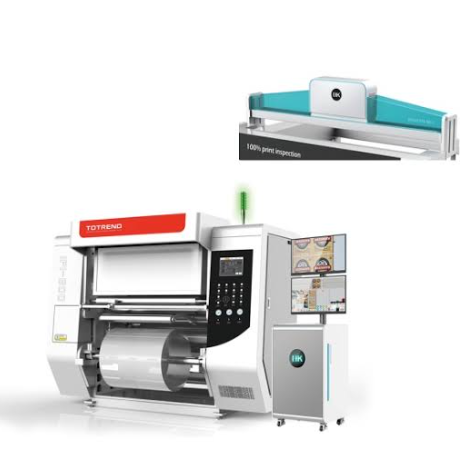
Print inspection systems are automated quality-control solutions designed to monitor printed materials while they are being produced. Depending on the application, cameras and specialized software can examine a continuous web of printed material and detect differences between the expected image and the actual print.
These systems can be used to identify a wide range of issues, including missing print, incorrect colors, spots, streaks, registration problems, smudges, and other visual defects.
The main objective is not simply to find errors. It is to help manufacturers detect problems early, reduce waste, and maintain consistent production quality.
Why Automated Inspection Matters
Traditional quality control often depends on operators visually checking samples from a production line. Manual inspection can still have a role, but it has limitations.
High-speed printing machines can produce large quantities of material in a short period. An operator may not be able to continuously examine every section of a moving web with the same level of attention.
Automated inspection provides continuous monitoring. This can help manufacturers identify defects closer to the moment they occur rather than discovering them after an entire production batch has been completed.
How a Print Inspection System Works
Although system configurations vary, the basic process generally involves several stages.
First, cameras capture images of the printed material as it moves through the production line. The inspection software then analyzes those images and compares them with a reference or predefined quality criteria.
When the system identifies a significant difference, it can alert the operator. Depending on the equipment and production setup, the system may also record defect information for later analysis.
This combination of imaging, software, and real-time monitoring allows quality control to become an integrated part of production rather than a separate final-stage activity.
Common Printing Defects
Different printing technologies can produce different types of defects. Some of the most common problems include:
Missing or Incomplete Print
A section of an image or text may be missing because of an issue with ink application, printing plates, digital files, or machine operation.
Color Variation
Inconsistent color can affect the visual identity of packaging and printed products. Automated systems can help identify deviations from an expected reference.
Registration Errors
When multiple colors or printing layers need to align accurately, even a small registration error can become visible in the final product.
Spots and Streaks
Unwanted marks, contamination, ink-related issues, or mechanical problems can produce spots and streaks across the printed material.
Text and Graphic Errors
For certain applications, incorrect text, missing elements, or unwanted graphic changes can create serious quality problems. Automated visual inspection can help detect these differences during production.
The Role of Cameras and Image Processing
High-quality imaging is central to an automated inspection system.
Industrial cameras continuously capture images at production speed. These images are then processed by software capable of analyzing patterns, shapes, colors, and other visual characteristics.
The effectiveness of the system depends on more than camera resolution. Lighting, camera positioning, web speed, software configuration, and the characteristics of the material being inspected all influence inspection performance.
A well-designed system therefore combines appropriate hardware with suitable image-processing technology.
Benefits for Printing Manufacturers
One of the biggest advantages of automated inspection is greater consistency.
Instead of relying exclusively on periodic manual checks, manufacturers can monitor production continuously. This can make it easier to detect problems early and potentially prevent large quantities of defective material from being produced.
Other potential benefits include:
- Reduced material waste
- Faster identification of production problems
- Improved quality consistency
- Better production monitoring
- More efficient operator workflows
- Improved documentation of defects
- Greater confidence in finished products
These benefits can become particularly valuable in high-volume production environments.
Reducing Waste Through Early Detection
Waste reduction is an important concern for modern manufacturers.
If a printing problem continues unnoticed, a significant amount of material may be produced before the issue is discovered. Detecting the problem earlier gives operators an opportunity to investigate and correct the source.
This can reduce the amount of defective material associated with a production run.
The exact savings depend on factors such as machine speed, material costs, defect frequency, and how quickly operators can respond to inspection alerts.
See also: How a Business Attorney Greenville SC Can Help Your Business
Improving Production Efficiency
Quality control and production efficiency are closely connected.
When defects are discovered only during final inspection, manufacturers may need to stop production, review completed material, or repeat part of the process. Automated inspection can provide information while production is still taking place.
This creates an opportunity to identify recurring problems and improve machine settings or production procedures.
Over time, inspection data can also help production teams understand where particular defects tend to occur.
Choosing the Right Inspection Solution
Not every printing operation has the same inspection requirements.
Before selecting a system, manufacturers should consider the type of printing process, material width, production speed, defect types, inspection resolution, and available integration options.
It is also important to consider how operators will interact with the system. A clear interface can make it easier to understand alerts and investigate detected problems.
The system should be selected according to the actual production environment rather than simply choosing the most technically advanced option available.
Integration With Existing Production Lines
For manufacturers with established printing equipment, integration is another important consideration.
The inspection system needs to work effectively with the existing production line, including available space, web movement, lighting conditions, control systems, and operator workflows.
A successful implementation should minimize unnecessary disruption to production while providing reliable inspection coverage.
Manufacturers looking for specialized solutions can explore print inspection systems to understand how automated inspection technology can support different printing and web-processing applications.
Using Inspection Data for Continuous Improvement
Modern inspection systems can provide more than simple defect alerts.
When defect information is collected and analyzed, manufacturers can identify recurring patterns. For example, a particular type of defect may appear more frequently under certain machine conditions or during specific production stages.
This information can support continuous improvement initiatives. Instead of simply removing defective products, production teams can investigate why defects occur and work toward reducing their frequency.
The Importance of Operator Involvement
Automation does not necessarily eliminate the need for skilled operators.
Human expertise remains important for interpreting alerts, investigating machine conditions, adjusting processes, and making production decisions.
The most effective approach is often a combination of automated monitoring and experienced personnel. The system handles continuous visual inspection, while operators use the resulting information to manage the production process.
Applications Across the Printing Industry
Automated inspection can be relevant to many types of printed products and materials.
Potential applications include packaging, labels, flexible materials, commercial printing, and other web-based production environments.
The inspection requirements can differ significantly between applications. Packaging may require careful monitoring of graphics and registration, while other applications may place greater emphasis on surface defects or consistency.
Understanding the specific requirements of the product is therefore essential when designing an inspection strategy.
Frequently Asked Questions
1. What do print inspection systems detect?
Depending on the system and application, they can detect problems such as missing print, color differences, registration errors, spots, streaks, smudges, and other visual defects.
2. Can automated inspection reduce printing waste?
It can help reduce waste by identifying defects earlier in the production process. Early detection gives operators an opportunity to investigate and correct problems before a larger quantity of material is affected.
3. Are print inspection systems suitable for high-speed production?
Yes, automated inspection is particularly useful in environments where materials move continuously at high speeds. The appropriate system should be selected according to the machine speed, material characteristics, inspection requirements, and desired resolution.
Conclusion
Print inspection systems have become an important technology for manufacturers seeking greater consistency and efficiency in modern printing operations. By combining industrial cameras, image processing, and automated monitoring, these systems can identify potential defects while production is underway.
Their value extends beyond simply finding defective prints. Early detection can help reduce waste, support faster problem-solving, improve production visibility, and provide useful information for continuous improvement.
As printing processes become increasingly automated and production speeds continue to rise, reliable inspection technology can provide manufacturers with an additional layer of quality control. The key is to choose a solution that matches the specific printing process, materials, production requirements, and quality objectives of the business.