Two Problems Solved by the Same Piece of Automation: Space and Safety
Manufacturers running injection molding operations tend to face two persistent challenges that rarely get discussed together, even though they are closely related in practice. Floor space is almost always limited, and repetitive manual tasks around active machinery carry ongoing safety risk. It turns out that a single category of automation equipment addresses both of these problems at once, which is part of why it has become such a standard fixture in modern injection molding facilities.
The Space Problem With Traditional Removal Methods
Injection molding facilities are often laid out with machines packed reasonably close together to maximize production density within a given building footprint. A removal system that requires significant additional clearance around each machine works directly against this goal, effectively forcing wider spacing between machines than would otherwise be necessary and reducing how many production lines a given facility can actually accommodate.
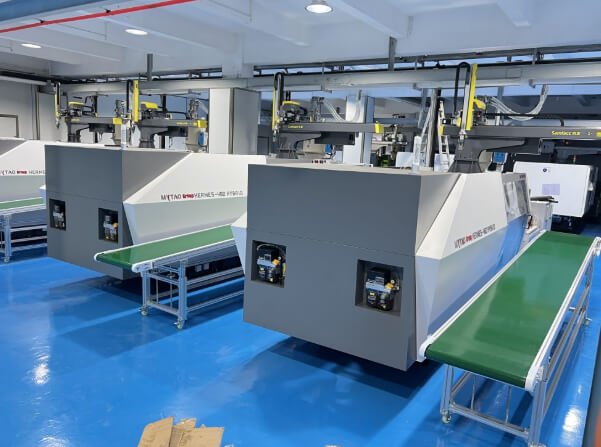
By combining vertical robot technology with arm robot functionality specifically designed for this application, manufacturers can meaningfully reduce the footprint required for part removal, freeing up floor space that can then be used for additional production capacity or other operational needs. This matters more in facilities where every square meter of production floor genuinely has a cost attached to it, whether that cost shows up in rent, construction, or simply opportunity cost from not being able to add another production line.
Why Manual Removal Carries Real Safety Risk
Removing finished products or material heads from an injection molding machine, particularly at the pace required to keep up with fast cycle times, is a genuinely repetitive task performed near active, often heated equipment. Repetition over long shifts naturally affects worker attention and reaction speed, which is exactly the kind of condition that increases the likelihood of an injury occurring, even when workers are following proper safety procedures.
A vertical injection molding machine supported by this kind of automated arm robot removes workers from direct, repeated contact with this part of the process, addressing the safety concern at its source rather than relying purely on training or protective equipment to manage a risk that automation can largely eliminate instead.
Built for Reliable, Consistent Operation
Equipment built for this application needs to hold up to genuinely demanding operating conditions, running continuously across long production shifts without introducing its own reliability problems into the process. Manufacturing built around quality materials specifically supports this kind of energy efficient, dependable operation over an extended service life, which matters considerably given how central this equipment becomes to a facility’s overall production throughput once it is integrated into the workflow.
Safety in the equipment’s own design and manufacturing process matters just as much as the safety benefit it provides by removing manual handling. Equipment built and tested according to approved industry standards gives manufacturers confidence that the automation itself will not introduce new hazards while solving the original safety problem it was brought in to address.
Customization Still Matters for a Good Fit
Different facilities and different products call for different specific configurations, whether that involves single arm versus double arm setups, or adjustments suited to a particular product size and shape. Equipment that can be customized to fit specific applications ensures a manufacturer gets a solution genuinely suited to their actual production needs, rather than trying to force a generic configuration to work with a product or facility layout it was not originally designed to accommodate.
See also: How a Business Attorney Greenville SC Can Help Your Business
Why Addressing Both Problems Together Makes Sense
Space and safety might seem like separate operational concerns handled by different departments within a manufacturing business, but in the context of injection molding automation, they are solved by the exact same piece of equipment. For manufacturers evaluating whether to invest in this kind of automation, recognizing that a single investment addresses both concerns simultaneously makes the overall business case considerably stronger than looking at either benefit in isolation.