Why Flexible PCB Manufacture Matters When Electronics Have to Move, Bend, and Adapt
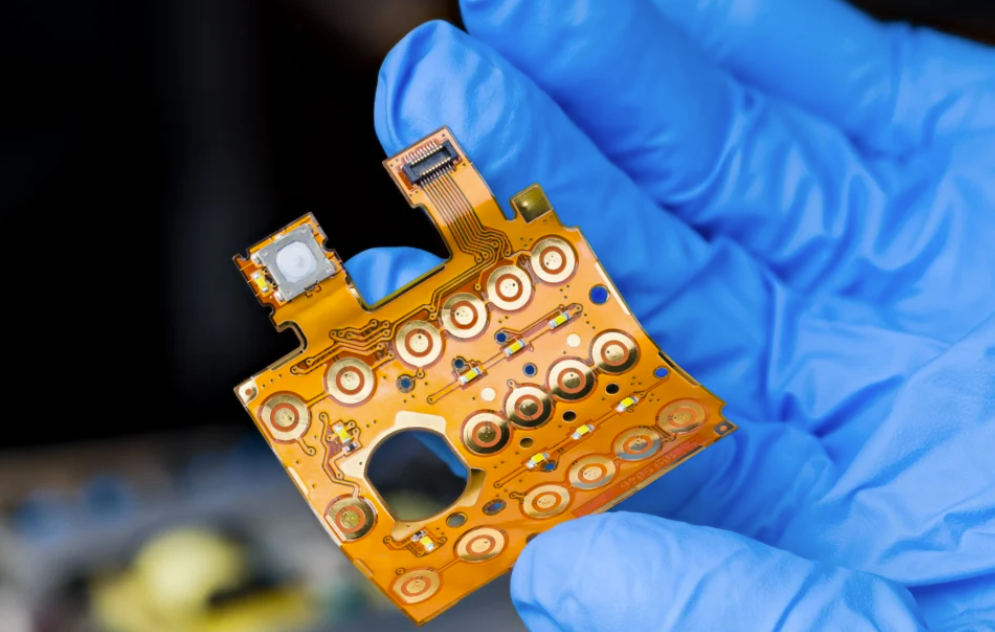
Electronic devices are no longer limited to rigid boxes with plenty of empty space inside. Wearables, compact sensors, medical equipment, automotive systems, and small consumer devices increasingly need electronics that can operate around curves, moving sections, and tightly packed components. As product shapes become more unconventional, the circuit itself has to accommodate those physical conditions rather than simply occupying a flat area inside the enclosure. This is where flexible PCB manufacture becomes increasingly relevant, giving designers more freedom when electrical connections need to follow the physical structure of a product.
The need for adaptable electronics is particularly visible in devices that move during normal use. A wearable may bend with the user’s wrist, a sensor may sit across a curved surface, or an electronic assembly may need to connect two sections that move relative to each other. A conventional rigid board can perform extremely well in fixed environments, but its physical limitations can become more noticeable when movement and curvature are part of the product’s design.
This makes flexible circuit technology interesting for more than simple miniaturization. Its value comes from the ability to combine electrical connectivity with physical adaptability. Instead of forcing every component and connection onto a fixed plane, designers can consider how the circuit should behave alongside the product itself, including where it bends, how it moves, and how different components are positioned.
Movement Is Becoming Part of Electronic Design
Traditional electronics were often designed around relatively stable operating environments. Once a circuit was assembled inside its enclosure, there was usually little expectation that the board itself would repeatedly move.
That assumption does not work for every modern product. Wearable devices, folding mechanisms, robotics, compact sensors, and certain automotive systems can experience movement as part of normal operation.
When movement becomes a fundamental part of the product, the circuit needs to be considered from a mechanical perspective as well as an electrical one. The board must connect the required components while accommodating the physical conditions surrounding it.
See also: Beyond the Facade: The Homecheck Protocol for Safeguarding Modern Real Estate Investments
Curved Products Need More Than a Flat Circuit
A rigid board naturally favors flat internal spaces. That works well when the enclosure has a conventional rectangular structure, but modern products increasingly use curved surfaces for comfort, aesthetics, ergonomics, or functionality.
A flexible circuit can follow certain curved paths without requiring the entire electronic assembly to remain flat. This can create opportunities for designers to place components in locations that would otherwise be difficult to connect.
The result is a closer relationship between product geometry and circuit layout.
Wearable Electronics Put Flexibility to the Test
Wearable technology is one of the clearest examples of electronics operating in an environment that is constantly changing.
Smartwatches, fitness trackers, health-monitoring devices, connected clothing, and other wearable systems may need to follow the contours of the body. They can also experience repeated movement throughout normal use.
A flexible circuit can help accommodate these conditions, but the design still needs to account for bend radius, material behavior, connection points, and expected movement cycles. Flexibility alone does not guarantee long-term reliability.
Repeated Bending Is Different From Simple Assembly Flexibility
There is an important distinction between a circuit that bends during manufacturing and one that is expected to bend repeatedly during operation.
A circuit may only need to fold once when it is installed inside a device. Another design may experience continuous movement every time the product is used.
Repeated bending places different mechanical demands on conductive layers and connection areas. Engineers therefore need to understand how the circuit will behave over its expected lifetime rather than simply asking whether the material can bend.
Flexible Connections Can Replace Some Conventional Routing
Small electronic systems often use wires and connectors to link components that cannot share the same rigid board.
That approach remains useful, but it also consumes physical space. Connectors require room, wires need routing paths, and additional connections can complicate assembly.
A flexible circuit can sometimes combine electrical pathways into a more compact structure. This can allow connections to travel through narrow or irregular spaces while reducing some of the routing complexity associated with separate wiring.
Robotics Creates a Natural Need for Adaptable Circuitry
Robotic systems frequently combine electronics with mechanical movement. Sensors, actuators, cameras, and control components may be distributed across parts that move relative to one another.
This creates a challenging environment for electrical connections. A conventional rigid board cannot simply follow every moving section.
Flexible circuits can provide a connection between different areas while allowing controlled movement. Their suitability depends on the required bend radius, cycle count, environmental conditions, and electrical requirements, but the basic concept fits naturally with mechanically active systems.
Automotive Systems Have Increasingly Irregular Electronic Spaces
Modern vehicles contain electronics in dashboards, seats, doors, lighting systems, control panels, sensors, and other areas throughout the vehicle.
These locations do not always provide large, flat spaces. Some components need to fit around mechanical structures or occupy narrow sections of the interior.
Flexible circuits can help address these routing challenges by allowing electrical pathways to follow available spaces. Automotive applications also introduce additional requirements involving vibration, temperature, durability, and long operating periods.
Medical Electronics Combine Compactness With Human Interaction
Medical and health-monitoring devices often need to operate close to the human body while remaining small enough to use comfortably.
Wearable sensors are particularly dependent on physical integration. The electronic structure may need to follow a curved surface or move with the user.
In such cases, the ability of a flexible circuit to accommodate certain shapes can become valuable. However, medical applications also require careful consideration of reliability, materials, manufacturing quality, and the requirements of the specific device.
Material Selection Influences More Than Flexibility
The choice of materials in a flexible circuit affects how it behaves during bending, how much mechanical stress it can tolerate, and how reliably its electrical characteristics are maintained.
Engineers may need to consider the substrate, copper construction, protective layers, adhesives, and other elements of the overall circuit structure.
The goal is not simply to make a circuit as flexible as possible. It is to achieve the appropriate balance between flexibility, electrical performance, durability, manufacturability, and the environment in which the product will operate.
Design Rules Change When the Board Can Move
Rigid PCB design has its own established rules, but flexible circuits introduce additional mechanical considerations.
Bend areas need to be planned carefully. Components may need to remain away from zones experiencing repeated flexing. Traces may require specific routing approaches to reduce mechanical stress.
This means electrical layout and mechanical design become more closely connected. A circuit cannot be evaluated only by whether the electrical connections work on a static drawing. Its physical behavior also matters.
Flexible PCB Manufacture Connects Electrical and Mechanical Engineering
The manufacturing process becomes especially important when the final circuit needs to survive movement. Material handling, layer alignment, trace construction, component attachment, and protective structures all contribute to the finished product.
For this reason, flexible PCB manufacture should be considered alongside the expected mechanical behavior of the circuit rather than treated as a later production detail.
Prototype testing can also reveal issues that are difficult to identify from electrical testing alone. A circuit may function correctly while stationary but behave differently after repeated bending or movement.
Hybrid Boards Can Offer a Practical Middle Ground
Not every electronic system needs to be completely flexible.
Some products benefit from rigid sections where processors, connectors, or larger components require structural support, combined with flexible sections that connect different areas.
Rigid-flex designs can therefore provide a combination of characteristics. The rigid sections provide stability, while flexible sections can handle routing through curved or moving areas.
This approach can be particularly useful when a product has both fixed and moving regions.
Flexibility Can Influence Product Architecture
The most interesting effect of flexible circuitry may be its influence on the product itself.
When designers know that electrical connections can occupy curved or narrow spaces, they may have greater freedom when deciding where components should sit. This can influence enclosure shape, component placement, assembly methods, and even the physical interaction between the user and the device.
The circuit therefore becomes more than an internal electrical component. It can participate in the overall architecture of the product.
Reliability Remains the Central Consideration
Greater physical freedom does not remove engineering limitations.
Flexible circuits still need to withstand the environmental and mechanical conditions expected during their operating life. Temperature, vibration, repeated bending, moisture, chemical exposure, and assembly stress can all influence reliability depending on the application.
A successful design therefore begins with understanding the actual conditions the circuit will face. Flexibility should solve a specific design problem rather than being added simply because it is available.
Future Products May Treat Circuitry as Part of Their Structure
As electronics become smaller and more integrated into everyday objects, the traditional idea of a circuit board may continue to evolve.
Future devices could contain electronic pathways that are increasingly shaped around the physical product rather than placed inside it as separate rigid components. Wearable technology, robotics, smart sensors, automotive systems, and compact medical equipment are all areas where this approach could become increasingly relevant.
The important development is not simply that boards can bend. It is that designers have more freedom to decide where electronics can exist within a physical structure.
Final Thoughts
The growing importance of flexible circuitry reflects a broader change in electronic product design. Devices are becoming smaller, more mobile, more interactive, and increasingly connected to objects or environments that do not remain stationary. Those conditions create requirements that a completely rigid circuit architecture cannot always address efficiently.
Flexible PCB technology provides another way to approach these challenges. It can allow electrical connections to follow curves, pass through constrained spaces, and connect areas that experience controlled movement. Its usefulness depends on careful engineering, appropriate materials, manufacturing quality, and realistic expectations about mechanical performance.
As product designers continue experimenting with curved, wearable, movable, and space-constrained electronics, flexibility is becoming less of an unusual feature and more of a design consideration. Flexible PCB manufacture sits at the intersection of these electrical and mechanical requirements, helping engineers think about circuitry as something that can adapt to the product rather than forcing the product to adapt entirely to the circuit.