How Custom ERP Systems Help Businesses Track Profitability by Project, Branch, or Department
Most business owners know their company is profitable. What they struggle to answer is where that profit is actually coming from.
A retail chain with twelve branches can grow overall while quietly losing money in three locations. A consulting firm can land big contracts while two projects erode the margin. A mid-size manufacturer can hit revenue targets with one division covering for another. None of this surfaces in a consolidated P&L. It gets buried.
This is exactly the visibility gap that Arobit sees when businesses come looking for better control over their numbers.
The Real Problem Is Granularity, Not Data
Standard ERP systems track performance at the organizational level. They consolidate. They aggregate. The company-wide view looks kinda clean but honestly it tells you not much about what is actually driving it.
Once a business grows past a single site, or has more than one revenue stream, that merged, consolidated glance starts to become a problem , pretty quickly.
Consider a logistics company with five regional branches. The overall margin sits at 14%. That looks acceptable. But Branch 3 runs at 8% and Branch 5 runs at 22%. Without branch-level profitability tracking in the system, that gap never surfaces cleanly. Finance teams spend hours carving up spreadsheets to find what should already be visible.
The same problem hits project-based businesses. For a construction company, an IT services firm, or a creative agency, job-level cost tracking is the difference between knowing you are profitable and knowing why.
What Custom ERP Does Differently
Off-the-shelf solutions handle common workflows reasonably well. But “common” rarely fits how a specific business actually runs.
Customised ERP software development builds the system around your cost centers, revenue categories, and project structures. The software maps to operations that already exist. You are not forcing your business into a predefined module.
Here is what that looks like in practice across three levels:
See also: Understanding the Internet of Things Technology
Project-Level Tracking
Every invoice, resource hour, and vendor payment gets tagged to a specific job automatically.
Rules set during implementation handle the tagging. No manual work required.
By the time a project closes, the system already holds the full cost picture: gross margin, labor utilization, budget variance.
Branch-Level Tracking
Intercompany transactions, shared overhead allocation, and local costs all sit in one system.
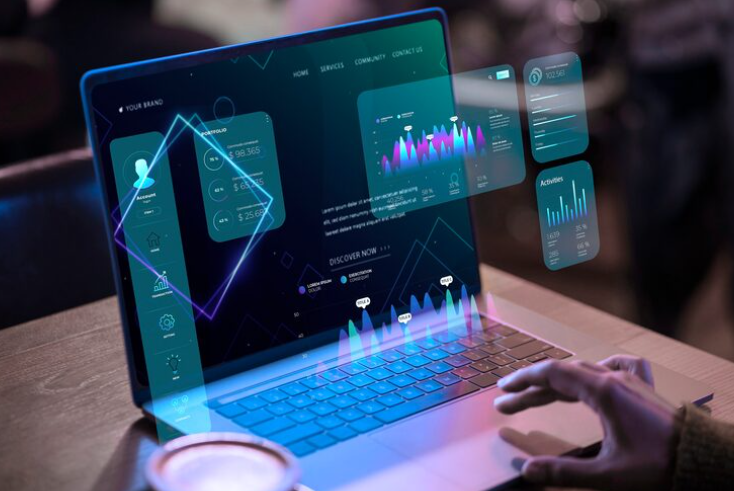
Branch managers see dashboards that reflect their actual performance.
Leadership gets reliable roll-up views without waiting for month-end reports.
Department-Level Tracking
Internal functions like logistics, procurement, or customer support get tracked as cost or profit centers, and kind of sorted that way.
This helps businesses see which departments are actually adding value, and which ones are just weighing on margin, a bit, in practice.
The Operational Shift
Real-time profitability data changes how decisions actually get made. It is not just about better reports. It is about earlier action.
A project manager who spots margin erosion mid-project has time to respond. They can renegotiate a subcontractor rate, reassign resources , or flag scope creep before it becomes a write-off. Without that visibility, the problem only shows up in the post-mortem.
A regional manager who sees her branch underperforming against peers in the same system does not need to wait for the quarterly finance review. She can see it, investigate it, and fix it.
Senior leadership stops spending days compiling reports from disconnected systems. They look at one dashboard and know which parts of the business are working.
Businesses that adopt granular ERP tracking consistently report faster decision cycles and a clearer picture of where to invest. The data was always there. A well-built custom ERP makes it accessible.
What Good Implementation Looks Like
The value of a custom ERP does not come from the software alone. It comes from how well the system reflects how the business actually runs.
This is where choosing the right custom ERP software development agency matters. The discovery phase comes before any development. It covers:
- How the business currently allocates shared costs
- Which managers need visibility into what
- Where the current system creates friction or blind spots
- How revenue gets recognized across projects or branches
A system built on a shallow understanding of the business will track the wrong things. Or it will track the right things the wrong way. Good questions during discovery prevent both.
The architecture that comes out of that process determines whether the ERP improves visibility or just adds complexity.
Scaling Without Migration
As businesses grow, financial granularity becomes more critical. Multi-entity structures, international branches, and complex project portfolios each create new visibility challenges. Generic systems are not built to handle them.
Custom ERP platforms scale with the business. New branches, project types, and departments slot into an existing framework. Teams avoid another disruptive tool migration. The system grows because it was built to grow.
Conclusion
Tracking overall revenue is straightforward. Understanding where margin is created and where it quietly disappears requires a system built for that purpose.
Custom ERP platforms give businesses the infrastructure to track profitability by project, by branch, and by department. Finance teams spend less time reconciling reports. Managers get the visibility to act early. Leadership makes decisions on real numbers.
For businesses ready to move past consolidated averages, Arobit brings the technical depth and practical industry experience to build ERP systems that fit the way the business runs.
FAQs
- Can a custom ERP handle profitability tracking across both projects and branches?
Yes, and that is one of its strongest use cases. A well-designed custom ERP tracks profitability across multiple dimensions at once: by project, by branch, by department, or any combination. The key is setting up the right cost center hierarchy during implementation. Once that is in place, transactions get tagged accurately from day one.
- How long does implementation typically take?
It depends on business complexity. A mid-size business implementing project and branch-level tracking can expect a timeline of four to nine months. That covers discovery, design, development, testing, and training. Rushing the process usually creates gaps that undermine the system later.
- Is a custom ERP only for large enterprises?
Smaller businesses often benefit the most. A twenty-person company running eight active projects needs job-level cost visibility just as much as an enterprise does. Off-the-shelf enterprise tools are overkill. SMB tools lack the granularity. A custom ERP built around a smaller operation’s actual workflows delivers exactly the visibility needed, without the unnecessary complexity.