Essential Equipment for Electrical Inspection Procedures
Electrical inspections will always play a hugely important role in maintaining safety, ensuring regulatory compliance, and pinpointing faults before they have a chance to develop into serious hazards.
Whether a given electrician or engineer is undertaking routine maintenance, scrutinising a new installation, or conducting an Electrical Installation Condition Report (EICR), they will rely on specialised electrical inspection equipment. Such tools are crucial for verifying electrical systems’ condition and performance.
Using the correct inspection tools is, of course, important for achieving accuracy. However, such a practice is also central to professionals’ efforts to comply with pertinent standards, such as BS 7671 (also commonly referred to as the “IET Wiring Regulations”) in the UK.
Why Does It Matter So Much to Use the Right Electrical Inspection Equipment?
Such factors as environmental conditions, ageing components, mechanical damage, and/or poor workmanship can all contribute to the gradual deterioration of electrical installations.
This underlines the importance of technicians being able to reach for inspection equipment that they can trust to help them identify issues such as insulation damage, inadequate earthing, faulty protective devices, and wiring defects. In the absence of early identification and intervention, these problems could go on to compromise safety.
Many electrical tests are also legally mandatory during installation verification, periodic inspection, and maintenance activities.
If professionals can be sure of the tools they use giving accurate results, they can have faith that the systems they have tested comply with safety standards and are functioning as intended.
5 Crucial Pieces of Equipment for Electrical Inspections
Electrical inspection procedures during the 2020s typically depend on a combination of visual checks and electrical testing using dedicated instruments.
Here are some of the most used and indispensable tools:
Multifunction Testers (MFTs)
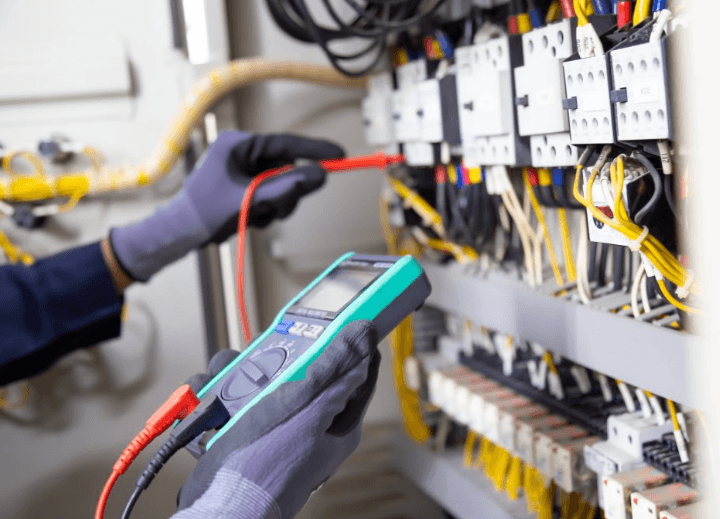
As far as installation testing and EICRs are concerned, a high-quality MFT will often be the single most important piece of kit.
The capabilities of the leading such testers encompass continuity and resistance testing, insulation resistance, loop impedance (Zs), Residual Current Device (RCD) testing, and more.
Insulation Resistance Testers (Megohmmeters)
Also often called “Meggers”, these specialised tools are essential for checking the standard of insulation in cables, motors, and appliances.
This instrument applies a high DC voltage and measures the tiny leakage current. This enables it to calculate the resistance in megaohms, thereby helping professionals pick out damaged or degrading insulation.
Portable Appliance Testers (PAT Testers)
Businesses, landlords, and service providers in the UK have legal duties to maintain electrical equipment in a safe condition. PAT testing is a widely used method of demonstrating compliance with those duties and identifying potentially unsafe appliances.
When the specialised instrument known as a PAT tester is connected to an appliance, it automatically runs through various diagnostic checks. These typically include an earth continuity test, an insulation resistance test, a lead polarity test, and operational and leakage tests.
Voltage Testers and Proving Units
The use of two-pole voltage indicators designed in accordance with the UK Health and Safety Executive (HSE)’s GS38 guidance is widely regarded as best practice for proving dead on low-voltage systems.
These devices need to be proven before and after use with a dedicated proving unit.
Earth Loop Impedance and Earth Testers
Loop impedance testers verify that fault currents will trip protective devices sufficiently quickly. Earth resistance testers, meanwhile, are used to assess grounding systems, as is crucial for properties with a “Terra-Terra” (TT) earthing system.
See also: Understanding the Pace of Technological Advancement
Final Thoughts: The Right Tools Can Truly Make All the Difference
When professionals invest in quality electrical inspection equipment from trusted suppliers, they will be putting themselves in a strong position to improve safety, minimise downtime, and ensure installations adhere to stringent standards.
Whether the individual in question is a sole trader carrying out domestic EICRs, an industrial electrician, or a member of a facilities team managing PAT schedules, having the right instruments to hand will help them achieve the right results, faster.