How 5 Axis Robot Systems Bring Coordinated Precision to Complex Manufacturing Tasks
Manufacturing becomes considerably more demanding when a component cannot be processed effectively from a single direction. Parts with curved surfaces, angled features, recessed areas, irregular profiles, or multiple machining requirements often need controlled movement across several directions to reach the required positions. This is where a 5 axis robot can provide an important advantage. By coordinating movement across multiple axes, robotic systems can approach workpieces from different orientations while maintaining a controlled relationship between the tool, component, and working area. The result is greater flexibility for applications where a conventional linear movement system may struggle to reach complex features efficiently.
The value of multi-axis robotics is not limited to the number of directions in which an arm can move. What matters is how those movements are coordinated. A robotic system may need to position a tool precisely, maintain a consistent angle against a surface, follow a complicated path, or reposition a component without requiring repeated manual intervention. These capabilities can be useful in machining, finishing, welding, cutting, inspection, material handling, and other industrial applications. The exact benefits depend on the robot’s configuration, end effector, programming system, payload requirements, and production environment.
Complex manufacturing also places greater demands on consistency. A process that depends heavily on manual repositioning can introduce variation between operators or production cycles. Robotic movement can provide repeatable positioning when the system has been correctly programmed and calibrated. However, automation does not remove the need for good process planning. Workpiece fixtures, tooling, programming, safety systems, maintenance, and operator oversight all influence the final result. Multi-axis robotics works best when these elements are designed as one coordinated production process.
Complex Geometry Changes the Requirements of Automation
Simple components can often be processed with straightforward linear movements, but increasingly sophisticated products contain features that are difficult to access from one fixed orientation. Curved edges, angled surfaces, cavities, and compound shapes can require the working tool to approach from several directions.
A multi-axis robotic system provides greater freedom to reposition the tool or workpiece during a process. Instead of stopping production to manually change the orientation, the programmed robot can follow a sequence of coordinated movements. This can reduce interruptions and make certain complicated operations more practical for automated production.
The geometry of the part still needs to be analyzed carefully. A robot may have multiple axes but still encounter limitations caused by reach, joint configuration, collision risks, or restricted access. Effective automation begins with understanding the component and identifying the movements required to complete the task.
Coordinated Movement Is the Real Advantage
Having multiple axes does not automatically guarantee precision. The axes need to work together according to a carefully developed motion program. Each movement can influence the position and orientation of the end effector, meaning even a small programming error can affect the final path.
Modern robotic control systems can coordinate these movements through programmed trajectories and positional data. The robot can be instructed to move through specific points while maintaining a required orientation or speed. For applications such as surface finishing or controlled tool movement, maintaining a consistent relationship with the workpiece can be particularly important.
Applications That Benefit From Multi-Axis Movement
The flexibility of multi-axis robotics makes the technology suitable for a wide variety of industrial processes.
- Machining support: Robots can position tools or components around difficult geometries.
- Welding: Multiple orientations can help maintain appropriate access to complex joints.
- Cutting and trimming: Controlled movement can follow curved or irregular profiles.
- Surface finishing: Robotic tools can maintain more consistent contact with selected surfaces.
- Inspection: Sensors or cameras can be positioned around components to examine different areas.
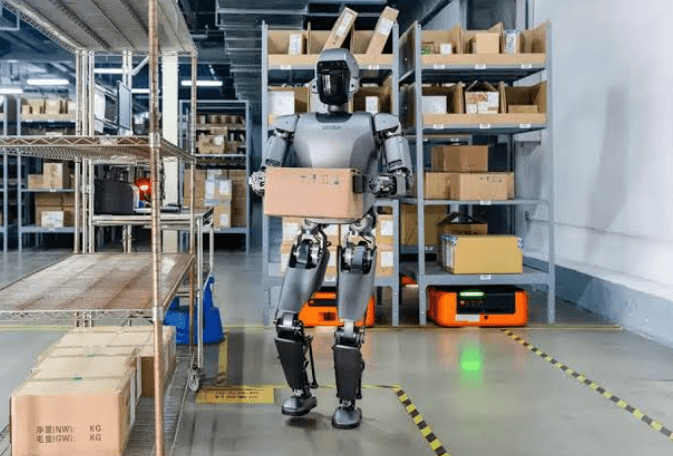
- Material handling: Parts can be picked, rotated, and positioned according to programmed sequences.
- Assembly: Components can be approached from different orientations during automated joining.
- Coating and dispensing: Tools can follow controlled paths across irregular surfaces.
The suitability of the robot depends on the exact task. Payload, reach, speed, repeatability, tooling, and environmental conditions all need to match the application. A system designed for lightweight inspection work may have very different requirements from one handling heavy components.
Programming Determines How Much the Robot Can Achieve
A capable robot still depends on effective programming. The motion path needs to account for the component geometry, tool orientation, travel speed, acceleration, approach angles, and potential collisions. Poorly planned movements can reduce efficiency or create unnecessary stress on equipment.
Programming can also influence production time. A path that technically completes the task may contain unnecessary movements or excessive repositioning. Optimizing the trajectory can reduce cycle time while maintaining the required process quality. For repetitive manufacturing, even small improvements to each cycle can become significant when multiplied across thousands of parts.
Tool Selection Is Just as Important as Robot Selection
The robotic arm provides movement, but the end effector determines what the system actually does. Welding torches, cutting tools, grippers, inspection sensors, dispensing heads, polishing tools, and other attachments can be used depending on the application.
Tool weight must be considered alongside the robot’s payload capability. A large or heavy end effector can reduce the available capacity for the workpiece or affect the robot’s movement characteristics. Tool dimensions also influence reach and collision clearance. Selecting the robot and end effector together creates a more realistic picture of what the complete system can accomplish.
Fixtures Provide the Foundation for Repeatable Work
Even the most advanced robotic arm needs a stable and predictable workpiece position. Fixtures hold components in known locations and help ensure that the programmed path corresponds to the actual part.
Poor fixture design can introduce movement, vibration, or positioning errors that affect the process. A good fixture should secure the workpiece without interfering with the robot’s access to the required surfaces. For products that change frequently, flexible fixturing may also help reduce setup time and support different production configurations.
Accuracy Depends on the Complete System
Robot specifications often include repeatability figures, but real-world accuracy depends on more than the robotic arm itself. Calibration, tooling, fixtures, workpiece variation, temperature, programming, and mechanical condition can all influence the final result.
Regular calibration can help maintain the relationship between programmed coordinates and the physical workspace. If a sensor, tool, fixture, or robot position changes, the system may require adjustment. Monitoring these factors is particularly important for applications where small positional differences can affect product quality.
Production Flexibility Can Be a Major Benefit
Manufacturers increasingly need to produce different components without completely redesigning their production lines. A programmable multi-axis robot can offer flexibility because the same basic platform may be adapted to different tasks through new programs, tooling, or fixtures.
This does not mean every robot can instantly switch between unrelated applications. Setup requirements, tooling changes, programming, safety validation, and production testing may still be necessary. However, a flexible robotic platform can provide more options than dedicated machinery when product variations are expected.
See also: How a Business Attorney Greenville SC Can Help Your Business
Safety Must Be Designed Around Movement
More axes mean more possible movement paths, which makes safety planning especially important. The robot’s working envelope needs to be clearly defined, and people should not be exposed to uncontrolled movement during operation.
Depending on the installation, protective fencing, safety scanners, interlocked access points, emergency stops, and other safeguards may be appropriate. The specific safety configuration should reflect the robot, task, workspace, and applicable regulations. Safety should be incorporated into the system design rather than added after the robot has already been installed.
Maintenance Protects Motion Accuracy
Robotic systems depend on mechanical joints, motors, drives, controllers, sensors, cables, tooling, and other components. Wear or contamination can gradually affect performance even when the robot continues to operate.
Preventive maintenance helps identify problems before they cause significant production disruption. Inspection schedules should cover the robot and the associated equipment rather than focusing only on the arm. Tooling, fixtures, cables, sensors, and safety devices can all influence system performance.
Human Expertise Still Has a Role
Automation can reduce repetitive work, but skilled personnel remain essential for programming, setup, maintenance, troubleshooting, quality checks, and process optimization. Operators and technicians need to understand the robot’s capabilities and limitations so that problems can be identified quickly.
Human oversight is particularly valuable during new product introduction. A programmed path may need adjustment after testing reveals unexpected interference, tool access limitations, or changes in cycle time. Combining robotic repeatability with human process knowledge can produce a more effective manufacturing system.
Final Thoughts
Multi-axis robotics provides manufacturers with a practical way to approach components and processes that require more than simple linear movement. By coordinating several axes, robotic systems can reposition tools and workpieces, follow complicated paths, and reach surfaces that would otherwise require repeated manual adjustment. These capabilities can support machining, welding, finishing, inspection, handling, assembly, and other demanding production activities.
A properly integrated 5 axis robot is most effective when the entire application is designed around its movement capabilities. Programming, tooling, fixtures, calibration, safety, maintenance, and operator expertise all contribute to the final outcome. Rather than viewing the robot simply as an automated arm, manufacturers can treat it as part of a coordinated production system designed to improve precision, flexibility, and repeatability across complex manufacturing tasks.