24/7 Water Damage Restoration: What to Expect
Water damage can happen without warning. A burst pipe, overflowing appliance, sewage backup, heavy storm, or sudden leak can leave a home or business dealing with standing water in a matter of minutes. When this happens, waiting until the next business day can allow moisture to spread and cause more damage.
This is where 24/7 water damage restoration in NJ becomes important. Emergency restoration professionals can assess the damage, remove standing water, dry affected areas, identify hidden moisture, and help prevent further problems. The goal is to begin controlling the damage as soon as it is safe to do so.
Moisture can move into flooring, walls, ceilings, insulation, and other materials that may not appear damaged from the surface. According to the U.S. Environmental Protection Agency, wet areas and materials should be dried within 24 to 48 hours when possible to help prevent mold growth.
A professional response focuses on the first critical steps: stopping the water source, extracting standing water, starting structural drying, and checking for moisture that may otherwise go unnoticed. Acting early can help limit secondary damage and make the restoration process more manageable.
What Is 24/7 Water Damage Restoration?
24/7 water damage restoration is an emergency service designed to respond to water-related property damage at any time of day or night. Restoration professionals help control the damage, remove excess water, dry affected areas, and determine what materials can be cleaned, restored, or need replacement.
Water emergencies do not follow normal business hours. A pipe can burst overnight, a water heater can fail on a weekend, or heavy rain can cause flooding in the middle of the night.
A 24-hour water damage restoration service gives property owners access to professional assistance when waiting could allow the damage to spread.
The restoration process is not simply about pumping water out of a building. Proper restoration involves moisture assessment, water extraction, structural drying, cleaning, and evaluation of affected materials.
The ANSI/IICRC S500 Standard for Professional Water Damage Restoration provides procedures and precautions for restoration work in residential, commercial, and institutional buildings. It covers areas such as inspection, water damage principles, microbiology, drying technology, equipment, safety, structural restoration, HVAC restoration, and contents evaluation.
When Should You Call for Emergency Water Damage Restoration?
You should contact a professional restoration company when water has entered your property and you cannot safely or completely remove and dry it yourself.
Some situations are more urgent than others. A small clean-water spill may require a different response from a sewage backup or major flood.
Emergency water damage restoration may be needed after:
- Burst or frozen pipes
- Water heater failures
- Washing machine or dishwasher leaks
- Toilet or sewage backups
- Storm or flood damage
- Roof leaks
- Overflowing sinks or bathtubs
- HVAC or appliance leaks
- Major plumbing failures
The source of the water matters because different types of water can present different risks. Floodwater or sewage-contaminated water may contain harmful microorganisms or other contaminants and should not be treated like a simple clean-water leak.
If there is standing water near electrical equipment, outlets, or electrical panels, do not enter the area until it is safe. Electrical hazards can make water damage cleanup dangerous.
See also: 7 Reasons US Universities Are Quietly Outsourcing HR and Payroll in 2025
What Happens When a Restoration Team Arrives?
The first step is usually an assessment of the property.
A restoration professional needs to understand where the water came from, how far it has traveled, how long the materials have been wet, and which areas may contain hidden moisture.
The technician may inspect floors, walls, ceilings, cabinets, insulation, and other affected materials. Moisture detection equipment can help identify water that is not visible on the surface.
This assessment helps create a restoration plan instead of relying only on what can be seen.
The team may also document the condition of the property. This information can be useful when working with an insurance company, especially after a significant water loss.
The IICRC S500 standard includes inspection, preliminary determinations, pre-restoration evaluations, project documentation, and risk management as parts of professional water damage restoration.
Step 1: Stop the Source of the Water
Water removal should not begin without considering where the water came from.
If a pipe is still leaking, for example, removing water from the floor will not solve the problem. The active source needs to be stopped first.
Depending on the situation, this may involve shutting off a water supply or having a plumber repair the failed pipe, appliance, fixture, or other source.
Restoration companies may handle some aspects of water source control, while specialized plumbing or other professionals may be needed for the underlying repair.
The IICRC S500 standard notes that determining and correcting the underlying cause of water intrusion is generally the responsibility of the property owner, although the owner may contract with a restorer or another specialist to perform that work.
Once the source is controlled, the restoration team can focus on removing and drying the affected areas.
Step 2: Remove Standing Water
The next major step is water extraction.
Professionals use commercial extraction equipment to remove standing water from floors and other affected surfaces. The equipment used depends on the amount of water and the materials involved.
Removing visible water is important, but it is only part of the process.
Water can remain beneath flooring, inside walls, under cabinets, beneath carpet padding, and in other concealed spaces. These areas may continue to release moisture even after the surface looks dry.
That is why professional restoration involves both water extraction and moisture monitoring.
The faster excess water is removed, the sooner the drying process can begin.
Step 3: Dry the Structure and Contents
After water extraction, the restoration team works to reduce remaining moisture.
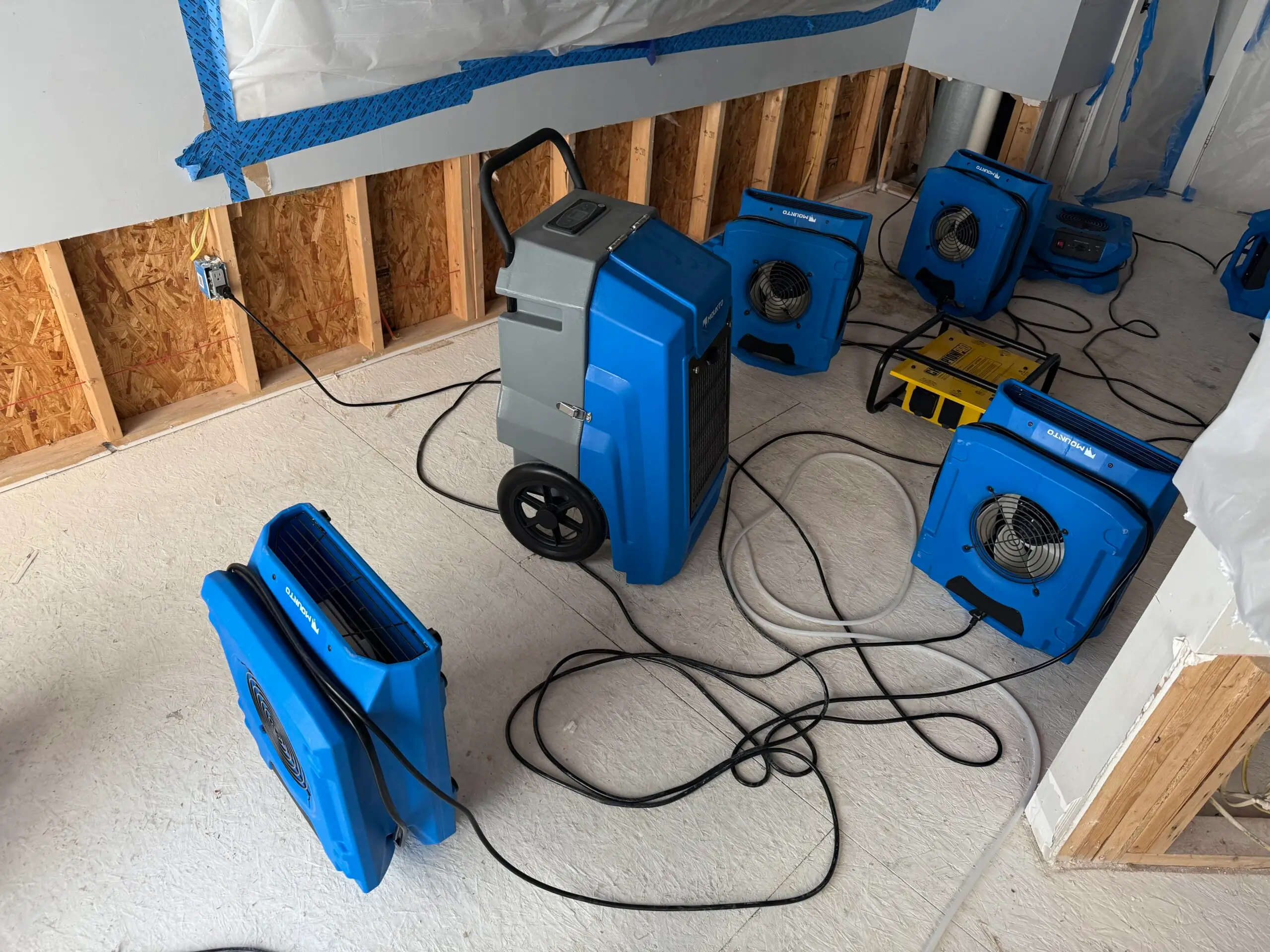
Commercial air movers and dehumidifiers are commonly used to increase evaporation and remove moisture from the air. Technicians may also monitor moisture levels in affected materials to determine whether drying is progressing properly.
The EPA explains that increasing air circulation and using dehumidifiers can help dry wet buildings and furnishings. It also recommends drying water-damaged areas and items within 24 to 48 hours when possible to help prevent mold growth.
Drying may take longer than expected if water has entered porous materials or hidden spaces.
For example, drywall, wood, carpet, insulation, and upholstered furniture can hold moisture even after visible water has been removed.
This is why simply placing a household fan in a flooded room may not be enough for significant water damage.
Why Is the First 24 to 48 Hours Important?
The first 24 to 48 hours can be important because moisture creates conditions that support mold growth.
The EPA identifies moisture control as the key to mold control and recommends drying wet materials within 24 to 48 hours after a leak or spill when possible.
This does not mean mold will automatically appear after a specific number of hours. Conditions vary based on temperature, humidity, material type, and the amount of moisture present.
However, delaying water extraction and structural drying can make the situation more difficult.
Water may also cause materials to swell, warp, stain, weaken, or deteriorate. Flooring can separate, wood can change shape, and drywall can absorb significant amounts of moisture.
Prompt action can help limit the extent of secondary damage.
How Do Professionals Find Hidden Water?
Visible water is only one part of a water damage problem.
Moisture can travel through building materials and enter areas that are difficult to see. A wall may look normal on the outside while moisture remains inside.
Restoration professionals use moisture meters and other inspection tools to identify affected areas and monitor drying.
This helps technicians determine whether materials are actually drying rather than relying only on how the surface looks or feels.
Hidden moisture is particularly important around:
- Walls and wall cavities
- Flooring and subfloors
- Cabinets
- Ceilings
- Baseboards
- Carpet padding
- Insulation
- Areas around plumbing fixtures
Identifying hidden moisture can help prevent a property owner from assuming the problem is resolved too early.
What Happens to Water-Damaged Materials?
Not every water-damaged material needs to be removed.
The decision depends on the type of material, how long it remained wet, the type of water involved, the extent of contamination, and whether the material can be properly cleaned and dried.
Hard, non-porous surfaces are often easier to clean and dry than porous materials.
Carpet, padding, drywall, insulation, wood products, furniture, and other absorbent materials may require more careful evaluation.
The EPA notes that materials exposed to contaminated floodwater can require extensive removal and that materials that cannot be thoroughly cleaned and dried may need to be discarded.
A professional assessment can help determine what can realistically be restored and what should be removed.
How Does Water Damage Restoration Address Mold Risk?
Mold prevention starts with controlling the moisture problem.
Mold spores are naturally present in the environment, but they can begin growing indoors when they land on wet materials. The EPA states that there is no practical way to eliminate all mold spores indoors, so moisture control is the key to preventing mold growth.
This is why water damage restoration and mold prevention are closely connected.
A restoration team should not simply clean visible water and leave damp materials behind. The affected structure needs to be dried properly and the source of the moisture needs to be addressed.
If mold is already present, additional remediation may be necessary. Water damage restoration and mold remediation are related services, but they are not exactly the same process.
What About Sewage or Contaminated Water?
Sewage backups and contaminated floodwater require additional caution.
Water from a sewage backup may contain bacteria, viruses, and other contaminants. Floodwater can also carry soil, chemicals, microorganisms, and other substances into a building.
The EPA warns that floodwaters can contain biological and chemical contaminants and recommends appropriate precautions during cleanup.
Property owners should avoid treating contaminated water like a normal household spill.
In these situations, professional water damage restoration services can help assess the affected areas, remove contaminated materials when necessary, and follow appropriate safety and cleanup procedures.
Will Water Damage Restoration Remove Odors?
Water damage can leave behind unpleasant or musty odors, especially when moisture remains in porous materials.
Odor control should begin with finding and removing the source of the moisture. Simply masking the smell with an air freshener does not solve the underlying problem.
The EPA notes that musty odors can be associated with mold growth and should be investigated.
Once wet materials are properly dried and affected materials are cleaned or removed as needed, odor problems can often be addressed more effectively.
How Long Does Water Damage Restoration Take?
There is no fixed timeline for every water damage project.
A small localized leak may be resolved relatively quickly, while extensive flooding can require several stages of drying, cleaning, repairs, and material replacement.
The timeline depends on factors such as:
- The amount of water
- The source of the water
- How long the property remained wet
- The affected building materials
- The size of the affected area
- Whether hidden moisture is present
- Whether mold or contamination is involved
Professional technicians should explain the expected process after assessing the property rather than promising a fixed completion time before seeing the damage.
What Should You Do Before Help Arrives?
Your safety should come first.
If it is safe to do so, stop the water source and move valuable items away from affected areas. Take photographs of the damage before cleanup if possible, especially if you plan to file an insurance claim.
Do not enter standing water if electrical hazards may be present. Also avoid entering areas with sewage contamination or significant structural damage unless they have been determined to be safe.
The EPA recommends documenting the home and belongings and contacting your insurance company before beginning cleanup after a flood.
Avoid throwing away heavily damaged items before documenting them if your insurer needs evidence of the loss.
What Should You Expect From Professional Water Damage Restoration Services?
A professional restoration company should provide a clear process rather than simply removing visible water.
You can generally expect an assessment, water extraction, structural drying, moisture monitoring, cleaning or treatment of affected materials, and recommendations for repairs or replacement where necessary.
Professional restoration should also account for safety and documentation.
The IICRC S500 standard covers professional water damage restoration procedures, equipment, drying technology, safety, structural restoration, contents evaluation, and project documentation.
This provides an industry framework for approaching water damage in a systematic way.
The exact services will depend on the property and the type and extent of the damage.
Why 24/7 Availability Matters After Water Damage
A water emergency can happen at any time. Waiting until regular business hours may allow water to remain in flooring, drywall, insulation, or other materials for several additional hours.
24/7 water damage restoration in NJ gives property owners a way to begin addressing an emergency outside normal working hours.
The purpose of round-the-clock service is not simply convenience. It allows assessment, water removal, and drying efforts to begin sooner when conditions require immediate attention.
This can be especially important after major plumbing failures, flooding, sewage backups, and severe storms.
Get Help Before Water Damage Spreads
Water damage rarely stays limited to the exact place where the leak started. Moisture can move through floors, walls, ceilings, and other materials, creating problems that are not immediately visible.
Acting quickly can help limit secondary damage and reduce the conditions that allow mold to develop. The EPA recommends drying water-damaged areas and items within 24 to 48 hours when possible, while the IICRC S500 provides professional guidance for inspection, extraction, drying, safety, and restoration procedures.
If you are dealing with flooding, a burst pipe, sewage backup, or another water emergency, contact NSH Home Services for 24/7 water damage restoration in NJ. The team can assess the affected property, remove standing water, begin structural drying, and help you take the next steps toward restoring your home or business.