Is a Balcony Solar Storage System Right for You? Honest Questions to Ask
A balcony solar setup sounds attractive. It is small, it is simple, and it lets people without a roof make their own electricity. But not every balcony and not every household is a good fit. Before you spend money, it is worth asking yourself some honest questions. This article helps you decide whether a balcony solar storage system matches your situation.
Question one: how much sun does my balcony really get?
Solar panels make power from sunlight, so sunlight is everything. Spend a day watching your balcony. Note when the sun arrives, when it leaves, and whether shadows from buildings, walls or trees fall on it. A balcony with several hours of direct sun is a good candidate. A balcony that stays shaded most of the day will give disappointing results no matter how good the equipment is.
Direction matters too. In the northern hemisphere, a south facing space generally gets more sun than a north facing one. East and west facing balconies can still work, since they catch morning or afternoon light, but output will usually be lower than a well placed south facing space.
Question two: what do I actually want to power?
Make a short list of the things you want to run. Lights, fans, phone and laptop chargers, a Wi Fi router and a television are all reasonable for a small system. Large appliances are a different story.
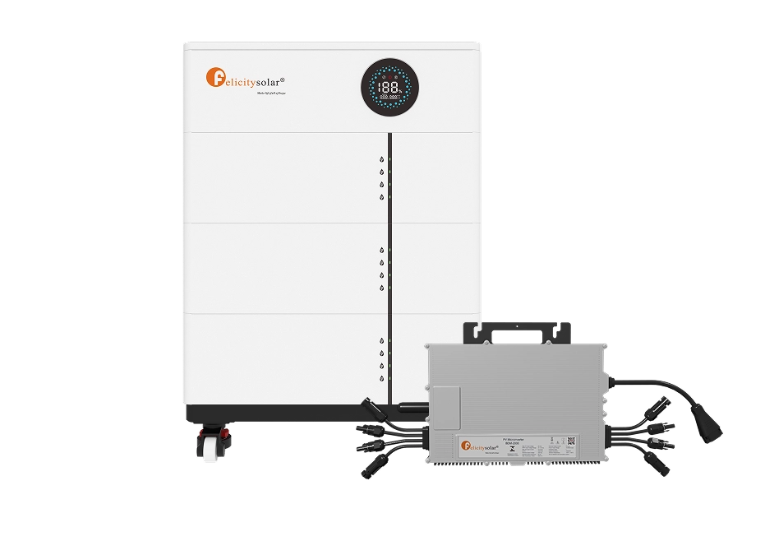
Felicitysolar’s balcony solution is described as combining an 800W micro inverter with a 2.56kWh lithium battery. That gives you a feeling for the scale. The inverter figure limits how much you can run at one moment, and the battery figure limits how long you can run it. If your list adds up to far more than 800 watts at once, a balcony system alone will not carry it.
Question three: am I allowed to install it?
This question is often forgotten. If you rent, you need your landlord’s permission. If you own an apartment in a shared building, there may be rules about what can be fixed to the outside of the building, and there may be limits for appearance or safety. Check these before buying anything. Also find out whether your area has rules about connecting small solar devices to household wiring. If you are unsure, speak to a licensed electrician.
Question four: do I value backup power or savings more?
A battery gives you two possible benefits. One is using more of your own solar energy, because you can store the daytime surplus for evening use. The other is some backup during an outage for light loads. Think about which matters more to you, because it affects how you will use the system. If backup is your main goal, you may want to keep some battery charge in reserve instead of draining it each night.
Question five: how much support will I have?
A small system still needs manuals, clear instructions and someone to ask when something is unclear. Felicitysolar’s website offers a download center with manuals and datasheets, a video gallery covering installation, commissioning and operation, and a service system for contacting its engineers. Having these resources does not make a purchase automatically right, but it does show that help exists after the sale.
You should also be able to confirm that the product is genuine. The company describes an anti counterfeiting page where you can verify a product using a 16 digit code.
Question six: will my needs grow?
Today you may only want to charge phones and run a fan. Next year you may want more. Felicitysolar’s page lists scalability among the features of its balcony solution, though it does not give details on how expansion works. If growth matters to you, ask the supplier directly how more capacity can be added and what the limits are.
Reading product claims carefully
When you read any product page, separate the specific facts from the general words. A specific fact is something like an 800W inverter or a 2.56kWh battery. General words such as smart management or safety features are only a starting point. Ask for the exact meaning. What protections are included? How does the monitoring work? What is the warranty? A trustworthy supplier will answer plainly.
So, is it right for you?
A balcony system is a good match if you have a sunny balcony, modest electricity needs, permission to install, and a wish to start small with clean energy. It is a poor match if your balcony is mostly shaded, if you hope to run heavy appliances, or if your building does not allow it.
There is no shame in deciding that it is not for you. The point of asking these questions is to spend your money wisely. If your answers are mostly positive, a balcony system could be a sensible and satisfying first step.