Inside a Modern Graphite Factory: Machines, Measurement and Quality Control
Most people only see graphite as a finished part. Few see how a block of raw material becomes a precise crucible, plate or ring. Looking inside a graphite factory shows how much care and equipment go into the process. This article describes the kind of operations a modern factory runs, using the facility information published by Haoxing Graphite.
The size of the site
Haoxing states that its production base covers 20,000 square meters. It describes the site as a high tech graphite manufacturing base and says it has invested in modern manufacturing infrastructure to support precision, quality and consistency. A larger site does not automatically guarantee quality, but space matters because graphite machining needs room for material storage, machining lines, inspection areas and packing.
From raw material to shape
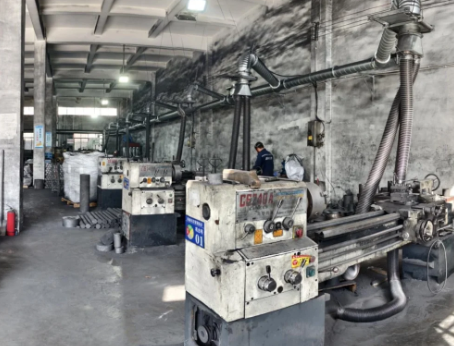
Graphite usually starts as large blocks or other basic forms. These are cut and machined into the shapes a customer needs. Haoxing says its factory is equipped with a wide range of CNC lathes, milling machines and drilling equipment. CNC stands for computer numerical control, which means the machine follows programmed instructions. This allows the same part to be repeated accurately, batch after batch, and makes complex shapes possible.
The company describes this as a vertical integration of research and development with high capacity production. In plain words, the people who design and improve the parts work close to the people who make them. This can speed up problem solving, since changes can be tested quickly.
Why graphite machining needs care
Graphite is easy to cut compared with many metals, but it is also brittle. The wrong tool or feed rate can chip an edge. Machining also produces fine dust, so a well run factory needs dust collection and clean working practice for the safety of workers and the quality of parts. Skilled operators and good tooling matter just as much as the machines themselves.
Measuring what was made
Making a part is only half the job. The other half is proving that it meets the drawing. Haoxing lists three important inspection tools. A coordinate measuring machine, often called a CMM, checks dimensions and shapes with a very small margin of error. An airtightness tester checks whether a part leaks, which matters for items used in vacuum or gas conditions. A hardness tester checks the hardness of the material, which helps confirm consistency from batch to batch.
When you buy from any factory, ask which of these checks are done and whether results are recorded. Parts for critical uses should come with an inspection report.
Quality systems
A factory also needs a system around its machines. Haoxing states that it passed ISO9001 quality management system certification in 2021, and that this led to a comprehensive upgrade of its quality system. ISO9001 is an international standard for quality management. It does not prove that every single part is perfect, but it shows that processes are documented and reviewed.
The company also says it was recognized as a National High tech Enterprise in 2023 and that several technology patents have been authorized. Its website displays utility model patent certificates and a patent certificate for a graphite ring.
Product range at the factory
A factory with flexible equipment can make many items. Haoxing lists graphite plates, rods, blocks, molds, rotors, crucibles, bearings, rings and tubes, and its website also shows graphite impellers, heating elements and ceramic refractory materials. Having these items made on one site can simplify purchasing and communication for customers who need several types of parts.
Packing and shipping
The final stage is protecting the finished parts. The company says that products are packed in strong plywood boxes without fumigation, with foam or similar shock absorbing material inside to protect against jolts and vibration during sea or air transport. It also says it delivers to more than 50 countries with the help of logistics partners.
Visiting a factory
The best way to understand a supplier is to see it. Haoxing offers to schedule a factory tour and also provides a video tour on its website. If you cannot travel, ask for a live video call that shows the machines, the inspection area and the packing area. Look at how clean and organized the site is, how parts are stored and whether measurement equipment appears in regular use.
What to take away
A good graphite factory combines machines, skilled people, measurement tools and a quality system, and it ships parts with care. When you evaluate a factory, ask about each of these areas and ask to see evidence. Direct dealing with a factory can offer benefits such as customization and clear communication, but only if the factory is open about how it works. Choose one that is happy to show you.