How to Build a Content Framework That Supports Every Stage of the Customer Journey
A lot of businesses have content for awareness and content for closing deals. What’s often missing is anything connecting the two.
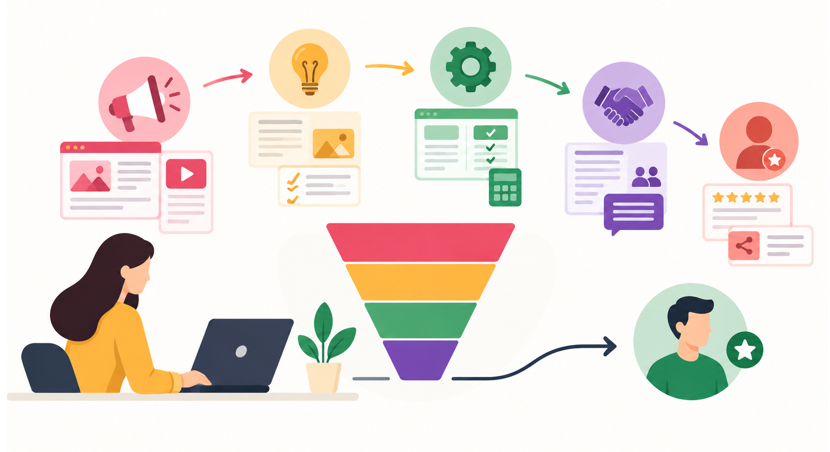
A solid content framework maps content deliberately to each stage a buyer moves through, rather than treating every piece as a standalone effort. Without one, businesses end up with gaps: strong top-of-funnel content but nothing to support a prospect who’s already interested and comparing options.
This is exactly the kind of structure strategic content services tend to bring, connecting content decisions to where buyers actually are, not just what topics sound interesting.
Let’s break down what a working framework actually looks like.
Why Random Content Leaves Gaps
Here’s the thing: without a framework, content usually reflects whatever felt urgent when it got written, not a deliberate plan.
The result is predictable. A business might have plenty of blog posts explaining industry basics but nothing addressing specific objections a prospect raises right before deciding. Or detailed case studies exist, but nothing simple enough for someone just discovering the problem.
- Gaps at any stage can stall a prospect’s progress toward a decision.
- Overlapping content at one stage wastes effort while other stages stay thin.
- Sales teams often notice these gaps before marketing does, through lost deals.
Honestly, most businesses only notice the gaps once a deal stalls for a reason content should have already addressed.
The Three Core Stages Most Frameworks Cover
A working content framework typically organizes around three broad stages, even if the specific labels vary by business.
- Awareness: The buyer recognizes a problem but hasn’t identified solutions yet.
- Consideration: The buyer is actively comparing approaches or vendors.
- Decision: The buyer needs specific reassurance to move forward confidently.
Quick summary: This kind of structure maps distinct content types to awareness, consideration, and decision stages, so nothing gets left unsupported.
Matching Content Types to Each Stage
Different stages call for genuinely different content, not just the same message reworded.
What Tends to Work Best at Each Stage
- Awareness: educational articles, guides, and explainer content addressing the core problem.
- Consideration: comparisons, buyer’s guides, and content addressing specific alternatives.
- Decision: case studies, detailed FAQs, and content addressing objections directly.
Mismatching content to stage, like pitching hard in awareness-stage content, tends to push prospects away rather than forward.
Auditing Existing Content Against the Framework
To be completely fair, most businesses don’t need to start from zero. An audit usually reveals which stages already have decent coverage and which are quietly empty.
Mapping existing content against the three stages makes gaps obvious fast. It’s often surprising how much content clusters at one stage while another gets almost nothing.
Note: An honest content audit against the framework typically reveals one stage with strong coverage and another nearly empty, guiding where to focus next.
Connecting the Framework to Sales
A content framework works best when sales teams have input into it. They talk to prospects directly and know exactly which objections and questions come up repeatedly.
Building that feedback loop, sales flagging recurring questions, marketing turning them into decision-stage content, keeps the framework grounded in real buyer behavior rather than assumptions.
Believe it or not, this collaboration is one of the most underused resources in content planning, even though it’s often free and readily available.
Keeping the Framework Flexible Over Time
Buyer behavior shifts. New objections emerge as the market changes or competitors adjust their positioning. A framework built once and never revisited eventually stops reflecting reality.
Reviewing the framework periodically, checking whether stage definitions and content types still match how buyers actually behave, keeps it useful instead of becoming an outdated reference nobody follows.
Building the Framework Without Overcomplicating It
Speaking of which, a working framework doesn’t need to be elaborate to be useful. A practical starting point:
- List out your current content and roughly tag each piece by stage.
- Identify which stage has the thinnest coverage right now.
- Talk to sales about recurring objections that content isn’t currently addressing.
- Plan two or three pieces specifically targeting the weakest stage first.
Take my word for it: a simple framework applied consistently beats an elaborate one that sits unused after the planning meeting.
FAQs
1. What’s the difference between a content framework and a content calendar?
A content framework defines how content maps to buyer stages and content types. A content calendar schedules specific publishing dates, usually built after that structure is in place.
2. How many stages should a content framework include?
Three stages, awareness, consideration, and decision, work well for most businesses. Some add more granular sub-stages, but three keeps things practical and easy to apply.
3. Should sales teams be involved in building this out?
Yes, ideally. Sales conversations reveal real objections and questions that content should address, especially at the consideration and decision stages where specificity matters most.
4. How often should a content framework be updated?
Reviewing it every six months to a year works for most businesses, though significant shifts in buyer behavior or competitive positioning may call for sooner adjustments.