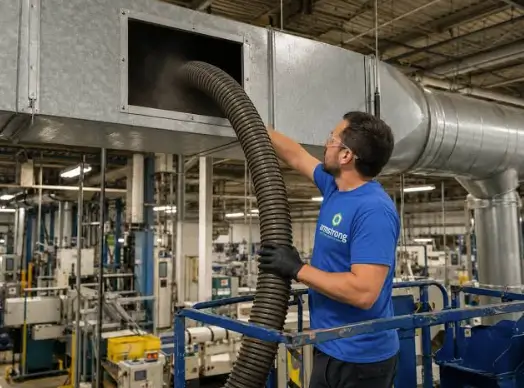
Commercial Air Duct Cleaning in Boston: Minimizing Downtime While Getting It Done Right
Shutting down a business, even partially, costs money every hour it happens, which is exactly why commercial property managers often put off duct maintenance longer than they should. The good news is that Commercial Air Duct Cleaning in Boston doesn’t have to mean choosing between a thorough job and keeping your business running. Understanding how a well-run commercial cleaning is actually scheduled and executed makes it much easier to get both, without sacrificing air quality on one side or revenue on the other.
Why Commercial Systems Take Longer Than Residential Ones
A single-family home typically has a handful of vents connected to one HVAC system. A commercial building, whether it’s an office, retail space, restaurant, or medical facility, often has a far more extensive duct network, sometimes spanning multiple systems serving different zones or floors. This added complexity means commercial jobs naturally take longer than residential ones, which makes planning around business hours and operational needs a bigger factor in how the work gets scheduled. A multi-floor office building, for instance, might require coordinating access across several tenant suites, each with its own hours and access restrictions to work around.
Scheduling Around Business Hours, Not Around the Cleaning Crew
A commercial cleaning company experienced in minimizing disruption typically works around your business hours rather than expecting you to work around theirs. This often means scheduling cleaning during overnight hours, early mornings before opening, or weekends when foot traffic and normal operations are lightest. A company unwilling to offer this kind of flexibility is signaling that convenience for their crew takes priority over minimizing your actual downtime, which is worth factoring into who you choose for the job regardless of how competitive their pricing looks on paper. Asking directly during the quoting process how flexible their scheduling actually is tends to reveal this priority quickly, before you’ve committed to anything.
Zone-by-Zone Cleaning to Keep Part of the Building Operational
For larger facilities, cleaning the entire duct system all at once isn’t always necessary or practical. Many commercial jobs are broken into zones, allowing one section of a building to be cleaned while the rest continues operating normally. A hospital, for example, might have critical areas serviced during planned downtime while less sensitive areas are cleaned during regular business hours with minimal disruption to daily activity. This zone-based approach also spreads the total project cost over a longer timeline in some cases, which can make budgeting easier for facilities that would rather not absorb the full expense of a whole-building cleaning in a single billing cycle. It also gives facility managers more control over the pace of the project, rather than committing to a single, large-scale disruption all at once.
Why Different Industries Have Different Priorities
A school’s air duct cleaning priorities differ from a restaurant’s, which differ again from an office building’s. Schools often prioritize scheduling around breaks and holidays when the building is empty. Restaurants deal with grease-related duct buildup in kitchen exhaust systems that requires specialized attention beyond standard HVAC cleaning. Offices tend to prioritize minimizing noise and disruption during work hours above all else. A company with experience across multiple industry types understands these differing priorities rather than applying a one-size-fits-all approach to every commercial client, and that experience often shows up in how quickly they can propose a workable schedule without needing extensive back and forth first. A retail store, for instance, might care most about avoiding any disruption during business hours entirely, while a manufacturing facility might be more concerned with air quality directly affecting equipment or product handling.
See also: Understanding the Process of Establishing an International Business
What Gets Inspected Before a Commercial Job Begins
A proper commercial cleaning starts with a facility walkthrough to map out the duct system, identify any problem areas, and confirm access points throughout the building. This is more involved than a residential walkthrough simply because commercial systems are larger and more complex, often requiring coordination with building management or maintenance staff to access mechanical rooms, rooftop units, or areas outside normal foot traffic. This walkthrough is also when a company should flag any code-related concerns specific to your industry, rather than treating every commercial building the same way regardless of use case.
Equipment Differences for Larger-Scale Jobs
Commercial duct cleaning typically requires more powerful, higher-capacity equipment than residential jobs, since the volume of ductwork and airflow involved is substantially greater. Companies equipped only for residential-scale work often struggle to generate sufficient negative pressure or agitation force for a commercial system, which is why it’s worth confirming a company has specific commercial experience and equipment before hiring them for a larger facility. A company that primarily services homes and treats a commercial job as simply a bigger version of the same process is more likely to under-deliver on a system that actually requires different tools altogether.
Coordinating With Building Management and Compliance Requirements
Certain commercial properties, particularly healthcare facilities, schools, and food service establishments, have specific air quality or health code requirements that duct cleaning needs to align with. A company experienced in commercial work understands how to document the service appropriately for compliance purposes and coordinates directly with building management to make sure nothing falls through the cracks between the cleaning crew and the property’s own maintenance records. This documentation can matter significantly during an inspection or audit, where being able to show a clear service history is often more valuable than the cleaning itself in terms of avoiding compliance headaches.
Communicating the Plan to Staff and Tenants Ahead of Time
Even a well-scheduled cleaning can create confusion if staff or tenants aren’t told what to expect in advance. A brief notice about which areas will be affected, what times the crew will be on-site, and whether any temporary noise or access restrictions apply helps avoid unnecessary questions or complaints during the work itself. This is a small step that’s easy to overlook, but it noticeably smooths out the experience for everyone in the building, not just the facility manager coordinating the job.
How to Estimate the Real Cost of Downtime vs. Delay
It’s worth weighing the cost of scheduling downtime for a thorough cleaning against the ongoing cost of postponing it. Dirty ductwork in a commercial setting doesn’t just affect air quality, it reduces HVAC efficiency, which shows up as higher energy bills over time. For many businesses, the modest disruption of a properly scheduled overnight or weekend cleaning costs far less than months of reduced system efficiency from continuing to delay the service, and that gap only widens the longer a facility puts off maintenance that keeps getting pushed to “next quarter.”
Questions Facility Managers Often Ask
Can commercial duct cleaning really be done without shutting down the whole building? Yes, in most cases, particularly with zone-by-zone scheduling and overnight or weekend appointments that avoid peak operating hours entirely, though the exact approach depends on the building’s layout and how its systems are zoned.
How often should a commercial building schedule duct cleaning compared to a home? This varies by industry and usage, but commercial spaces with higher foot traffic, food service operations, or specific air quality requirements often benefit from more frequent cleaning than a typical residential schedule, sometimes annually rather than every few years.
Does commercial cleaning cost significantly more than residential? Generally yes, given the larger scope and more powerful equipment required, though pricing depends heavily on the size and complexity of the specific facility rather than a flat per-building rate, so getting a walkthrough-based quote is the only reliable way to know actual cost.
What industries most commonly need specialized commercial duct cleaning? Restaurants, healthcare facilities, schools, and multi-tenant office buildings tend to have the most frequent or specialized needs, each for different reasons ranging from grease buildup to strict air quality standards.
Getting the Work Done Without the Business Suffering For It
Commercial air duct cleaning in Boston doesn’t have to mean choosing between air quality and operational continuity. With the right scheduling approach, zone-based planning, and a company experienced in working around business hours rather than against them, a thorough cleaning and a functioning business aren’t mutually exclusive. The businesses that handle this well are usually the ones that treated scheduling as seriously as the cleaning itself.
Property managers across Boston who need this balance handled correctly often turn to Mass Green Air Duct Cleaning, whose commercial technicians have serviced hospitals, schools, banks, and retail spaces with scheduling built specifically around minimizing downtime.