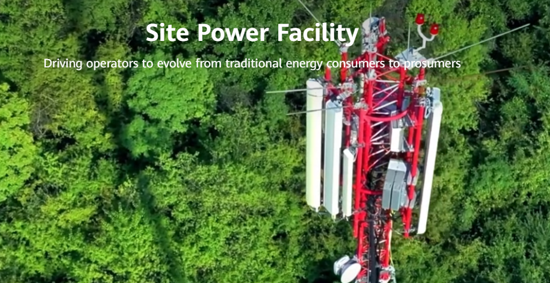
Delivering Reliability, Efficiency, and Sustainability for Every Network Site
Telecommunication sites form the backbone of modern digital infrastructure, but their power needs vary drastically across regions, environments, and network types. Huawei’s site power solutions address this complexity with a holistic, adaptive system that balances performance, cost, and environmental impact. Unlike one-size-fits-all power systems, Huawei’s approach integrates cutting-edge power conversion, smart management, and renewable energy compatibility to meet the unique demands of rural villages, urban CBDs, and extreme terrain sites worldwide.
Modular, Grid-Interactive Core Technology Foundation
At the heart of Huawei’s site power solutions is the FusionPower series, a line of modular power systems built for scalability and efficiency. Traditional power systems rely on silicon-based components that waste 5-7% of energy as heat, but Huawei uses silicon carbide (SiC) power devices to boost conversion efficiency to 98.5%—a 3% improvement over industry averages. This reduction in energy loss directly lowers operational costs, especially for sites running 24/7. The modular design also lets operators adjust capacity on demand: a small rural site can use a 10kVA module, while a high-density 5G macro site can scale up to 200kVA without rewiring the entire system.
Complementing the hardware is the iPower Manage intelligent platform, a cloud-based tool that monitors every aspect of site power in real time. It tracks 20+ parameters including voltage, temperature, battery state of charge, and grid stability, using AI algorithms to predict potential failures 72 hours in advance. For example, if a power module’s temperature rises above a safe threshold, the platform automatically alerts on-site technicians and schedules preventive maintenance, reducing unplanned downtime by up to 85% compared to traditional reactive maintenance. The platform also enables remote control, so operators can switch between grid, solar, and battery power modes from a central office, eliminating costly site visits for minor adjustments.
See also: Emerging Technology Trends That Are Shaping Everyday Life
Environment-Tailored Solutions for Diverse Site Types
One of the biggest strengths of Huawei’s solutions is their adaptability to extreme and varied environments. For rural areas with limited or no grid access—such as sub-Saharan African villages or remote Southeast Asian islands—Huawei offers hybrid solar-storage systems that eliminate reliance on diesel generators, which are expensive to transport and maintain. These systems combine 10-20 solar panels with a lithium-iron phosphate battery bank, sized to match the site’s energy needs: a small community telecom site might use a 50kWh battery, while a larger rural health clinic could use a 100kWh unit. The systems are pre-assembled, cutting installation time by 50% compared to custom-built diesel setups.
For urban dense areas like Shanghai’s central business district, where space is at a premium, Huawei’s small-form-factor power modules are designed to fit into tight network closets. These modules measure just 15x20x30cm, smaller than a textbook, and support Power over Ethernet (PoE) to power 5G small cells and edge computing devices without additional wiring. For extreme terrain sites—such as Himalayan base stations or desert telecom towers—Huawei’s power systems are built to withstand temperatures from -40°C to 55°C, high winds, and saltwater corrosion. The desert-specific models include automatic dust-cleaning systems for solar panels, a critical feature in regions where sandstorms can cut energy production by 30%.
Proven Deployment Success Stories Across Regions
Huawei’s site power solutions have been deployed in over 100 countries, with tangible results for telecom operators. A key example is Safaricom, Kenya’s largest mobile network operator, which faced challenges with rural sites relying on diesel generators. Before 2021, 90% of Safaricom’s 1,800 rural sites used diesel, with fuel costs making up 60% of site operational expenses, and service availability hovering at 92% due to frequent fuel shortages. After deploying Huawei’s hybrid solar-storage systems in 150 western Kenyan sites, the results were dramatic: fuel costs dropped by 72% in the first year, service availability rose to 99.8%, and carbon emissions from those sites fell by 1,200 tons. Safaricom’s head of infrastructure noted that “we no longer spend 10 hours a week coordinating diesel deliveries; the system runs itself, and our rural users get consistent service.”
Another success story comes from Deutsche Telekom, Germany’s leading telecom provider, which upgraded 200 core urban sites to Huawei’s smart power system in 2022. The old system had an average of 12 unplanned outages per year, with an MTBF (mean time between failures) of just 50,000 hours. After the upgrade, the MTBF jumped to 120,000 hours, and outage frequency dropped by 88%. The iPower Manage platform’s predictive maintenance tools cut downtime from 2 hours per month to 0.2 hours, saving Deutsche Telekom over €1.2 million annually in lost revenue. The efficiency gains also reduced each site’s energy use by 5,000 kWh per year, cutting total carbon emissions by 1,500 tons—enough to power 300 households for a month.
For Maldives-based operator Dhiraagu, which serves 30 scattered island sites, Huawei’s floating solar-storage solution solved a unique problem: space. The islands have no open land for solar panels, so Huawei’s floating panels are installed on lagoons, avoiding land use conflicts. The battery systems are sealed to resist saltwater corrosion, and the hybrid setup reduced fuel costs by 65% and equipment failures by 70% in two years. Dhiraagu’s CEO highlighted that “before, we had to transport diesel by speedboat, which was expensive and risky. Now, each island generates its own power, and our users have 100% service availability, even during monsoon seasons.”
Future-Ready Innovations and Long-Term Value
As networks evolve to 5G and beyond, Huawei’s site power solutions are designed to adapt to future needs. A key innovation is the integration of virtual synchronous machine (VSG) technology, which allows the power system to mimic the stability of a traditional grid. This means sites can now participate in grid services like peak shaving and frequency regulation, earning additional revenue for operators. For example, in Denmark, a telecom operator using Huawei’s power system has earned €2,000 per site annually by providing grid stability support, turning a cost center into a revenue stream.
Another future-focused feature is compatibility with green energy trading. Huawei’s iPower platform lets operators sell excess solar power back to local grids, a growing market in countries like the Netherlands and Australia. For a mid-sized urban site, this can add €1,500 to €2,500 in annual revenue. Additionally, Huawei’s modular design supports upgrades to 6G, which will require 2-3 times more power than 5G. Operators won’t need to replace their entire power system—they can simply add extra modules to meet the new demand, reducing capital expenditure by 40% compared to traditional systems.
Huawei also prioritizes compliance with global sustainability regulations, like the EU’s Carbon Border Adjustment Mechanism (CBAM). The iPower platform generates detailed carbon reports for each site, helping operators avoid carbon tariffs and meet their net-zero goals. For a telecom operator with 10,000 sites, this can add up to significant savings while aligning with corporate sustainability targets. As digital infrastructure grows, Huawei’s site power solutions remain a reliable, efficient, and forward-thinking choice for operators worldwide, bridging the gap between connectivity and sustainability.