The Art of Layering: How to Style Printed Rugs for a Designer Look
Let’s be honest for a second. Have you ever finished decorating a room – painted the walls the perfect shade of warm white, found a sofa you actually love, and hung the art – only to step back and feel like something is still missing? The space feels a little flat, a little cold, or just… unfinished.
If you’re nodding your head right now, you aren’t alone. The missing ingredient isn’t usually another throw pillow or a new coffee table. It’s texture. More specifically, it’s the floor. And nothing adds instant warmth, personality, and visual interest to a space quite like printed floral rugs layered beneath your furniture.
One of the biggest interior design secrets of the last few years, which is carrying strong momentum into 2026, is the art of rug layering. It’s a trick that high-end interior designers use to make spaces feel collected, cozy, and incredibly custom. But the best part? You don’t need a massive budget to pull it off. You just need to know how to mix the right foundation with the right statement piece.
Let’s break down exactly how to master the art of rug layering and transform your home from “nice” to “wow.”
Why Layer Rugs in the First Place?
Before we get into the “how,” let’s talk about the “why.” Why go through the trouble of putting one rug on top of another?
- It solves the “too small” rug dilemma. We’ve all been there. You find a vintage rug you absolutely adore, but it’s only 5×7. In a large living room, a small rug looks like a postage stamp. Layering it over a larger, inexpensive natural fiber rug allows you to use that beautiful piece while still anchoring your furniture properly.
- It adds instant architectural interest. If your home has neutral floors or a basic wall-to-wall carpet that you can’t rip out (hello, renters!), layering adds depth, hides the flooring you dislike, and zones the space beautifully.
- It maximizes coziness. Combining a chunky, tactile base layer with a softer top layer feels amazing underfoot and visually warms up the entire room.
Rule #1: Start with a Solid Foundation
Think of your base rug as the canvas. Its job isn’t to be the star of the show; its job is to provide texture, scale, and a neutral backdrop for the real artwork to shine.
The undisputed champions of base rugs are natural fibers like jute, sisal, or seagrass. They are incredibly durable, relatively inexpensive, and their nubby, organic textures pair beautifully with almost any decor style, from modern farmhouse to coastal to eclectic boho. A chunky wool rug in a neutral oatmeal or soft grey also works beautifully if you want something a little softer underfoot than scratchy sisal.
Pro Tip: When choosing your base rug, go big. You want this rug to anchor the room. In a living room, it should ideally be large enough that at least the front legs of all your major seating pieces can rest on it. This creates a defined “zone” and makes the room feel larger.
Rule #2: Add Personality with Your Top Layer
Now for the fun part. This is where you get to inject your personal style, color, and pattern into the space.
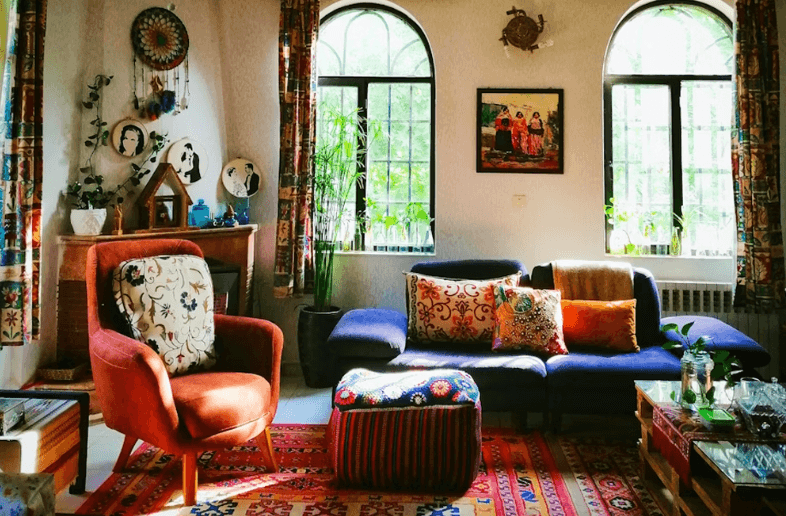
While solid colored top rugs can work, they often don’t provide enough contrast against a neutral base to create that “designed” look. This is exactly why interior designers have been leaning heavily into printed rugs lately. Unlike a solid block of color that can sometimes fall flat, a beautifully patterned top layer acts like a piece of art for your floor. It draws the eye, ties together the accent colors in your room, and sets the entire mood.
When selecting a printed top layer, look for designs that offer a bit of vintage charm or botanical inspiration. Floral motifs, subtle geometrics, and faded, antique-inspired patterns are incredibly popular right now because they add a sense of history and soul to a room.
You don’t need to spend thousands hunting through dusty flea markets for a fragile antique Persian carpet to get this look. Modern manufacturing means you can find stunning, durable options that mimic that high-end, vintage feel. For instance, Rifle Paper Co rugs are a brilliant example of this done right. They take the brand’s iconic, hand-painted gouache artwork and translate it into gorgeous floor coverings. Whether you opt for a soft wool-hooked pile for a cozy bedroom or a durable, low-pile option that can handle the chaos of a busy entryway, you get that antique charm without the antique price tag or the delicate maintenance.
Rule #3: Master the Scale and Proportion
The biggest mistake people make when layering rugs is getting the proportions wrong. If the top rug is too large, it will cover up the beautiful texture of your base rug entirely. If it’s too small, it will look like an accident.
Here are two foolproof layout formulas to follow:
- The Framing Method: Leave about 12 to 18 inches of the base rug visible on all sides of the top rug. This creates a beautiful, natural “border” that frames your statement piece perfectly.
- The Front-Leg Anchor: If you are using a smaller vintage or printed rug as your top layer, place it right in the center of your seating area, ensuring the front legs of your coffee table and the front legs of your sofa/chairs rest on it. Let the jute base rug handle the rest of the heavy lifting under the furniture.
How to Layer Rugs Room-by-Room
Now that you know the rules, let’s look at how to apply them in different spaces around your home.
The Living Room: The Ultimate Anchor
In the living room, you want maximum coziness. Start with a large 8×10 or 9×12 jute rug. Then, layer a softer, printed wool or power-loomed rug on top, positioned under the coffee table. A botanical or floral print here is fantastic because it brings a touch of the outdoors inside, softening the hard lines of your sofa and media console.
The Bedroom: Morning Warmth
Nobody likes stepping out of bed onto a cold, hard floor. In the bedroom, you have two great layering options. You can use a large neutral rug as your base, and layer a smaller, vibrant printed rug right at the foot of the bed or horizontally under the lower two-thirds of the bed frame. Alternatively, if you have wall-to-wall carpet that you’re tired of, layer a large, patterned rug directly over it to completely change the vibe of the room without a renovation.
See also: Reliable Appliance Repairs in Brisbane: Keeping Your Home Running Smoothly
The Entryway and Kitchen: High-Traffic Beauty
These spaces take a beating, which usually scares people away from nice rugs. The trick here is material choice. You can layer a beautiful, printed indoor/outdoor rug over a heavy-duty coir doormat or a flatweave runner. Because the top layer is printed and often made from treated, washable, or low-pile fibers, you get the aesthetic of a high-end country kitchen or a welcoming mudroom, but you can easily shake it out, hose it off, or toss it in the wash when the muddy shoes and paw prints inevitably arrive.
Don’t Forget the Grip!
There is one final, non-negotiable rule to rug layering: always use a rug pad.
When you place one rug on top of another, slipping and sliding is a major hazard. A good quality, non-slip mesh rug pad placed between your base rug and your top printed rug will keep everything securely in place. It also adds an extra layer of cushioning underfoot and protects the fibers of both rugs from rubbing against each other and wearing out prematurely.
The Takeaway
Decorating your home should be an experiment, not a chore. Rug layering is one of the most forgiving, impactful, and reversible design tricks you can use. It allows you to play with scale, mix textures, and bring your favorite colors into a room without committing to paint or expensive upholstery.
So, the next time your living room feels a little lackluster or your bedroom needs a spark of joy, don’t buy another throw blanket. Look down. Grab a textured base, find a beautifully printed top layer that speaks to you, and layer them up. You’ll be amazed at how quickly your house starts to feel like a professionally designed home.