Is a Pickleball Ball Machine Worth It? A Complete Buying Guide
Pickleball’s growth has brought a familiar question to a new audience: is a ball machine actually worth the investment, or is it a novelty that ends up gathering dust after a few sessions? For a sport that’s exploded in popularity partly because of how social and accessible it is, the idea of practicing alone with a machine can seem counterintuitive at first. But for players serious about improving, the answer usually comes down to a few practical factors rather than a simple yes or no.
The Core Value Proposition
A pickleball ball machine solves a problem that every improving player eventually runs into: consistent, structured practice is difficult to arrange with other people. Partners cancel, skill levels don’t always match, and courts fill up during peak hours. A machine removes that dependency entirely, letting players train on their own schedule with repetition that’s actually structured around specific skills rather than whatever a casual hitting partner feels like working on that day.
This is really the central question to ask before buying one: how much is your improvement currently being limited by inconsistent practice access rather than lack of instruction or ability? For many players, that access gap is the bigger obstacle, and it’s exactly what a machine is designed to close.
What a Good Machine Actually Needs to Do
Not all training machines are created equal, and understanding what actually matters helps separate genuine value from marketing features that sound good but don’t affect real practice quality.
Shot variety matters more than raw power. Pickleball is a game decided largely at the kitchen line, so a machine that only fires hard drives misses most of what actually needs practice. Look for support for dinks, drops, cross-court shots, and lobs — not just speed.
Adjustability determines how useful practice actually is. Fixed-speed, fixed-spin machines get repetitive quickly. The ability to adjust speed, spin, and trajectory — ideally through an app rather than manual dials — makes a real difference in session variety and long-term usefulness.
Capacity affects session flow. Machines that require frequent reloading interrupt the rhythm of a practice session. Higher ball capacity keeps drills continuous rather than stop-start.
Portability affects how often it actually gets used. A machine that’s a hassle to transport or set up tends to get used less over time, regardless of how good its features are on paper.
See also: 3 Mounting Locations to Capture the Whole Picture with Your Car Dash Camera
Who Benefits Most From Owning One
Ball machines aren’t equally valuable for every type of player, and being honest about this upfront helps avoid an unnecessary purchase.
- Improving players without consistent partners get the clearest value, since the machine directly solves their biggest practice bottleneck.
- Players working on specific weaknesses — like dinks, footwork, or shot consistency — benefit from being able to isolate and repeat those exact scenarios without needing a partner willing to feed the same shot repeatedly.
- Competitive players preparing for tournaments often use machines to supplement regular play, adding structured reps between matches or lessons.
- Casual players who mainly enjoy social games may get less value, since a large part of their enjoyment comes from the social dynamic a machine can’t replicate.
A Practical Starting Point
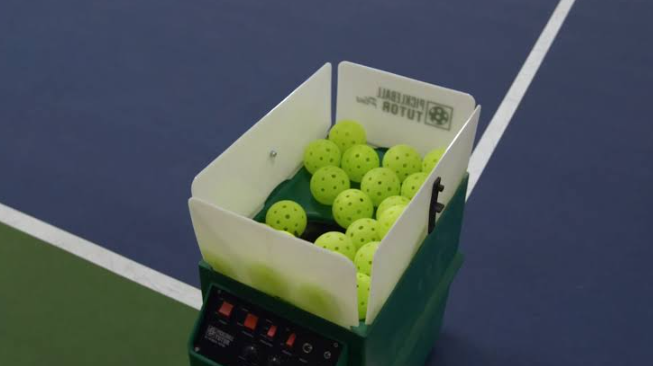
For players deciding to invest, starting with a portable, adjustable machine tends to be the more sensible entry point rather than jumping straight to an advanced system. A solo pickleball trainer designed around independent, repeatable practice — supporting multiple shot types like drives, serves, dinks, drops, and lobs — covers the fundamentals that most improving players actually need without unnecessary complexity or cost.
This matters because advanced features like AI shot tracking and adaptive drills provide the most value once a player already has consistent mechanics. Before that stage, straightforward, adjustable repetition tends to deliver more practical improvement per session than more complex systems.
Weighing the Cost Against Alternatives
It’s worth comparing the cost of a machine against realistic alternatives. Regular private coaching adds up quickly over months of sessions, and reliably finding hitting partners at a matching skill level isn’t guaranteed even at busy courts. A machine represents a one-time cost that removes both of those dependencies, which is often what makes it worthwhile for players who train multiple times a week rather than occasionally.
For occasional or purely social players, the calculation looks different — infrequent use makes the upfront cost harder to justify compared to simply playing more games with available partners.
Final Verdict
A pickleball ball machine is worth it for players who are serious about consistent improvement and currently limited by access to partners or structured practice. It’s less valuable for casual players whose enjoyment comes primarily from the social side of the game. For the right player, though, a machine solves a genuine, recurring problem — and starting with a portable, adjustable model is usually the most practical way to test whether structured solo training fits into a regular routine.
FAQs
1. Is a pickleball ball machine only useful for advanced players? No. Machines with adjustable speed and shot settings work well for developing players building consistency, as well as advanced players refining specific skills.
2. What features matter most when choosing a machine? Shot variety, adjustable speed and spin, ball capacity, and portability tend to affect day-to-day usefulness more than any single advanced feature.
3. Will a machine actually replace practicing with a partner? Not entirely, but it removes the dependency on partner availability for structured repetition, which is often the biggest bottleneck for consistent improvement.
4. Is it worth buying an advanced machine right away? Not necessarily. A simpler, adjustable machine often covers what most improving players need before more advanced features like AI tracking become genuinely useful.
5. Who might not benefit much from owning a machine? Casual players whose main enjoyment comes from the social aspect of pickleball may get less value, since a machine doesn’t replicate that side of the game.