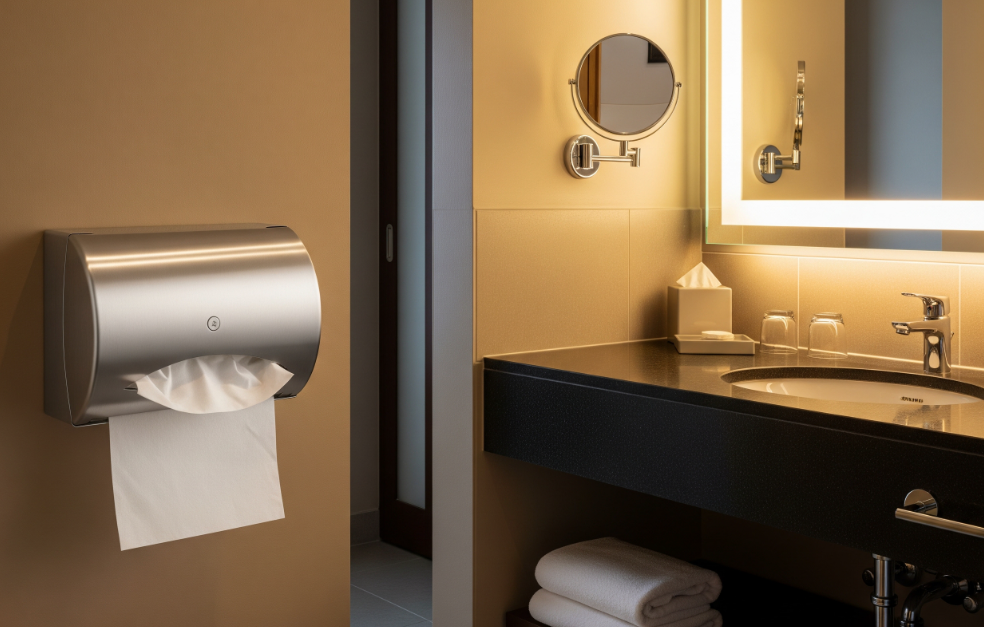
How Automatic Paper Dispensers Are Changing the Way Shared Spaces Handle Everyday Hygiene
Paper towels are one of those everyday necessities that usually receive attention only when something goes wrong. A dispenser is empty, the paper becomes difficult to pull, or several people touch the same surface before washing their hands. These small inconveniences become more noticeable in environments where many people use the same washroom, kitchen, workplace, healthcare facility, restaurant, or public area throughout the day. An automatic paper dispenser approaches the problem from a different direction by reducing the need for users to manually operate the dispenser before taking a paper towel.
The more interesting part of this technology is not simply the presence of a sensor. It is the way a relatively small change can alter the interaction between a person and a shared hygiene station. Instead of reaching for a lever, pressing a button, or pulling exposed paper from a roll, the user can trigger the dispensing process with a hand movement. Depending on the system, the dispenser can then provide a controlled portion of paper while keeping the remaining supply enclosed inside the unit.
This makes the dispenser part of a larger conversation about how shared spaces are designed. Hygiene, convenience, waste management, maintenance, accessibility, and user behaviour all intersect around something as simple as a paper towel. The most effective systems are therefore not necessarily the ones with the most complicated technology. They are the ones that solve the practical problems of a particular environment without creating new ones for staff or users.
Why the Simple Paper Towel Became a Design Problem
A paper towel may appear to be a straightforward consumable, but its delivery method affects how people interact with it. In a busy washroom, dozens or hundreds of users may approach the same dispenser during a single day.
Manual dispensers require some form of physical interaction. Users may need to touch a handle, press a mechanism, or pull the paper themselves. Over time, these contact points can become heavily used surfaces that require regular cleaning.
Automatic dispensing introduces another option. A sensor can detect the user’s hand and initiate the dispensing process without requiring the same type of physical contact.
See also: Why Experience Matters in a Probate Attorney West Palm Beach
Moving From Manual Interaction to Sensor-Based Use
The basic idea behind automatic dispensing is relatively simple. A sensor identifies an approaching hand or another suitable trigger, and the dispenser activates its internal mechanism.
The user does not have to understand how the mechanism works. Ideally, the experience feels almost invisible: approach the dispenser, receive the paper, and move away.
That simplicity is important because shared facilities are used by people with different levels of familiarity with equipment. A dispenser that requires several steps or unclear instructions can create unnecessary friction.
Why Touch-Free Operation Matters
Reducing unnecessary contact can be useful in environments where hygiene is a priority. The dispenser’s exterior can remain a point of contact in some circumstances, but removing the need to physically operate a handle or lever can still change the overall interaction.
This can be particularly relevant in busy public washrooms, healthcare settings, food-service environments, offices, schools, and other shared facilities.
However, touch-free operation should not be treated as a complete hygiene solution. Regular cleaning, proper handwashing, appropriate waste disposal, and maintenance remain important regardless of the dispensing mechanism.
The Hidden Engineering Behind a Small Device
From the outside, an automatic dispenser can look like a simple wall-mounted box. Inside, however, several components have to work together.
A typical system may involve:
- A detection sensor
- An electronic control system
- A motor or dispensing mechanism
- A paper-feed assembly
- A power source
- A housing that protects internal components
Each element contributes to the user experience. If the sensor responds too slowly, the dispenser feels frustrating. If the motor feeds too much paper, waste can increase. If the mechanism struggles with the selected paper type, maintenance problems can follow.
The technology therefore has to be balanced with practical engineering.
The Importance of Reliable Detection
The sensor is one of the most noticeable parts of the system because users experience its response directly.
A dispenser that activates when someone approaches can waste paper. One that fails to detect a hand quickly can make users wave repeatedly or pull at the housing.
Good sensor behaviour should therefore be predictable. The detection range, sensitivity, surrounding lighting, user position, and environmental conditions can all influence how the system behaves.
Controlled Dispensing Can Influence Waste
One of the less obvious benefits of automatic dispensing is the possibility of controlling how much paper is delivered at a time.
Manual systems can allow users to pull long sections from a roll, particularly when the mechanism provides little resistance. Automatic systems can be configured to deliver a predetermined portion depending on their design.
This does not guarantee lower consumption in every facility. User behaviour, paper quality, dispenser settings, and maintenance practices all influence actual usage. Still, controlled dispensing creates an opportunity to approach paper consumption more deliberately.
The Relationship Between Paper Quality and Machine Performance
Not all paper behaves identically. Thickness, texture, sheet structure, roll dimensions, and other characteristics can influence how smoothly a dispenser feeds the material.
A mechanism designed around one paper specification may not perform equally well with another.
For facility managers, this means the dispenser and consumable should be considered together. Choosing a machine without considering the paper it is expected to handle can lead to jams, inconsistent dispensing, or unnecessary maintenance.
Why Maintenance Still Matters
Automation does not eliminate maintenance. It changes what maintenance involves.
A manual dispenser may have relatively simple mechanical components, while an automatic model introduces sensors, motors, electronic controls, and power requirements.
Staff may therefore need to monitor battery levels or power connections, clean sensor areas, replace paper supplies, and inspect the dispensing mechanism.
The goal should be to make maintenance predictable rather than assuming that automation means zero maintenance.
Battery-Powered Versus Permanently Connected Systems
Power requirements can influence where an automatic dispenser is practical.
Battery-powered systems can be easier to install because they do not necessarily require a permanent electrical connection. This can be useful in existing buildings where changing wiring would be inconvenient.
Permanently powered systems may be more appropriate for locations where consistent electrical access is available and long-term operation is expected.
The right choice depends on the building, installation location, expected usage, and maintenance strategy.
Accessibility Is Another Part of the Equation
A dispenser should not be evaluated only from the perspective of an average standing user. People have different heights, mobility levels, reach abilities, and ways of interacting with equipment.
The installation height and sensor range can therefore affect accessibility.
A thoughtfully positioned unit should be easy to approach and activate without requiring unnecessary movement or force. This becomes especially important in public and institutional environments where the facility needs to accommodate a broad range of users.
Why Public Washrooms Can Benefit From Better Dispensing
Public washrooms often combine high traffic with limited maintenance opportunities. A dispenser can be used repeatedly within a short period, making reliability particularly important.
Automatic operation can make the interaction quicker while reducing the number of physical controls users need to touch.
At the same time, high traffic places greater demands on the mechanism. A system that performs well in a small office may face a very different workload in a transport terminal, shopping centre, stadium, or large commercial building.
Food-Service Environments Have Different Priorities
Restaurants, commercial kitchens, cafeterias, and food-production environments place particular emphasis on hygiene and operational efficiency.
In these locations, unnecessary contact with shared surfaces can be undesirable. A touch-free dispensing mechanism can help create a cleaner interaction point while also allowing staff to manage paper consumption.
The surrounding environment can also be demanding, with moisture, cleaning chemicals, and frequent use potentially affecting equipment. Material selection and maintenance practices therefore become especially important.
Healthcare Spaces Require a More Careful Approach
Healthcare facilities have strict hygiene expectations, so dispensing equipment must be considered within a broader infection-control strategy.
Touch-free operation can reduce certain forms of direct contact, but it does not replace established cleaning procedures or professional hygiene protocols.
The equipment also needs to be reliable because interruptions in basic hand-drying facilities can affect the overall user experience in a high-demand environment.
The User Experience Is Easy to Underestimate
People rarely want to spend much time thinking about a paper dispenser. They simply want it to work.
This means good design is often about removing friction. The sensor should respond naturally, the paper should appear without unnecessary delay, and the mechanism should not require users to guess what to do.
A dispenser that performs these tasks quietly can be more successful than one that offers numerous complicated features.
Why Sound and Movement Can Matter
Automatic systems use motors and mechanical components, which means they can produce sound during operation.
In some environments, a short mechanical noise is insignificant. In others, such as hotels, offices, healthcare spaces, or premium commercial interiors, excessive noise may affect the perceived quality of the facility.
Smooth movement and controlled mechanical operation can therefore contribute to a better overall experience.
Designing Around Real User Behaviour
Technology works best when it responds to how people actually behave rather than how designers assume they behave.
Users may approach the dispenser from different angles. Some may hold their hands higher or lower. Others may move quickly because the facility is busy.
Testing the dispenser in its intended environment can reveal issues that are difficult to identify from specifications alone.
Installation Location Can Affect Performance
The position of the dispenser influences both convenience and sensor behaviour.
Installing the unit too high can make it difficult for some users to activate. Installing it too low can create accessibility or splash-related concerns depending on the environment.
The surrounding walls, mirrors, lighting, sinks, counters, and other objects can also influence how users approach the dispenser and how the sensor behaves.
What Facility Managers Should Consider
Before choosing a system, facility managers can examine several practical factors:
Traffic level
Estimate how frequently the dispenser will be used during normal and peak periods.
Paper compatibility
Confirm that the intended paper format and dimensions work with the dispensing mechanism.
Power requirements
Determine whether battery replacement or a permanent electrical connection is more practical.
Maintenance
Consider how easily staff can clean the unit, replace supplies, and troubleshoot common issues.
Accessibility
Evaluate mounting height, sensor range, and ease of use for different users.
Environment
Consider moisture, cleaning chemicals, temperature, and other conditions surrounding the installation.
These factors can produce a more realistic decision than focusing only on the dispenser’s appearance.
Is Automation Always Better?
Not necessarily. A technology is only useful when it solves a genuine problem.
A small, low-traffic facility may find a simple manual dispenser perfectly adequate. Introducing electronics, batteries, and sensors can add complexity without delivering enough practical benefit.
Automatic dispensing becomes more compelling when hygiene, traffic, convenience, controlled dispensing, or accessibility justify the additional technology.
The Future of Everyday Hygiene Equipment
Small facility technologies are increasingly being designed around automation, reduced contact, resource management, and easier maintenance.
Paper dispensers fit naturally into this trend because the basic interaction is repetitive and predictable. There is a clear opportunity to make the process more controlled without requiring users to think about it.
Future systems may focus more heavily on usage monitoring, predictive maintenance, improved sensor performance, and integration with broader facility-management systems. The challenge will be ensuring that additional features provide genuine operational value rather than simply adding complexity.
Final Thoughts
An automatic paper dispenser may seem like a minor upgrade compared with larger technologies found in modern buildings, but its value comes from how frequently people interact with it. A small improvement repeated hundreds or thousands of times can influence hygiene routines, user convenience, paper consumption, and maintenance requirements. That makes the dispenser a useful example of how everyday infrastructure can benefit from thoughtful automation.
The most effective approach is not simply to replace every manual dispenser with an electronic alternative. Facilities need to consider traffic, environment, accessibility, paper compatibility, power requirements, maintenance, and the actual problems users experience. In some locations, automation can meaningfully improve the dispensing process. In others, a well-designed manual system may remain the more practical choice.
Ultimately, good hygiene equipment should disappear into the background of everyday life. Users should not have to struggle with it, understand its internal technology, or spend unnecessary time operating it. When sensor technology, mechanical reliability, appropriate paper, and thoughtful installation come together, an automatic paper dispenser can turn an ordinary interaction into one that is faster, cleaner, and more consistent.