Is an AR VR Course Worth It for Freshers Entering the Tech Industry?
Introduction
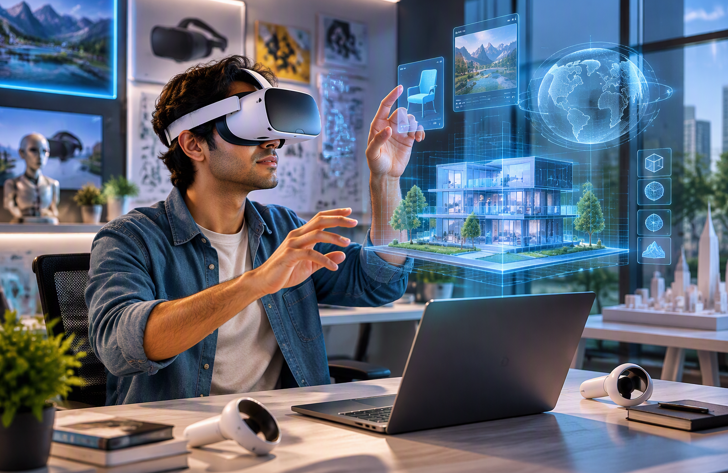
The technology sector is one that changes rapidly and immersive technologies such as AR VR have quickly emerged as mainstream innovations. From gaming to entertainment, from healthcare to retail and from education to many other sectors, these technologies are revolutionizing the way that people engage with digital information. With freshers looking to join the tech industry, there emerges a question whether learning about ar vr courses would be worth the investment.
The true worth of such AR programs should be determined not just through the enthusiasm over immersive experiences but by the practical value they hold in terms of career relevance and growth potential.
Why AR and VR Are Gaining Momentum
Augmented reality and virtual reality are not confined to specialized use cases anymore. Various businesses are turning to these technologies to enhance their customers’ experience, create training simulations, visualize products, and collaborate remotely. As businesses venture into immersive technologies, the need for specialists skilled at developing and implementing them is rising.
It becomes increasingly relevant for freshers in terms of developing skills in this area because they can enter into industries that have not matured yet but need fresh talent.
What Freshers Can Expect to Learn
An effective VR/AR course usually gives its students exposure to aspects of design thinking, development techniques, and technology that is required for creating an immersive application experience. Instead of concentrating only on the theoretical part of things, such courses usually concentrate on the hands-on experience of building immersive applications.
Some of the key areas covered in such courses include:
- Understanding the fundamentals of augmented and virtual reality
- Learning about three dimensional modeling and spatial design
- Exploring development platforms used to build immersive applications
- Understanding user experience principles specific to immersive environments
- Gaining exposure to real world use cases across industries
This structured learning approach helps freshers build both technical and creative skills that are relevant across multiple sectors.
Career Relevance for Freshers
Among the key factors for freshers to pursue AR classes is to have the opportunity to enter a specialized field at an early stage. Taking into consideration the fact that AR and VR are relatively young as compared to other fields like software programming and the like, it can be said that having specialized skills in AR can give freshers an edge over others.
Among some of the career opportunities open to freshers through such training programs are jobs in designing immersive applications, UX designing in virtual environment, creation of three-dimensional content, and technical assistance with AR/VR systems. Among some of the industries in which they work include the gaming industry, education tech industry, healthcare simulations, real estate visualization, and retail experience design.
Addressing Common Doubts
Freshers tend to avoid paying for ar vr training due to concerns about lack of employment or the sustainability of the skills over time. It is a valid point considering that some technologies may take unpredictable amounts of time to be implemented successfully.
But with more companies incorporating immersive technology into their offerings, there will continue to be a demand for professionals with experience and skills in the area. By taking the specialization route, freshers are not only acquiring a specialized skill, but they are also building solid skills in 3D thinking, interactivity, and development processes.
Is It the Right Choice for Every Fresher
Augmented Reality Courses are very promising, but may not be suitable for all freshers. Freshers who like to work on problem-solving in a creative way, design graphics, and interact with technology will find the field very appealing. However, freshers who prefer to stick to software development jobs should consider whether AR VR training is beneficial to their careers as a whole.
It helps to consider the following before enrolling in such a program:
- Personal interest in immersive and interactive technology
- Willingness to learn specialized tools and development platforms
- Long term career goals within the broader technology industry
- Industry trends relevant to the sectors they wish to enter
Approaching the decision with clarity about personal strengths and interests can help freshers make a more informed choice.
Building a Future Ready Career
For students selecting ar vr courses, they would basically be equipping themselves with knowledge and skills needed in a sector which would grow with the growth in the use of technology. This is not a fleeting trend, but an investment in a skill which combines creativity and highly technical abilities.
As more and more companies continue to test immersive technology in areas such as training, marketing, design, and customer interaction, those individuals who have the knowledge needed in this area will be well-positioned to make a contribution.
Conclusion
For new starters in the tech industry, courses on AR VR can be an interesting career choice, provided the choice goes well with their likes and long-term goals. Courses related to augmented reality not only help with technical learning but also instill interactive and creative skills that are in demand nowadays.
Whereas all professions have their drawbacks, deciding to take up immersive technology right from the start could give fresher an advantage for positions which will most probably increase in the coming years. Where there is true interest in digital and physical experience convergence, then this could actually be a good career move.