Automation + Antidetect Browsers: Scaling Operations Efficiently
Automation is a key driver of efficiency in modern digital workflows. When combined with antidetect browsers, it becomes a powerful tool for scaling operations without increasing risk.
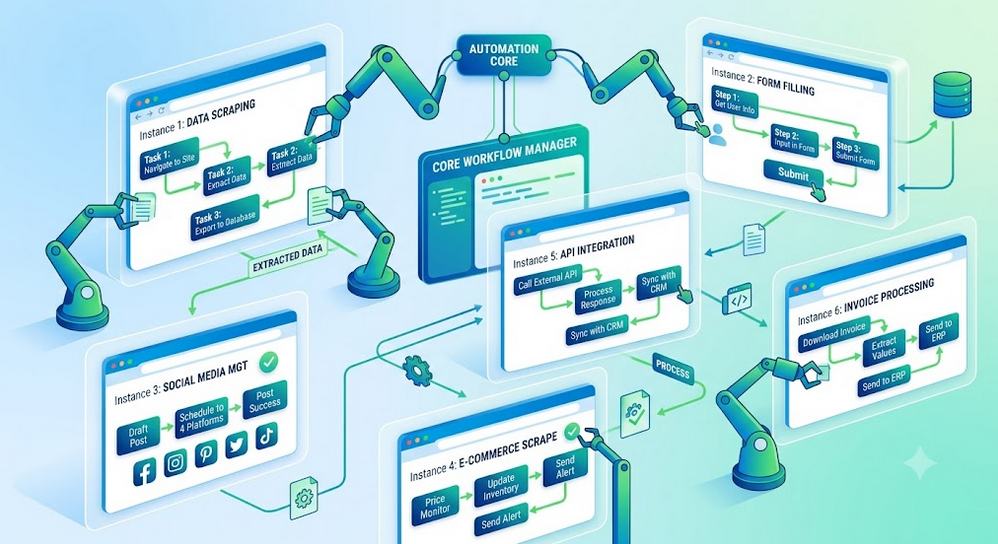
Many antidetect solutions support integration with automation frameworks like Selenium, Puppeteer, and Playwright.
This allows users to:
- Automate repetitive tasks
- Run hundreds of sessions simultaneously
- Maintain unique identities for each automated process
Unlike traditional bots, which are easily detected, antidetect-powered automation operates within realistic browser environments.
Antidetect.org helps users navigate this complex setup by providing guides, comparisons, and best practices. It bridges the gap between theory (fingerprinting) and practice (automation workflows).
For businesses aiming to scale without compromising account safety, this combination is a game-changer.
Picking the right browser
Not every antidetect browser handles automation well. Before you scale, weigh a few things.
API support matters most. Native compatibility with Selenium, Puppeteer, or Playwright means less rebuilding and more reusing what you already have. Fingerprint depth is next. The strong tools keep canvas, WebGL, audio, fonts, time zone, and hardware signals steady across sessions. Then there’s proxy integration, which ties each profile’s network identity to its fingerprint. And once you pass a handful of profiles, team features like cloud sync and bulk creation stop being nice-to-haves.
A fingerprint that doesn’t match its network identity is one of the quickest ways to get flagged. Consistency is everything.
Keeping it stable at scale
Running lots of sessions only works when each one feels human. A few habits help.
Give every profile its own proxy. Sharing IPs across identities defeats the whole purpose. Warm new profiles up slowly, too. A fresh identity that suddenly fires off hundreds of actions looks mechanical, while a gradual ramp mirrors how real people actually behave. Add some variance with randomized delays, mouse movement, and natural scrolling. And keep an eye on performance, retiring any profile that starts showing friction. Small touches like these usually separate a setup that lasts from one that gets caught early.
Where it actually gets used
The applications are broader than people assume. Researchers gather pricing and availability data across regions. Ad teams check how campaigns render for different audiences. Affiliate marketers lean on it heavily, running parallel campaigns that would otherwise trip platform limits. Store operators manage several shopfronts at once, and agencies juggle separate client accounts without sessions bleeding into each other.
Same goal every time: clean, isolated environments that stay efficient as you grow.
Common mistakes
Good tools don’t save you from sloppy habits. Reusing one fingerprint across profiles, skimping on proxy quality, or rushing too many actions too quickly are the usual culprits. Treat each profile as a real, lasting identity rather than something disposable, and the results hold up far better over time.
The takeaway
Automation and antidetect browsers work best as a team. One removes the grind of manual, single-session work. The other keeps things isolated and resilient. As platforms get sharper at reading traffic, the businesses that win will be the ones combining automation with believable, well-managed browsers. Antidetect.org makes that climb easier, turning dense concepts into workflows you can repeat. Master the pairing and it stops being optional. It becomes a genuine edge.