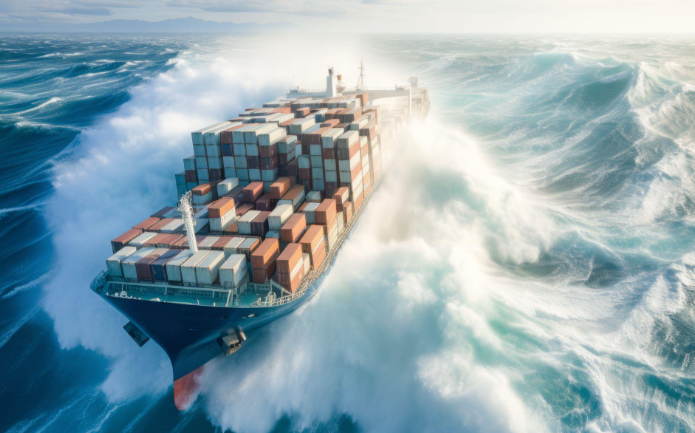
Designing Vessels for Harsh Weather and Uncertain Operating Conditions
Calm-water performance tells only part of a vessel’s story. Ships must continue operating when wind rises, visibility drops, decks become wet, and waves impose loads far beyond those seen alongside a quay. For vessels working offshore or on exposed routes, resilience is therefore a design objective of its own. The challenge is to preserve safety and mission capability without making the ship unnecessarily heavy, complex, or expensive.
Start With the Environment, Not the Vessel
A resilient concept begins with a clear understanding of where and how the ship will operate. Significant wave height, wind, temperature, icing risk, current, water depth, and seasonal weather can influence dimensions and systems. Designers also consider how often a vessel must remain operational rather than sheltering or slowing down. A craft intended for sheltered coastal work faces a very different design problem from one expected to maintain offshore operations in winter.
Seakeeping Affects More Than Comfort
Roll, pitch, heave, and accelerations influence crew fatigue, equipment loads, cargo security, and the ability to perform deck tasks. Designers can adjust hull proportions, weight distribution, freeboard, bilge geometry, and stabilization systems to improve behavior. The target is not zero motion, which is impossible, but acceptable motion for the vessel’s mission. A ship that is technically safe but unable to perform its core task in common sea states may not be commercially successful.
Reserve Capability Matters When Conditions Deteriorate
Harsh conditions often increase power demand. Wind and waves create resistance, steering corrections become more frequent, and thrusters may work harder during station keeping. A robust ship design therefore considers margins in propulsion, electrical generation, cooling, and fuel capacity. These margins should be justified by operations rather than added blindly. Too little reserve can reduce availability, while too much can increase weight and running cost.
Deck Safety Requires Weather-Aware Arrangement
Open decks deserve special attention on offshore and service vessels. Water can sweep across working areas, equipment can shift if poorly secured, and wind can make lifting operations more difficult. Raised coamings, drainage, protected routes, non-slip surfaces, handholds, lighting, and equipment placement all contribute to safer work. Designers may also consider where crews can move while staying shielded from the worst exposure.
Systems Need Redundancy Without Confusion
Redundancy is valuable when a single failure could endanger the vessel or stop a critical mission. Separate power sources, duplicated pumps, independent control paths, and protected routing can improve resilience. However, redundancy must be arranged so that one incident does not disable both sides of the backup. Fire boundaries, flooding zones, cable separation, and physical distance can matter as much as the number of components.
Cold and Heat Create Different Problems
Environmental resilience is not limited to waves. Cold-climate vessels may require heating, de-icing, protected piping, low-temperature materials, and consideration of ice accumulation. Hot-climate operation can put pressure on ventilation, air conditioning, cooling water, electronics, and crew spaces. Designing around realistic temperature ranges helps prevent a vessel that performs well only under moderate conditions.
Resilience Comes From Integration
A vessel prepared for harsh operations is not defined by one oversized system. Resilience emerges from many connected choices: hull behavior, reserve power, safe access, drainage, redundancy, environmental protection, and operational margins. When these decisions are made together, the ship is more likely to continue working safely when the sea stops behaving like the assumptions used in a calm-water calculation.
A Final Practical Consideration
Operational feedback should continue after delivery. Masters and crews quickly learn which weather combinations reduce speed, increase motion, or complicate deck work. Feeding that experience back into future projects helps designers move from theoretical resilience toward vessels shaped by the conditions crews actually encounter.
Harsh Weather Also Tests Communications
Bad weather can interfere with routine coordination at exactly the time clear communication matters most. Noise, wind, protective clothing, and reduced visibility can make verbal communication more difficult on deck. Designers can support crews with well-positioned radios, repeaters, alarm beacons, cameras, sheltered control points, and visual indications that remain understandable in poor conditions. Communication planning is easy to overlook because it occupies little physical space, yet it can strongly influence how safely teams manage lifts, mooring, transfers, and emergency actions.
See also: How a Business Attorney Greenville SC Can Help Your Business
Recovery After a Failure Should Be Designed In
Resilience is not only about avoiding failure; it is also about restoring capability after something goes wrong. Access to damaged equipment, isolation points, spare components, bypass arrangements, and clear fault diagnostics can reduce the time needed to recover. A vessel that can safely return to useful operation after a minor incident may be more valuable than one that simply has more duplicate equipment. Recovery planning encourages designers to think about the sequence crews will follow when normal systems are unavailable.