From Idea to Mass Production: How Technology Is Accelerating Hardware Innovation
The pace of hardware innovation has never been faster. Just a decade ago, bringing a physical product from concept to market could take years of development, testing, and manufacturing preparation. Today, advances in digital design tools, rapid prototyping, automation, and smart manufacturing technologies have dramatically shortened that timeline.
From consumer electronics and IoT devices to medical equipment and automotive components, businesses are finding new ways to transform ideas into market-ready products faster than ever before. Companies that successfully leverage these technologies gain a significant competitive advantage, while those that rely on outdated development processes risk falling behind.
In an increasingly technology-driven world, understanding how modern manufacturing supports hardware innovation is essential for entrepreneurs, startups, and established businesses alike.
The Evolution of Hardware Development
Historically, hardware development was a slow and resource-intensive process. Product designers often relied on physical drawings, manual prototyping, and multiple rounds of trial-and-error testing before a design could move into production.
Manufacturing partners were typically involved only after a product design had been finalized, creating communication gaps that often resulted in costly design revisions, tooling delays, and production challenges.
Today, digital technologies have transformed every stage of product development. Cloud-based collaboration tools, computer-aided design (CAD) software, simulation platforms, and advanced manufacturing processes allow teams to validate ideas much earlier and move through development cycles with greater efficiency.
As a result, companies can bring innovative products to market faster while reducing development risks and overall costs.
Digital Design Tools Are Eliminating Development Bottlenecks
Modern product development begins with sophisticated digital design environments. Engineers can now create highly detailed 3D models and perform virtual testing long before physical prototypes are produced.
Advanced simulation software enables teams to evaluate:
- Structural strength
- Material performance
- Thermal behavior
- Assembly compatibility
- Product durability
These capabilities help identify potential issues during the design phase rather than after expensive tooling investments have been made.
Digital workflows also improve collaboration between designers, engineers, suppliers, and manufacturers, ensuring that everyone works from the same data throughout the development process.
This integrated approach reduces misunderstandings and accelerates decision-making.
Rapid Prototyping Has Changed the Innovation Process
One of the most significant advances in modern hardware development is rapid prototyping.
Technologies such as 3D printing, CNC machining, and additive manufacturing allow companies to create functional prototypes in days rather than weeks.
Rapid prototyping provides several advantages:
- Faster design validation
- Earlier user feedback
- Reduced development costs
- Lower risk before production
- Improved product performance
Rather than waiting months for traditional prototype tooling, teams can quickly test multiple design variations and refine products based on real-world performance.
This iterative approach encourages innovation by making experimentation more accessible and affordable.
The Growing Role of Smart Manufacturing
While rapid prototyping accelerates development, manufacturing technologies are equally important for scaling successful products.
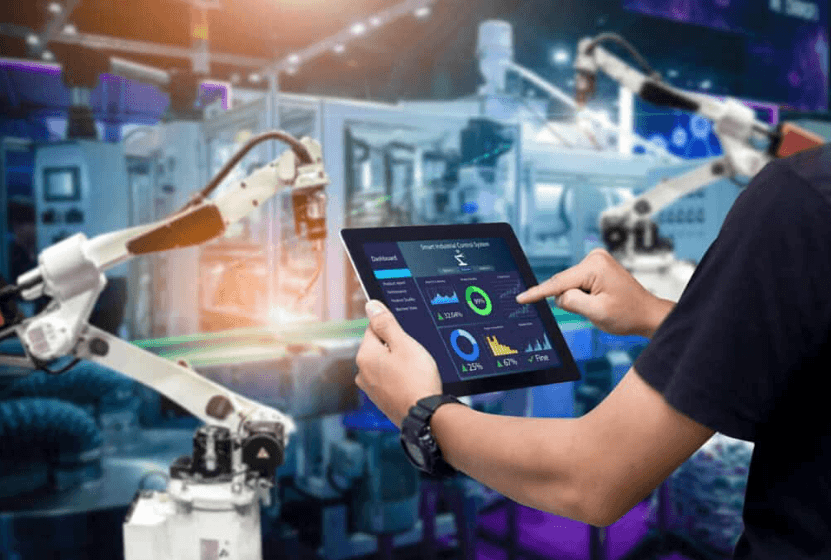
Modern factories increasingly rely on automation, robotics, real-time monitoring systems, and data-driven production processes to improve efficiency and consistency.
Smart manufacturing technologies enable companies to:
- Monitor production performance in real time
- Reduce human error
- Improve quality control
- Increase production speed
- Minimize waste
These capabilities are particularly important when transitioning from prototype development to large-scale production.
Manufacturers that embrace digital production technologies can respond more quickly to changing market demands while maintaining high product quality standards.
Bridging the Gap Between Prototype and Production
Many promising hardware products fail not because of poor design, but because of challenges encountered during manufacturing scale-up.
A prototype that performs well in testing may require significant modifications before it can be manufactured efficiently at volume.
This is where experienced manufacturing partners become valuable.
Companies such as EzraMade help bridge the gap between product development and production by providing engineering support, tooling expertise, manufacturing consultation, and scalable production solutions.
By involving manufacturing experts earlier in the development cycle, businesses can identify potential production challenges before they become expensive obstacles.
This approach improves manufacturability, shortens development timelines, and reduces overall project risk.
Why Injection Molding Remains Critical for Hardware Products
Although many new manufacturing technologies have emerged, injection molding remains one of the most important production methods for hardware products.
Plastic components are found in nearly every industry, including:
- Consumer electronics
- Medical devices
- Industrial equipment
- Automotive systems
- Smart home products
- Wearable technology
For high-volume production, custom injection molding continues to offer significant advantages:
- High production efficiency
- Consistent part quality
- Excellent dimensional accuracy
- Low per-unit costs
- Broad material compatibility
Once tooling is established, manufacturers can produce thousands or even millions of identical parts with exceptional repeatability.
This makes injection molding an ideal solution for products that require both precision and scalability.
See also: The Importance of SOC 2 Compliance for Modern Businesses
Automation Is Driving Faster Product Launches
Automation is no longer limited to factory floors. It now influences nearly every stage of product development and manufacturing.
Automated systems assist with:
- Design optimization
- Material selection
- Quality inspection
- Production scheduling
- Inventory management
Artificial intelligence and machine learning technologies are further enhancing manufacturing operations by identifying patterns and predicting potential issues before they affect production.
Predictive maintenance systems, for example, can detect equipment problems early and reduce costly downtime.
As automation technologies continue to evolve, companies will gain even greater control over product quality and manufacturing efficiency.
Supply Chain Innovation Supports Faster Growth
Global supply chains have experienced significant disruption in recent years, highlighting the importance of flexibility and resilience.
Technology is helping businesses build stronger supply chains through:
- Real-time inventory tracking
- Digital supplier networks
- Demand forecasting
- Production analytics
- Cloud-based collaboration platforms
These innovations improve visibility across the entire product lifecycle, allowing companies to make informed decisions and respond quickly to market changes.
Manufacturers that combine advanced production capabilities with agile supply chain strategies are better positioned to support rapid product growth.
The Future of Hardware Innovation
The future of hardware development will be shaped by continued advances in digital engineering, artificial intelligence, automation, and smart manufacturing.
Emerging technologies such as digital twins, generative design, advanced materials, and fully connected production environments will further reduce the barriers between product ideas and market-ready solutions.
Companies that embrace these innovations will be able to develop products faster, improve quality, and adapt more effectively to changing customer demands.
The organizations that succeed will not necessarily be those with the biggest budgets, but those that leverage technology to accelerate development, improve collaboration, and scale production efficiently.
Conclusion
Hardware innovation is entering a new era. Technologies that once seemed futuristic are now enabling companies to move from concept to production with unprecedented speed and precision.
Digital design tools, rapid prototyping, smart manufacturing systems, and scalable production methods are transforming how products are developed and manufactured across industries.
As competition continues to intensify, businesses that integrate technology throughout the product development process will be better equipped to launch innovative products, reduce time-to-market, and achieve long-term growth.
For startups and established brands alike, the ability to efficiently move from idea to mass production may become one of the most important competitive advantages of the decade.