How Robotic Laser Welding Is Reshaping Precision Manufacturing in 2026
Modern manufacturing increasingly depends on processes that can deliver speed without sacrificing consistency. Welding is a good example of this challenge. Traditional welding methods remain useful across countless industries, but applications involving repeated joints, demanding tolerances, complex components, and high production volumes can place significant pressure on operators and production teams. Automation offers a way to approach these challenges by making the welding process more repeatable while reducing the amount of manual intervention required.
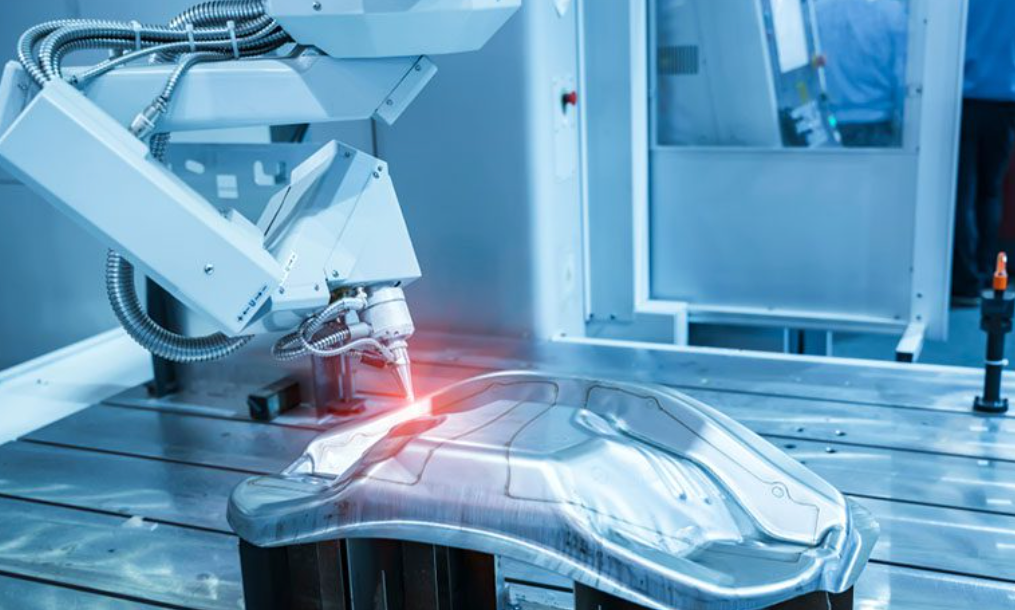
Robotic laser welding combines the controlled energy delivery of laser welding with the repeatability of robotic movement. Instead of relying on an operator to guide the welding tool through every joint, a programmed robotic system can follow a defined path and maintain consistent process parameters. This can be particularly valuable when manufacturers need to produce large numbers of similar components while maintaining predictable weld quality.
The technology is not simply about replacing a person with a robot. Successful implementation requires coordination between the laser source, robot, workholding system, sensors, software, material characteristics, and production workflow. When these elements are properly integrated, manufacturers can create a welding environment in which speed, precision, repeatability, and process monitoring work together rather than being treated as separate objectives.
What Makes Laser Welding Different?
Laser welding uses a concentrated beam of energy to create a weld between materials.
Because the energy can be focused into a relatively small area, the process can produce narrow welds with limited heat transfer into surrounding material.
This characteristic can be useful when working with components where excessive heat could cause distortion or affect nearby features.
See also: How Technology Is Changing the Professional Aesthetic Industry
The Role of Robotics
A robotic arm adds controlled movement to the welding process.
Once the appropriate path and parameters have been established, the robot can repeatedly move the welding head through the required sequence.
This repeatability can be particularly useful for production lines where the same joints need to be created thousands of times.
Why Repeatability Matters in Manufacturing
Human welders can produce excellent results, but repetitive production work introduces variables such as fatigue, movement differences, and changes in concentration.
A programmed robotic system follows the same path and sequence each time when operating under consistent conditions.
This can make process results easier to standardize and can reduce variation between individual production cycles.
Precision Becomes More Important With Smaller Components
Manufacturers are increasingly working with compact components and assemblies where excessive heat or inaccurate weld placement can create significant problems.
Laser welding can provide a highly concentrated heat source, making it suitable for applications where controlled energy input is important.
When combined with robotic positioning, this can allow manufacturers to work with precise weld locations while maintaining repeatable movement.
Lower Heat Input Can Reduce Distortion
Welding inevitably involves heat, but how that heat is introduced can influence the final component.
A concentrated laser source can reduce the amount of surrounding material exposed to high temperatures compared with some conventional processes.
Lower thermal impact can help limit distortion in certain applications, although results depend on material type, thickness, joint design, laser settings, and the overall welding process.
Speed Can Influence Production Capacity
Automation becomes particularly attractive when manufacturers need to repeat the same welding operation frequently.
A robotic system can maintain programmed movement patterns without requiring the same level of manual repositioning between individual joints.
When the process is properly optimized, faster cycle times can contribute to higher production capacity.
However, welding speed should never be considered separately from weld quality. Increasing speed without adjusting the rest of the process can produce unacceptable results.
Automation Can Reduce Repetitive Manual Work
Welding can involve repetitive physical movements, awkward working positions, and exposure to heat and process fumes.
Robotic systems can take over certain repetitive operations, allowing workers to focus on programming, quality control, setup, maintenance, and other tasks.
This changes the role of the workforce rather than eliminating the need for skilled people. Experienced technicians remain important for system setup, troubleshooting, process optimization, and production oversight.
Programming Is a Critical Part of the Process
A robotic welding system is only as effective as its programming and setup.
The robot needs accurate movement paths, appropriate speeds, correct positioning, and coordinated laser parameters.
Programming also needs to account for the physical geometry of the component and any changes that can occur during production.
Poor programming can create inconsistent weld placement even when the equipment itself is highly capable.
Sensors Can Add Another Layer of Control
Modern robotic welding systems can incorporate sensors to monitor aspects of the process.
Depending on the system, sensors may help identify component position, monitor weld conditions, or detect changes that could affect production.
This can make automated welding more adaptable than a completely fixed process.
The usefulness of sensing depends heavily on the application and the type of feedback required.
Workholding Is Often Underestimated
A robot cannot compensate for a poorly positioned workpiece.
Fixtures and workholding systems need to keep components in the correct position while allowing the welding head to reach the required joints.
Consistent positioning is particularly important in automated production because even small variations can affect the robot’s programmed path.
Good fixture design is therefore an important part of the complete welding system.
Material Selection Influences Laser Performance
Different metals respond differently to laser energy.
Reflectivity, thermal conductivity, thickness, surface condition, and alloy composition can all affect how a material interacts with the laser.
This means welding parameters cannot simply be copied from one application to another.
Testing and process development are often necessary before a production configuration is finalized.
Joint Design Matters
A laser cannot create a reliable weld if the components are poorly fitted together.
Joint geometry, gap size, surface condition, alignment, and accessibility all influence the result.
Manufacturers considering robotic laser welding should therefore evaluate the component design itself rather than treating welding as an isolated stage at the end of production.
Automotive Manufacturing Is a Major Application
Automotive production involves large numbers of repeated components and assemblies.
Consistency and cycle time are therefore extremely important.
Robotic laser welding can be used where manufacturers need repeatable joints and controlled heat input, depending on the particular vehicle component and material.
The technology can also integrate with highly automated production lines where multiple manufacturing stages operate together.
Electronics Manufacturing Requires Controlled Processes
Electronic assemblies can contain small components and materials that are sensitive to excessive heat.
Where laser welding is suitable for the specific materials and joint design, concentrated energy delivery can provide a way to control the affected area.
The process must still be carefully developed because even small amounts of thermal damage can be significant in sensitive assemblies.
Medical Manufacturing Demands Consistency
Medical components often require precise manufacturing and controlled production conditions.
Automated laser welding can be useful for applications where repeatability and accurate joining are important.
However, medical manufacturing also involves strict quality requirements, documentation, validation, and material considerations that go beyond simply achieving a visible weld.
Aerospace Applications Require Careful Process Control
Aerospace components can involve specialized materials, demanding tolerances, and strict production requirements.
Automation can help create repeatable movement and process conditions.
Nevertheless, aerospace applications require appropriate qualification and verification procedures. Robotic equipment does not remove the need for rigorous quality assurance.
Why Weld Inspection Remains Important
Automation does not automatically guarantee perfect welds.
Inspection remains necessary to verify that the process is producing the expected results.
Depending on the application, inspection may involve visual examination, dimensional checks, destructive testing, or non-destructive evaluation.
The appropriate inspection method depends on the component and its performance requirements.
Maintenance Protects Production Consistency
A robotic welding cell contains several critical components.
The laser source, optics, robot, fixtures, sensors, cooling systems, extraction equipment, and control hardware all need appropriate maintenance.
A neglected optical system, for example, can affect laser delivery and eventually influence weld quality.
Preventive maintenance can therefore be just as important as initial equipment selection.
Safety Must Remain Central
Laser welding involves concentrated optical energy, automated movement, heat, fumes, and electrical equipment.
A properly designed robotic cell needs appropriate guarding, interlocks, ventilation or extraction, warning systems, and operational procedures.
Workers should also receive suitable training for the equipment they operate or maintain.
Automation can improve consistency, but it does not remove the need for a strong safety culture.
Comparing Automation With Manual Welding
Manual welding remains valuable for repair work, prototypes, low-volume production, complex one-off components, and applications where frequent adjustment is required.
Robotic laser welding becomes more attractive when production involves repeatable components, demanding consistency, or high volumes.
The right decision depends on production requirements rather than assuming that automation is always superior.
When Investment Can Make Sense
The initial cost of a robotic laser welding system can be significant.
Manufacturers should therefore examine expected production volume, labour requirements, cycle times, quality targets, material costs, maintenance, and potential downtime before investing.
A system that operates continuously in a high-volume production environment may have a very different financial case from one used only occasionally.
Building a Complete Welding Cell
A robotic welding installation should be viewed as a complete production cell.
The robot and laser are only two components.
Material handling, fixtures, safety systems, extraction, cooling, controls, inspection, and operator interfaces all contribute to overall performance.
Integrating these elements from the beginning can prevent bottlenecks that might otherwise appear after installation.
What Manufacturers Should Evaluate
Before selecting equipment, manufacturers can consider:
- Required weld type
- Material and thickness
- Joint geometry
- Production volume
- Target cycle time
- Required positional accuracy
- Laser power requirements
- Robot reach
- Fixture design
- Sensor requirements
- Inspection process
- Maintenance needs
- Safety requirements
- Operator training
- Future production expansion
A structured evaluation helps ensure that the technology is selected for the actual production challenge.
Final Thoughts
Robotic laser welding represents an important development in automated manufacturing because it brings together concentrated laser energy and highly repeatable robotic movement. For suitable applications, this combination can help manufacturers pursue consistent weld placement, controlled heat input, faster production cycles, and reduced dependence on repetitive manual operations. Its advantages become particularly relevant when the same components must be produced repeatedly under carefully controlled conditions.
At the same time, automation should not be treated as a shortcut to quality. Successful results depend on material behaviour, joint design, fixture accuracy, programming, laser parameters, sensors, inspection, maintenance, and safety. A powerful laser mounted on a robot cannot compensate for poor component preparation or an unsuitable production process.
The strongest implementations are therefore designed as complete manufacturing systems. When robotics, laser technology, workholding, monitoring, quality control, and operator expertise are brought together, robotic laser welding can become more than an automated welding method. It can form part of a production strategy focused on repeatability, precision, efficiency, and consistent manufacturing performance.