Why Polyurethane Flooring Performance Depends on More Than the Topcoat
A floor coating is often judged by the finish it leaves behind, yet its real value becomes apparent only after the surface has been exposed to daily use. Warehouses, workshops, production areas, commercial facilities, garages, and service spaces can subject concrete to abrasion, impacts, moisture, chemicals, temperature changes, and constant movement. Polyurethane systems are frequently considered for applications where a combination of durability, chemical resistance, flexibility, and surface protection is needed. However, choosing a suitable system involves more than comparing product names or advertised performance figures. The formulation, intended use, substrate condition, installation method, and curing environment all influence whether a polyurethane coating performs as expected. For that reason, working with knowledgeable polyurethane coating manufacturers can help buyers and flooring professionals understand which formulations are designed for particular environments and application requirements.
Polyurethane coatings are available in formulations intended for different purposes, and their characteristics can vary considerably. Some systems are developed for industrial floors exposed to demanding traffic, while others may be intended for commercial, decorative, or specialized applications. Factors such as abrasion resistance, chemical exposure, flexibility, UV stability, gloss retention, and curing behavior can influence material selection. A facility that operates heavy machinery throughout the day has very different needs from a lightly used interior room. Selecting a coating according to the environment allows the flooring system to provide meaningful protection without adding unnecessary complexity or expense.
The concrete beneath the coating is equally important. Even a technically advanced polyurethane system cannot compensate for a contaminated, weak, excessively damp, or poorly prepared substrate. Oil, grease, dust, old coatings, laitance, cracks, and moisture can interfere with adhesion and affect the appearance or longevity of the finished surface. Proper preparation may involve mechanical profiling, cleaning, repairs, and moisture evaluation before application begins. Understanding the complete installation process makes it easier to appreciate why coating performance depends on both the material and the conditions in which it is installed.
Polyurethane Is a System, Not Simply a Layer of Paint
Polyurethane flooring is best understood as part of a broader surface-protection system. Depending on the project, an installation may include a primer, intermediate layer, polyurethane finish, and additional components selected for specific performance requirements. Each layer can serve a different function, such as improving adhesion, building thickness, resisting abrasion, or protecting the surface from particular environmental exposures. The final specification should therefore be based on how the complete system is expected to perform rather than on the characteristics of one container of material.
This distinction becomes especially important in demanding environments. A floor may require resistance to constant foot traffic in one area and forklift movement in another. A food or service facility may prioritize cleanability and resistance to repeated washing, while an industrial plant could be more concerned with chemicals, mechanical wear, and impact. The coating system needs to reflect these differences. A product that performs well under one set of conditions may not provide the same advantages when the operating environment changes.
See also: How Technology Is Changing the Professional Aesthetic Industry
The Application Environment Shapes the Final Performance
Temperature and humidity can influence the behavior of polyurethane materials during installation. Concrete temperature, condensation, ventilation, and moisture conditions may affect curing and adhesion. Manufacturers provide application requirements because the same coating can behave differently when environmental conditions move outside its recommended range. Monitoring these factors before and during application gives installers a better opportunity to achieve the intended finish and performance.
Timing also matters. Coating systems may have specific recoat windows, curing periods, and requirements for protecting the surface from traffic. Introducing equipment or heavy loads before adequate curing can damage a floor that otherwise would have developed its intended properties. Proper planning is particularly important for commercial and industrial facilities where downtime has a direct operational cost. A realistic installation schedule should account for preparation, application, curing, and the point at which normal use can safely resume.
Matching Polyurethane Systems to Different Facilities
The same flooring technology can serve very different purposes depending on the environment. Before selecting a formulation, buyers and installers should consider the floor’s daily workload, exposure, cleaning routine, and expected service life.
- Manufacturing facilities: Machinery, abrasion, chemicals, and heavy traffic can require a system designed for demanding industrial conditions.
- Warehouses: Forklifts, pallet movement, impact, and continuous pedestrian activity can place substantial stress on the surface.
- Commercial spaces: Appearance, cleaning, foot traffic, and resistance to everyday wear may receive greater attention.
- Workshops: Oils, tools, equipment, impacts, and frequent cleaning can influence the coating specification.
- Garages: Tire traffic, automotive fluids, dirt, and occasional mechanical impacts are common concerns.
- Service environments: Frequent washing, moisture, spills, and maintenance activity may make chemical and abrasion resistance particularly valuable.
This type of assessment can prevent an expensive mismatch between product and environment. Choosing solely according to price may produce a coating that is unable to handle the actual workload. On the other hand, specifying a highly specialized industrial system for a lightly used space may increase costs without creating proportional benefits. The most effective approach is to identify the stresses the floor will face and then select a system capable of handling them.
Substrate Preparation Determines Whether the Coating Has a Chance to Work
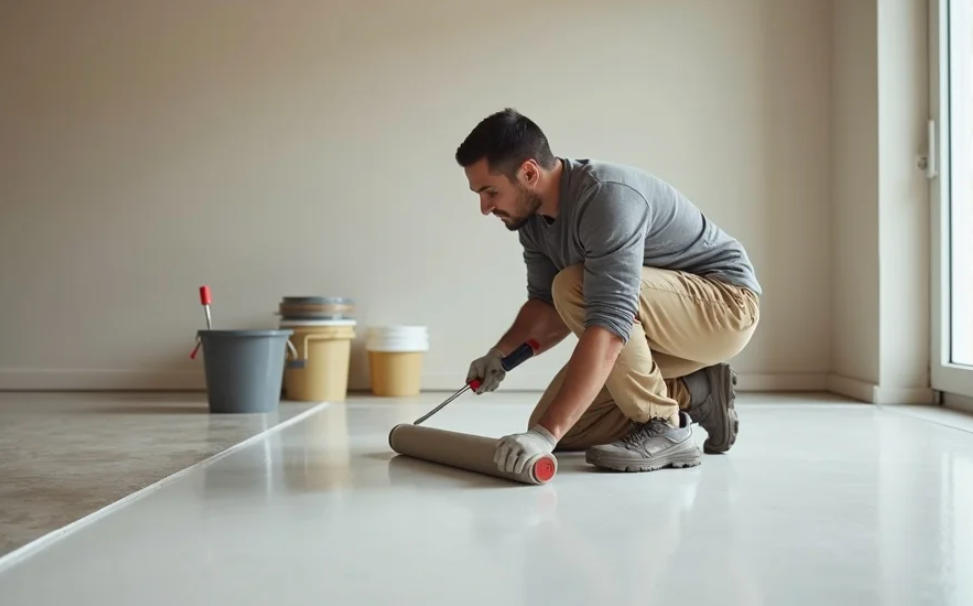
A polyurethane coating needs a sound surface to establish reliable adhesion. Concrete can contain dust, grease, oil, curing compounds, weak material, old coatings, and other contaminants that interfere with bonding. Surface preparation may involve grinding, shot blasting, cleaning, or removal of existing finishes depending on the condition of the slab. The goal is to create a suitable profile and eliminate materials that could compromise the coating.
Repairs should be considered before the main application begins. Cracks, holes, spalled areas, and deteriorated concrete can remain visible or affect performance if they are simply covered. Moisture also deserves careful attention because vapor transmission through the slab can create problems for certain coating systems. Proper assessment helps determine whether repairs or moisture-control measures are needed before the polyurethane system is installed. Treating preparation as a technical stage rather than a cosmetic cleaning exercise can significantly improve the reliability of the finished floor.
Product Selection Should Be Supported by Technical Information
A professional purchasing decision should include more than a product name and price. Technical information about recommended substrates, mixing procedures, coverage, film thickness, environmental conditions, curing, chemical resistance, and recoat intervals can help installers determine whether a formulation fits the project. polyurethane coating manufacturers can be an important source of this information because the manufacturer’s technical documentation explains how a particular system is intended to be used.
Compatibility between components is equally important. A primer, base layer, and polyurethane topcoat should not be combined simply because each appears suitable on its own. The materials need to be designed or approved for use together. Technical documentation can help clarify compatible combinations and application requirements. This reduces the risk of creating a system where one layer behaves differently from another and ultimately weakens the finished surface.
Durability Includes Resistance to Everyday Abuse
One reason polyurethane is considered for demanding flooring applications is its ability to provide useful resistance characteristics when the correct formulation is selected. Abrasion can be a major concern in areas where people, carts, vehicles, or machinery repeatedly travel across the same paths. Chemical exposure can create another challenge, particularly in workshops, production environments, and service areas. The actual level of resistance depends on the formulation and the substances involved, so assumptions should be avoided when the floor will encounter aggressive chemicals.
Flexibility and surface behavior can also influence performance. A floor that experiences repeated thermal changes or mechanical stress may benefit from characteristics that differ from those required by a stable, lightly used interior space. This is why the coating should always be specified around the environment rather than treated as a generic protective layer. Product documentation and application guidance provide a more reliable basis for selection than broad claims about polyurethane as a material category.
Installation Skill Can Protect the Investment
Even the right coating system can fail to deliver its intended performance if installation is poorly controlled. Accurate mixing, correct application thickness, suitable environmental conditions, proper recoat timing, and adequate curing all require attention. Inconsistent application can lead to differences in appearance or performance across the floor, while poor preparation can undermine adhesion regardless of the quality of the material.
For larger projects, the installation plan should also account for movement through the facility. Equipment, workers, and materials may need to be kept away from freshly coated sections while different areas are completed. Clear scheduling can reduce contamination and accidental damage during curing. The more demanding the environment, the more valuable a disciplined installation process becomes.
Maintenance Extends the Useful Life of the Surface
A polyurethane-coated floor can be easier to maintain than unfinished concrete, but routine care still matters. Dust and abrasive particles can gradually wear the surface when they are repeatedly dragged across it by footwear, tires, carts, or machinery. Regular sweeping or appropriate cleaning can reduce that unnecessary abrasion. Spills should be removed using cleaning procedures compatible with the installed system, particularly when the facility handles chemicals or oils.
High-traffic zones should also be inspected periodically. Entrances, forklift routes, workstations, loading areas, and locations around machinery can experience more wear than other sections. Early identification of damaged areas can make repairs easier and prevent localized problems from becoming more extensive. Maintenance recommendations should follow the coating manufacturer’s guidance because cleaning chemicals and procedures suitable for one system may not be appropriate for another.
Final Thoughts
Polyurethane flooring can provide a valuable combination of surface protection and practical performance, but its success depends on the entire system surrounding the material. Substrate condition, preparation, product selection, application conditions, curing, and maintenance all contribute to the final result. Focusing exclusively on the coating itself can overlook several factors that determine whether the finished floor actually survives the environment for which it was installed.
For buyers, contractors, and facility managers, choosing suitable materials should therefore involve careful technical evaluation rather than a simple comparison of prices. polyurethane coating manufacturers can provide valuable product information, system guidance, and application requirements that help professionals make more informed decisions. When the material is matched to the environment and installed over a properly prepared substrate, polyurethane flooring can offer a durable, maintainable surface capable of handling demanding everyday conditions without sacrificing a clean and professional appearance.