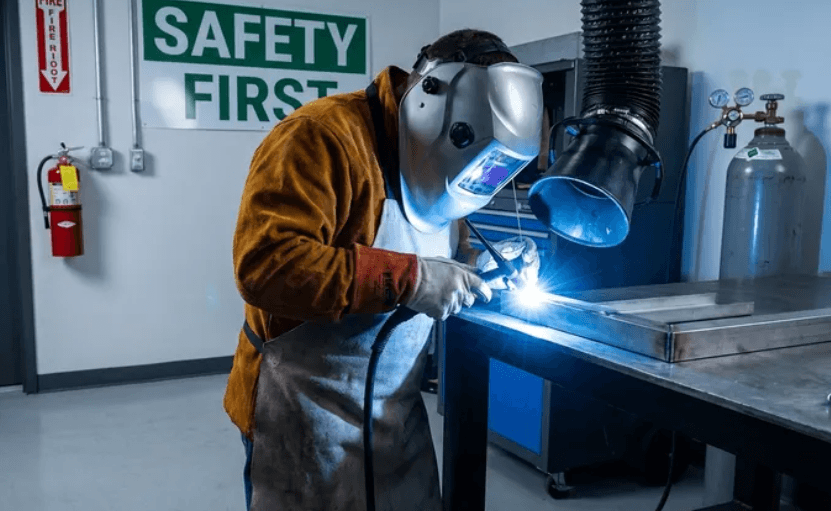
Essential Welding Safety Tips: Protecting Yourself and Your Workspace
Most welding safety conversations start and end with personal protective equipment. A good helmet, gloves, apron, and respiratory protection are absolutely necessary. But they are only part of the equation. Workspace safety and air quality management sit equally high on the list of factors that determine whether your team walks out of the shop healthier than they walked in, yet they receive a fraction of the attention. Welding fume extractors and proper ventilation strategies eliminate hazards at the source, before they reach workers’ lungs and skin.
Why It Matters
Welding fumes contain manganese, chromium, nickel, and other metals that accumulate in the body over time. Short-term exposure causes respiratory irritation, dizziness, and discomfort. Long-term exposure contributes to neurological damage, kidney problems, and chronic respiratory disease. Many welders discover health effects years after exposure, when the damage is already irreversible.
Regulatory agencies set exposure limits, but those limits are minimums, not targets. They define what is “legally permissible,” not what is actually safe. A workspace that technically meets OSHA standards can still expose workers to preventable harm if it lacks proper fume extraction, ventilation, or air circulation.
The business case is equally compelling. Poor air quality leads to respiratory illness among your best welders, driving up turnover, training costs, and lost productivity. Workers who feel unsafe or who develop health problems become expensive liabilities. Shops that take workspace safety seriously attract and retain skilled fabricators and build a reputation that opens doors to new contracts.
Personal Protective Equipment Still Comes First
Respiratory protection remains your first line of defense. Welding helmets with auto-darkening features protect eyes from arc radiation and flying debris. Leather jackets and gloves shield skin from sparks, spatter, and heat. A proper respirator rated for welding fumes keeps particles and gases out of your lungs.
But many shops fall into the trap of assuming that proper PPE fully solves the safety problem. In reality, respiratory protection only works if workers actually wear it, and many workers remove respirators in high-heat situations because they feel uncomfortable or restrictive. A workspace with low fume concentrations means workers can maintain respiratory protection without overheating, and their actual exposure stays low even if they momentarily lower their mask.
The right PPE also depends on the specific welding process and materials in use. MIG welding in a small, poorly ventilated area produces concentrated fume loads that basic N95 masks cannot adequately filter. TIG welding generates less fume but still produces hazardous gases. Stick welding produces heavy particulate loads. Each process and material combination calls for different respiratory strategies.
Workspace Ventilation and Air Quality Management
General ventilation is your starting point. A properly designed shop layout allows fresh air to enter from intake zones and exit through exhaust vents. Cross-drafts minimize stagnant pockets where fumes accumulate. The goal is steady, consistent air movement that prevents fumes from settling in work areas.
Many shops rely on natural ventilation or large bay doors. In cold climates or sealed buildings, this becomes impractical. Engineered ventilation systems cost money upfront but dramatically reduce worker exposure and improve air quality across the entire facility. A balanced intake and exhaust system maintains slight negative pressure in the shop, so fumes are pulled toward vents rather than drifting toward other workers.
Local exhaust capture at individual welding stations is far more efficient than trying to ventilate the entire space. A fume hood or extraction arm positioned close to the arc pulls fumes away immediately after they form, before they disperse into the broader air. This approach requires far less overall ventilation volume and keeps air quality high even in high-production environments.
Wall-mounted and overhead extraction systems work well for fixed workstations. For shops with mobile work or multiple stations, portable extraction units offer flexibility without sacrificing air quality. The key is positioning and maintenance; a poorly placed extractor or a clogged filter provides the illusion of fume capture while workers still breathe contaminated air.
See also: The Technology Behind TITUM Fusion and Better Everyday Cooking
Operational Procedures That Reduce Exposure
Where you position workers relative to fume sources makes a measurable difference. Welders standing directly in the fume plume receive much higher exposure than those positioned to the side or behind an extraction arm. Layout changes that move workers away from fume sources cost nothing but deliver real results.
Rotation between tasks also helps in multi-station shops. A welder who spends the entire shift at one station experiences continuous high exposure. Rotating between welding, grinding, assembly, and other tasks allows exposure to drop during non-welding work and lets the body recover somewhat between high-exposure periods.
Housekeeping directly impacts air quality. Dust and particulate accumulate on surfaces and in corners, and air currents kick them back into breathing zones. Regular sweeping and vacuuming with proper equipment (not shop air) remove settled fumes before they become a problem. Some shops designate specific areas for high-dust tasks like plasma cutting or grinding and isolate those areas with additional ventilation.
Monitoring and Maintenance Keep Safety Real
A fume extraction system installed five years ago and never maintained is less effective than no system at all. Filters clog with particulate, reducing airflow and fume capture. Ductwork develops leaks. Exhaust vents get blocked by debris or shop additions. The system continues to run and make noise, but it no longer pulls air effectively.
Regular monitoring catches these problems before they become serious. Simple practices include checking filter pressure drops, feeling airflow at the hood opening, and inspecting ductwork for damage or blockages. More comprehensive approaches involve air sampling to measure actual fume concentrations in the breathing zone and compare them against regulatory limits or health-based guidelines.
Worker feedback is also valuable data. If welders report respiratory irritation, headaches, or difficulty breathing even with PPE in place, air quality has degraded. Investigating these reports and taking corrective action, whether that means cleaning filters, repairing ductwork, or repositioning extraction equipment, directly improves worker health and shop performance.
A Real-World Example: The Multi-Station Fabrication Shop
Consider a typical 15-person fabrication shop with five welding stations, a plasma cutter, and a grinding area. The shop installed a large bay door exhaust system years ago, which technically meets minimum ventilation standards. Most welders report headaches and respiratory irritation by mid-shift. Turnover is high. The shop owner assumes workers are simply not wearing their respirators properly.
An air quality assessment reveals that the large central exhaust draws air away from welding stations, creating dead zones where fumes settle. Welders at two stations experience particularly high exposure because they work upwind of the main air current. The bay door exhaust works, but it moves the air in the wrong direction relative to where fumes actually form.
The solution involved repositioning extraction equipment to capture fumes at the source and improving the general ventilation layout so fresh air reaches welders directly. Filter maintenance was also overhauled to ensure extraction equipment operated at full capacity. Within two weeks, headaches dropped significantly. Respirator use improved naturally because fume concentrations dropped. Turnover stabilized.
The investment was moderate relative to the improvement in air quality and worker comfort. More importantly, the shop owner now understands that welding safety is a system: PPE protects the individual, but workspace design, ventilation, extraction, and maintenance protect the entire team.
Actionable Takeaways
- Conduct a workspace assessment: Walk through your shop during a busy shift and observe where fumes accumulate. Ask workers where they experience the most respiratory irritation. Identify the sources (welding stations, plasma cutting, grinding) and the path the air takes from those sources to the exhaust.
- Evaluate your current ventilation system: Check filter condition, test airflow at key points, and confirm that exhaust vents are not blocked. If you cannot measure airflow easily, call in a ventilation professional for a formal assessment.
- Prioritize fume extraction at the source: If your shop relies solely on general ventilation, add local capture systems at high-exposure stations. Start with the stations where workers report the most respiratory symptoms.
- Create a maintenance schedule: Assign responsibility for checking filter pressure, inspecting ductwork, and cleaning exhaust vents. Document maintenance actions and track filter replacement intervals based on actual conditions, not guesses.
- Include workers in safety decisions: Ask your team where they feel air quality is worst and what operational changes might help. Workers closest to the fumes often have the best ideas about solutions.
- Combine PPE, ventilation, and procedures: Ensure every welder has a properly fitted respirator rated for welding fumes, the shop has engineered ventilation or extraction, and work practices minimize unnecessary exposure.
Conclusion
Welding is inherently risky. Flames, hot metal, radiation, and hazardous fumes are part of the job. But the level of risk is not fixed. Shops that take a comprehensive approach to safety, addressing PPE, workspace design, ventilation, and maintenance, see measurably better health outcomes and lower turnover. Those that treat safety as a checklist often discover expensive problems only when they become crises. The difference lies not in spending more money, but in understanding that welding safety is a system, and every component matters.
FAQ
What is the most dangerous part of welding for worker health?
Long-term inhalation of welding fumes is the greatest health risk. Fumes contain manganese, chromium, nickel, and other metals that accumulate in the body and cause neurological, respiratory, and kidney damage over time. Many welders do not realize they are experiencing cumulative exposure until health effects appear years later.
Can a respirator alone protect a welder from all fumes in a poorly ventilated space?
A properly fitted respirator rated for welding fumes provides significant protection, but it is not a substitute for good ventilation and fume extraction. Respirators can be uncomfortable in hot environments, leading workers to remove them or not seal them properly. Additionally, sustained use of high-filtration respirators increases breathing effort and worker fatigue. Combining a well-maintained respirator with good air quality management provides the most reliable protection.
How often should welding fume extraction filters be replaced?
Filter replacement intervals depend on shop workload, welding process, and filter type. A shop running high-volume MIG welding may need to replace filters every one to two weeks, while a lighter shop might go a month or more. The correct approach is to monitor actual pressure drop across the filter and replace when it reaches the manufacturer’s maximum recommended threshold, rather than following a calendar schedule.
Is OSHA compliance enough to ensure worker safety?
OSHA standards define legal minimums, not safety targets. A shop that technically meets OSHA exposure limits may still expose workers to preventable harm if those limits are interpreted as targets rather than ceilings. Health-based exposure guidelines from organizations like the ACGIH often recommend lower exposure limits than OSHA requires. The safest shops aim well below regulatory minimums.
What is the difference between general ventilation and local exhaust capture?
General ventilation moves air throughout the entire shop space, diluting fumes but not removing them at the source. Local exhaust capture positions equipment close to the welding arc and pulls fumes away immediately after they form, before they spread into the breathing zone. Local capture is far more efficient and effective at protecting workers in high-production environments.
How does poor air quality affect shop productivity and profitability?
Welders experiencing respiratory irritation, headaches, or fatigue work less efficiently and make more mistakes. High turnover from health-related departures drives recruiting and training costs. Sick leave and reduced productivity from health complaints reduce output. Shops that invest in air quality typically see measurable improvements in both worker retention and per-welder output.