Choosing Insulation for More Than Temperature Control
Home insulation is usually discussed in terms of heating and cooling, but temperature is only one part of indoor comfort. Noise, air movement, humidity, and the way different rooms are used can also influence which insulation system makes sense for a property.
Homeowners planning an upgrade should therefore think about the problem they are trying to solve before choosing a material. An insulation product that works well in an attic may not be the best option for an interior wall, garage, media room, or space where sound control is the main priority.
Identify the Main Goal
The first step is deciding what improvement matters most. Some homes need better thermal performance because upper rooms stay warmer than the rest of the house. Others have spaces next to busy streets, entertainment areas, mechanical equipment, or shared walls where noise is a bigger concern.
Writing down the main goal makes product comparisons easier. It also gives the insulation contractor a clearer understanding of what the homeowner wants to improve.
In some cases, the best solution may involve more than one insulation material because different parts of the home have different requirements.
Understand Closed-Cell Foam
Closed cell spray foam is a dense insulation product that expands after application and can create both thermal resistance and an air-sealing layer.
Because its cells are tightly packed, closed-cell foam generally provides a higher insulating value per inch than open-cell foam. Its density can make it useful in areas where available space is limited or where stronger resistance to air and moisture movement is desired.
However, the correct application depends on the building. Roof design, ventilation, existing materials, moisture conditions, and the location of the insulation should all be reviewed before installation.
Think About Air Leakage
Insulation can slow heat transfer, but gaps in the building envelope may still allow conditioned air to escape.
Common leakage areas include attic access panels, plumbing penetrations, electrical openings, and gaps around framing. Warm outdoor air may enter through the same locations, making certain rooms harder to cool.
Air sealing can therefore be an important part of an insulation project. Addressing leaks before adding or replacing insulation can create a more consistent boundary between conditioned and unconditioned spaces.
Consider Indoor Noise
Temperature is not the only reason homeowners add insulation to walls and ceilings. Soundproofing insulation can help reduce the amount of sound traveling between different areas of a property.
Bedrooms beside living spaces, home offices, media rooms, laundry areas, and walls near mechanical systems are examples of spaces where sound control may be useful.
Insulation does not make a room completely silent because sound can also move through doors, windows, floors, ducts, and structural framing. However, suitable insulation inside wall or ceiling cavities can be one useful part of a broader noise-control strategy.
Match Material to Location
Different insulation materials behave differently, so one product should not automatically be used throughout an entire home.
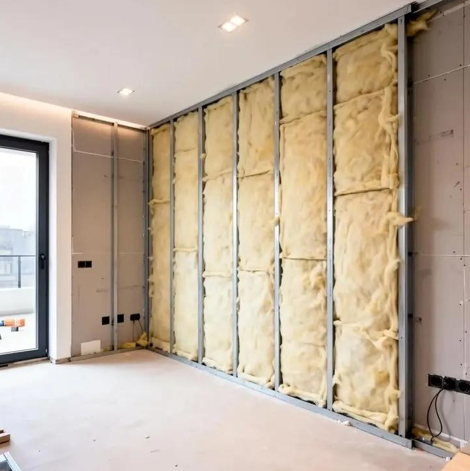
Fiberglass batts can work well in open wall cavities and standard framing. Blown-in products may be more practical for covering large attic areas or irregular spaces. Mineral wool is another option that can provide thermal resistance along with useful acoustic and fire-related characteristics.
Spray foam can be helpful where air sealing is also a priority. The right choice depends on the location, installation method, desired performance, and future access requirements.
Do Not Ignore Moisture
South Florida’s humid climate makes moisture management an important part of insulation planning.
A roof leak, plumbing issue, or condensation problem should be corrected before new insulation is installed. Covering damp or damaged material may hide the problem rather than solve it.
Homeowners should also look for water stains, musty odors, wet framing, or deteriorated insulation. These warning signs may indicate that another repair is necessary before the insulation project continues.
See also: Reliable Appliance Repairs in Brisbane: Keeping Your Home Running Smoothly
Check Existing Conditions
An inspection can reveal whether the current insulation is still performing properly. Some areas may remain in good condition while others have settled, shifted, compressed, or become damaged.
The inspection can also expose air leaks, duct problems, moisture concerns, and gaps around penetrations.
This makes it easier to decide whether the project requires a complete replacement or only targeted improvements in specific parts of the home.
Think About Daily Comfort
An insulation upgrade should ultimately improve how the home feels during everyday use.
Homeowners may want bedrooms to remain quieter, upstairs rooms to stay more comfortable, or the air conditioner to maintain temperatures more consistently. Defining these expectations before work begins makes it easier to evaluate whether the finished project has addressed the original problem.
Good insulation planning focuses on the whole home rather than simply adding the greatest amount of material possible.
Conclusion
Insulation is not only about controlling temperature. It can also influence air movement, noise, moisture management, and overall indoor comfort.
By identifying the main problem first, checking existing conditions, and matching the insulation material to the location, homeowners can make more informed decisions. A carefully planned approach can provide better results than treating every room or insulation need the same way.